

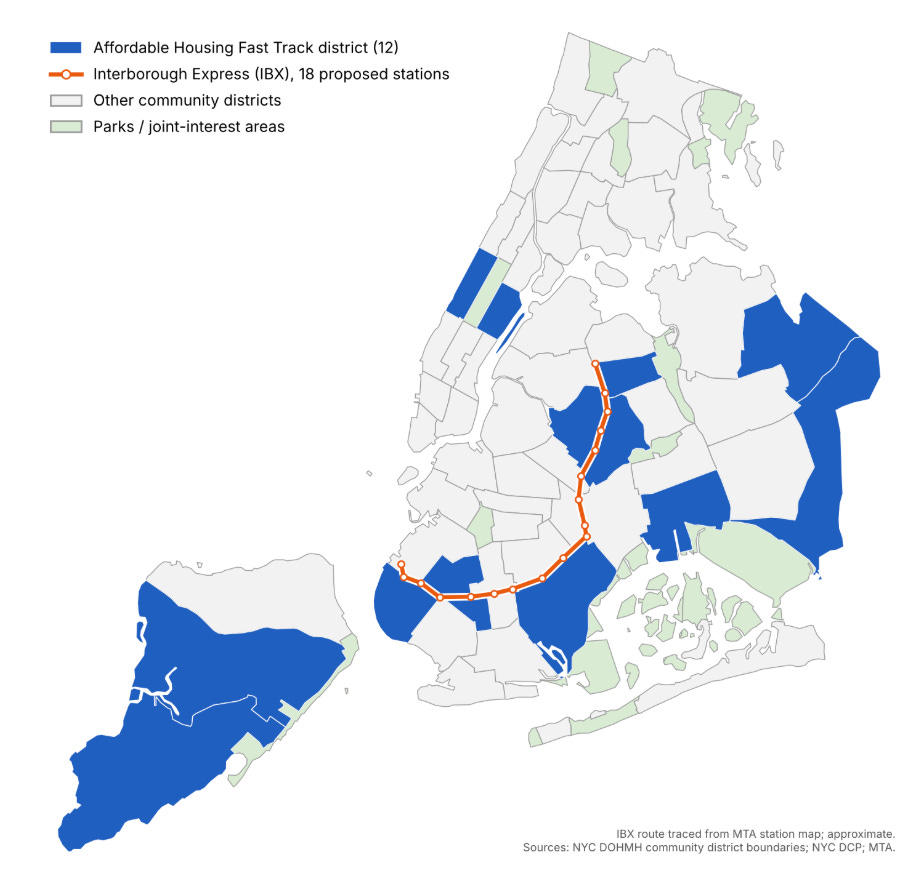
The Mamdani administration named the 12 community districts that have seen the lowest growth in affordable housing over the last 5 years and are now on the affordable housing fast track. A fast track qualified project could receive city approval in 3 rather than the usual 7 months.
From tony parts of Manhattan to Staten Island and Canarsie, these neighborhoods are diverse, and the kind of development they may see will also likely vary significantly.
There is one big reason why housing is generally more affordable — the inconvenient commute. (“Leaving Brooklyn – Fuhgeddaboudit!”) And there is little the mayor can do to improve the situation — the MTA, which controls subways and buses, is a state entity.
Upper West Side and Upper East Side have convenient transportation, especially since the completion of the 2nd Avenue stops on the Q line. But they also have large landmarked areas, constraining where new development could go — especially on the UWS.

Staten Island is hardly easy to get to, unless you have a car, as are parts of the Brooklyn and Queens districts — it is hard to argue, when taking public transit can mean commutes of more than an hour to get to Midtown.
Interestingly, five of the districts the mayor named are directly touching the one major transportation project in the city that is in the works — IBX — a light rail line that will, hopefully, soon connect Bay Ridge in Brooklyn with Roosevelt Avenue in Queens. By the time it opens, some new housing projects along the route should be in the works.
If you are curious about these neighborhoods, Furman Center is an excellent source of data in a very accessible format. According to the 2024 data, the Upper East Side and Upper West Side had the shortest average commutes of the 12 districts, about 30 minutes, and by far the highest median rent, $2,860 and $2,780. The other ten districts had rents between $1,710 and $2,310, and all but Borough Park averaged 41 to 48 minutes to work (not necessarily in Manhattan).
And so you don’t have to go looking, here are the neighborhoods:
Brooklyn CD 10: Bay Ridge, Dyker Heights
Brooklyn CD 12: Borough Park, Kensington
Brooklyn CD 18: Canarsie, Flatlands
Manhattan CD 7: Upper West Side
Manhattan CD 8: Upper East Side, Roosevelt Island
Queens CD 4: Corona, Elmhurst
Queens CD 5: Ridgewood, Maspeth, Middle Village
Queens CD 10: South Ozone Park, Howard Beach
Queens CD 11: Auburndale, Bayside, Douglaston
Queens CD 13: Queens Village, Bellerose, Rosedale
Staten Island CD 2: Mid-Island
Staten Island CD 3: South Shore
The Rent Is Frozen. Heating Costs Aren’t.
On October 1, with the lawsuit challenging it still unsettled, rent-freeze for rent-stabilized apartments went into effect. Also on October 1, the heating season started.
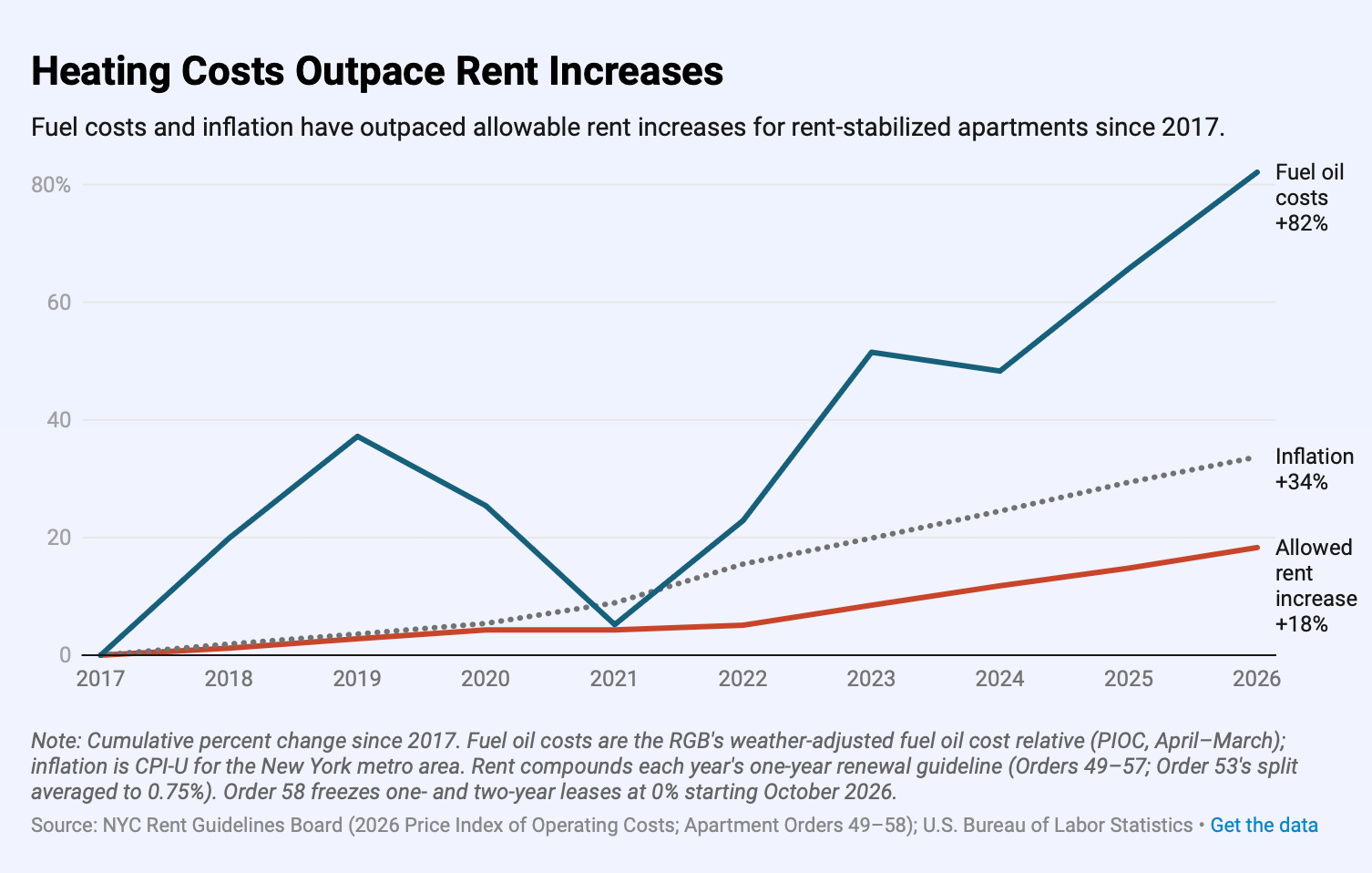
The Rent Guidelines Board research had projected that fuel costs would decline by 7.5% between April 2026 and March 2027, having risen 11% from April 2025 to March 2026, which is unlikely to happen.
“For rent-stabilized owners, however, a rent freeze layered on top of soaring fuel-oil prices could make this one of the hardest heating seasons in decades,” MI’s John Ketcham writes.
The Unmentioned Villain in Nikole Hannah-Jones’s Story
The New York City teachers’ union contract shapes most aspects of school operations, MI’s Danyela Souza Egorov writes, limiting opportunities for change as well as accountability.
Over the last decade, Black student enrollment in the city's charter schools grew from about 53,000 to more than 65,000. Last year, 38% of Black elementary school students attended a charter school.
“These black families are fleeing the public-school system to avoid exactly the challenges that Hannah-Jones found: lack of discipline, poor instruction, and the total absence of a system to measure students’ learning,” Souza Egorov writes. “Hannah-Jones blames this dysfunction on persistent inequality—wrongly. But she misses the true culprit driving the problems: the teachers’ union constraints on schools and the concurrent lack of accountability for low-performing schools.”
New York City’s AI Boom
The City Council is set to hold a meeting on Oct. 5 to discuss the risks of AI and a package of oversight legislation.
“But while New York politicians are focused on the perils of AI, the city has emerged as a center for AI companies, second only to the Bay Area, showing the industry’s growing importance to the city’s economy — and the risks if the AI boom turns into a bubble,” The City Reporter reports.
New York has become an AI hub for the same reasons it became a tech hub over the last decade.
The city has a deep talent pool (about 70,000 AI specialists, according to The City Reporter) and it is the biggest market for the industries AI startups sell to — finance, law, medicine, insurance, real estate and other regulated sectors. Taking office space, as OpenAI and Anthropic have both done in Manhattan, is the logical next step; venture money follows. And, it seems, at least some of the founders don’t want to live anywhere else.
Can Canal Street Be Tamed?

Best known for sidewalk merchants selling anything from fruit to counterfeit goods, Canal Street has long defied attempts to change it. We discussed the current state of affairs on the podcast earlier this year.
“Canal Street is one of those places that I think you can make a strong argument has simply been lost,” MI’s Rafael Mangual argued. “And how do we know that? Well, because it’s constantly home to visibly illegal conduct on a daily basis, and no one seems scared of enforcement, and no one seems to be willing to do anything on the enforcement side. So I don’t know how else you could define who controls a strip, if not for that, but it seems very clear to me that the city has obviously lost control of Canal Street.”
“What exists now is a failure of basic public space,” a frustrated Manhattan resident opined in Streetsblog this year. The city has since proposed safety improvements to the busy corridor. How would taming traffic change the street?
“Canal’s identity is tied up with timeless entropy, untidy humanness and disarranged beauty, reflecting the city around it,” The New York Times observes as it takes a picturesque walk through it, relishing the grittiness.
Recommend
MI’s Brittany N. Montgomery's Substack Bulletproof Bureaucracy unpacks why anticorruption rules meant to protect government integrity end up "bulletproofing" bureaucracies against progress, drawing on 20 her years working in government in New York, Bogotá, and beyond.
Extra! Extra!
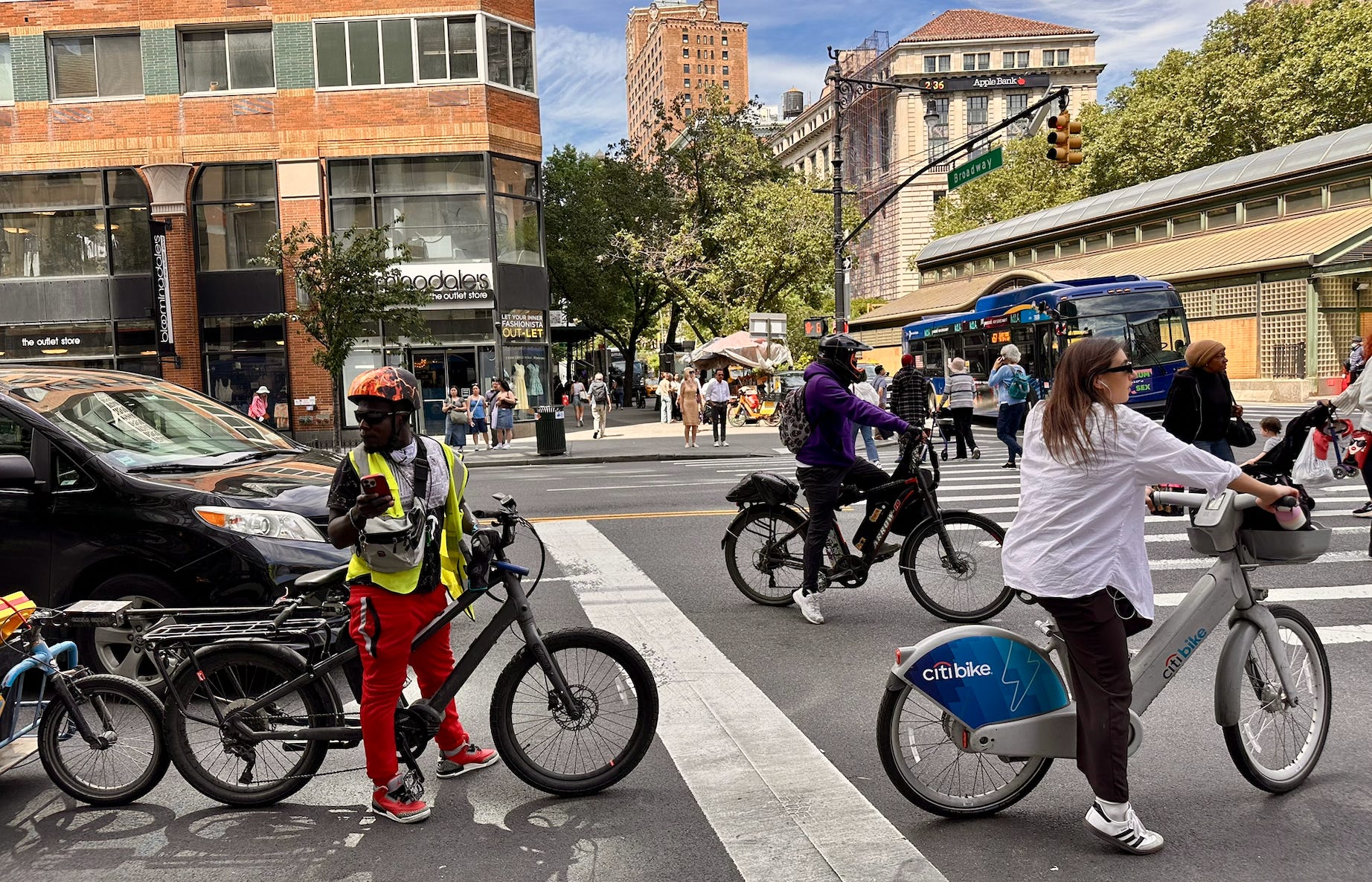
Last week, a bill was introduced in the City Council to pilot Low Traffic Neighborhoods (LTNs) in five neighborhoods across three boroughs, with the goal of reducing through traffic through devices like speed humps, curb extensions, traffic diverters, median barriers, and raised crosswalks.
This week, following some high-profile crashes, the council had a marathon hearing on e-bikes. Streetsblog called the 10+ hour hearing a “legislative farce.”
Mamdani released an updated Vision Zero traffic safety plan.
Bulldozing the NYC School Construction Authority as Mismanagement Accusations Mount (Susan Edelman)
Mamdani invites New Yorkers to enter yet another lottery — this time for a citywide scavenger hunt.
NYC-DSA Wants to Make Buses Fast and Free; Now It’s Organizing Riders, Streetsblog has the details.
K-12 enrollment is falling rapidly; school closures tend to follow. What does this mean for real estate? (Thesisdriven)