

This week, on the challenges of balancing budgets, dealing with the disorder on Canal Street, stalling on autonomous vehicles, and funding a school system shrinking in enrollment but not in cost.
Mamdani’s Budget Balancing Act
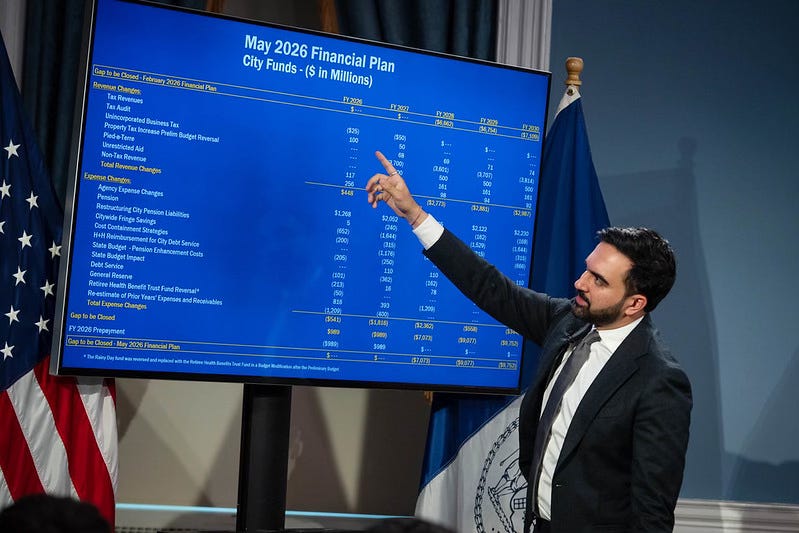
Mayor Zohran Mamdani presented his executive budget this week, balanced through a mix of temporary fixes, outside help, and a fair amount of optimism about what comes next. How exactly did he balance the books? Is the city in a better place? MI’s Eric Kober takes a look. The final budget will now be negotiated with the council.
“Balancing the budget is, of course, the mayor’s job, by law. Mamdani deserves credit for submitting a credible financial plan. Despite his inexperience, he has mastered the process and successfully worked with the governor and the legislature to get the budget relief he needed. But his plan is good for just one year,” Kober writes. “If he had listened more to the budget critics, less trouble would be in store for the future. Depending on unfolding events, many beyond his control, working people may still find their benefits under serious strain.”
Hochul’s New Taxes
There is a bit more clarity this week on the tax to be levied on nonresident second-home owners in the city - the so-called pied-à-terre tax. Intended to help Mamdani balance the city’s books, it is expected to be included in the final state budget, along with an additional tax on cash purchases of properties over $1 million. Between the two, officials estimate annual revenues of more than half a billion dollars, though the city’s comptroller warns the actual numbers may be lower.
Bad Arguments Against Self-Driving Taxis in NYC
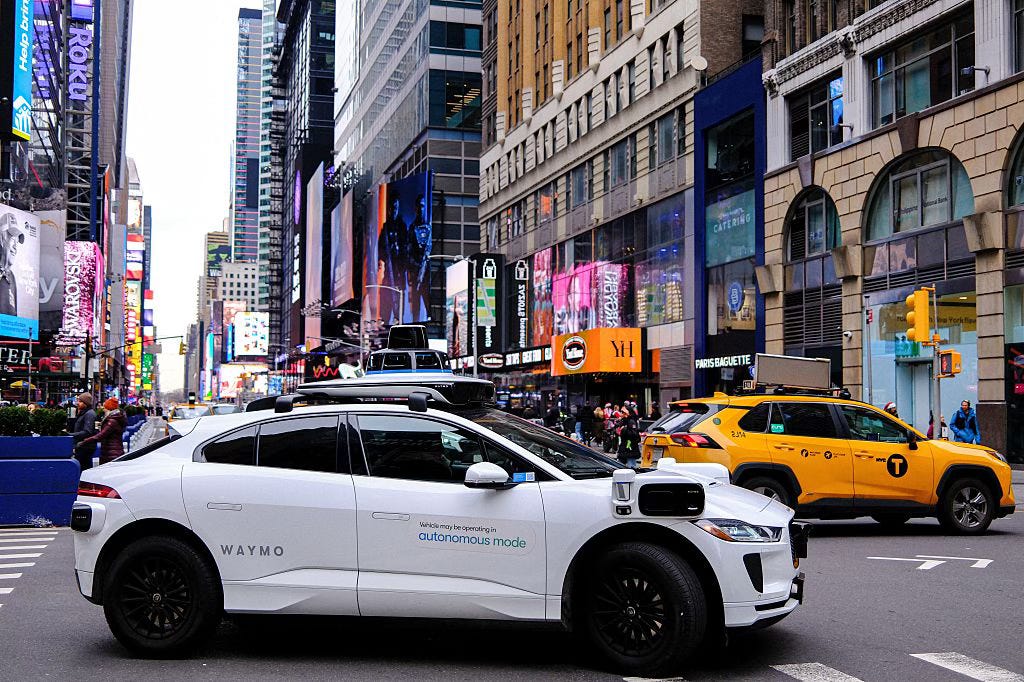
Autonomous vehicles are already operating in major American cities, and New York cannot avoid them indefinitely.
The city’s political class remains wary after the disruptions caused by Uber and Lyft, with concerns centered on labor displacement, safety, congestion, and corporate influence.
The objections are serious but manageable through policy, and the city already has tools like congestion pricing, service mandates, and licensing rules to shape outcomes. The issues here center on the city’s capacity to regulate and the political challenges posed by the unions.
Other states are already embracing AV technology, and federal action could eventually limit local control. New York’s leaders should act now to build a regulatory framework that permits testing, integrates AVs with transit and ensures the technology serves the public interest rather than simply corporate priorities.
Related:
Erik Engquist had a piece in TRD on how AVs could shape the physical city, and on the role of unions in blocking progress.
Works in Progress offers an interesting take on how to think about pricing autonomous vehicles: “Escaping the Ogallala trap.”
Street Vending on Canal Street Is Out of Control
“What exists now is a failure of basic public space,” a frustrated Manhattan resident opines in Streetsblog.
We discussed this issue on the podcast earlier this year.
“Canal Street is one of those places that I think you can make a strong argument has simply been lost,” MI’s Rafael Mangual argued. “And how do we know that? Well, because it’s constantly home to visibly illegal conduct on a daily basis, and no one seems scared of enforcement, and no one seems to be willing to do anything on the enforcement side. So I don’t know how else you could define who controls a strip, if not for that, but it seems very clear to me that the city has obviously lost control of Canal Street.”
NYC’s Expensive Empty Schools
The city’s public system is designed to educate more than 1 million students, a number last achieved before the pandemic. Enrollment this school year was just 884,400, and is projected to keep falling, a result of demographic change and parental choice. Meanwhile, the city keeps operating as if nothing has changed, keeping schools “harmless” as their student numbers fall, costing taxpayers hundreds of millions a year. (School budgets used to change based on enrollment.)
“If the city merges half its under-enrolled schools and brings the per-pupil spending at the newly merged schools in line with average spending, the city would save at least $108 million every year—and even more, after factoring in building and maintenance costs,” MI’s Danyela Souza Egorov writes in a brief on What to Do About NYC’s Empty Schools.
Extra! Extra!
Prof. Ed Glaeser on “the perfect city”, a great conversation.
The New Yorker takes a look at the role neighborhood newsletters play in our communities.
The New York Times on the many young adults who struggle to afford their dreams in NYC.