

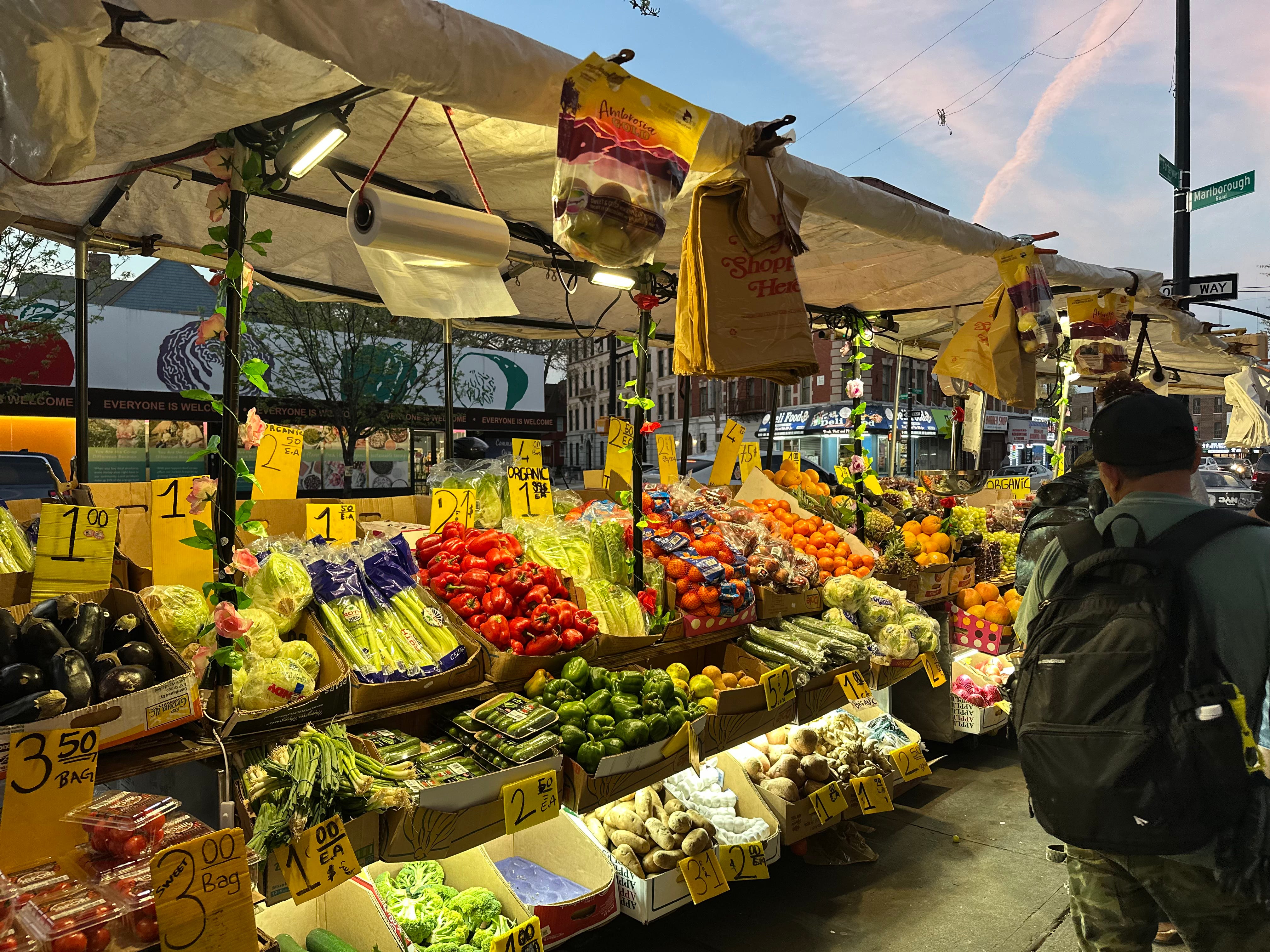
It’s understandable why I’m skeptical of Mayor Zohran Mamdani’s new “grand experiment” in government-run groceries. I grew up in the Soviet Union, where the government decided what kind of bread, among other things, would be sold at what prices—it did not go very well when it came to equalizing supply and demand.
Mamdani announced earlier this week that the city will build a new supermarket on a vacant lot where La Marqueta once occupied five blocks in East Harlem, and set prices for a basket of groceries to be sold there. In his telling, this is a direct heir to mayor Fiorello LaGuardia’s Depression-era campaign to make food affordable.
But LaGuardia’s experiment was about reorganizing an entire food system, not running a handful of branded stores. Municipal markets were just one element of a broader plan to connect them to new wholesale terminals, to police racketeers, and to regulate weights and measures to narrow the spread between wholesale and retail prices.
Contrast that with what Mamdani has actually proposed. The N.Y.C. Groceries program will establish five city‑branded supermarkets, one in each borough, with about $70 million in capital funding. The city’s development agency will pick private operators, set “strict requirements” for pricing, labor standards, and reporting, and subsidize a “core basket” of staples to guarantee “meaningful, predictable savings.”
How much the city is planning to spend on subsidizing these supermarkets is unclear, nor has there been any public talk of plans that would help lower the cost of goods for the grocers, bodegas, and street vendors who already feed East Harlem.

La Marqueta itself is a reminder of how hard it has been to will this site back to life. In its mid‑century heyday, it drew tens of thousands of shoppers a day, including people coming in from downtown and the suburbs for niche products they couldn’t find elsewhere. Since urban renewal transformed the neighborhood and ethnic products dispersed across modern supermarkets, mayor after mayor has tried some version of revival here—capital upgrades, incubator stalls, cultural events—investing millions of dollars with little to show for it. Could one more round of massive capital spending and a subsidized supermarket operator finally overcome those structural problems? I fear, no.
Meanwhile, the basic grocery math hasn’t changed. Supermarkets are an unforgiving business, with margins in the low single digits. Stores survive by getting you to buy more than the sale items: you come for the eggs, you leave with coffee, cereal, snacks, and cleaning supplies. If the city‑branded supermarket succeeds at undercutting local stores on the classic loss leaders—milk, bread, eggs —it can easily tilt that math. The risk isn’t just that La Marqueta struggles; it’s that surrounding grocers lose the volume they need to stay afloat, leaving the neighborhood dependent on one heavily subsidized store whose fate rests on future mayors’ enthusiasm for this particular experiment.
LaGuardia used public markets to rationalize a messy private ecosystem, among other things. For now, Mamdani is building one shiny, expensive, city‑owned box on top of the same old supply chain and calling it a grand experiment.
Pied-à-Terre Tax

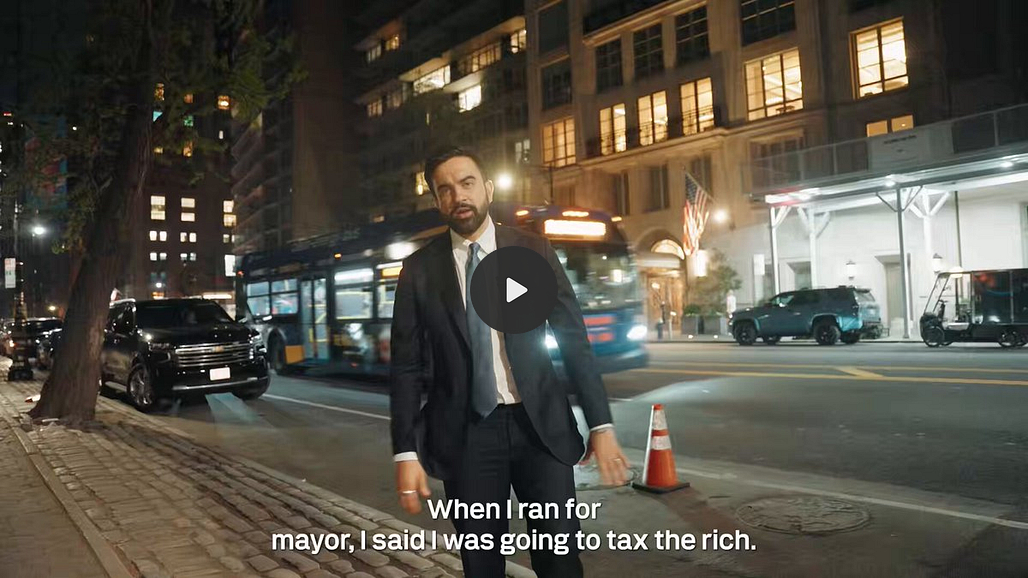
While Mamdani was celebrating Gov. Hochul’s proposal to impose a pied-à-terre tax on owners of $5 million plus second homes that is expected to generate half a billion in recurring revenue for the city, I was at Semafor World Economy, where I had a chance to talk to some of the business elite who’d be affected by the various “tax the rich” schemes on both East and West coasts.
My takeaway — they can certainly afford to live in NYC or have a pied-à-terre here; the question is — will they want to? While everyone I talked to had friends who had relocated to Texas or Florida, not everyone was eager to leave their expensive abodes just yet. As one executive put it, “I did not make this much money not to be able to live where I want to.” (disclosure — I’m married to a Semafor co-founder)
Insurance in Exchange for Rent Freeze?
At the other end of affordability spectrum, the Mamdani administration needed to come up with some solutions to improve the odds of survival for affordable housing providers. The goal is to increase the odds that the Rent Regulation Board will freeze the rents on the city’s million or so rent stabilized apartments and the mayor will be able to deliver on his biggest campaign promise.
Under current circumstances, buildings with large shares of such apartments are already barely making ends meet. The solution the city has proposed is an insurance fund to help lower insurance costs for landlords.
High Profile Incidents


This week, we had a cop on a horse chase down a handbag thief and a mass casualty event at Grand Central, where three riders were slashed with a machete.
Autonomous Vehicles
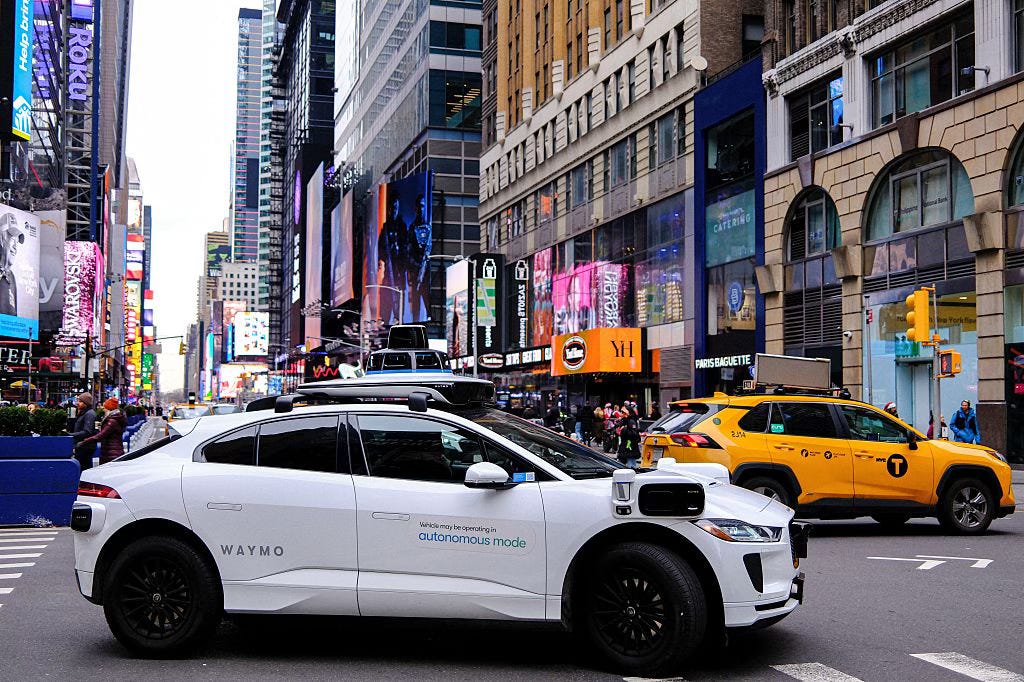
But while cops are happily riding horses, I’d rather be in a Waymo, I think. Or at least be able to try one without having to go to California. Or Texas.
NYC’s AV testing stopped at the end of March as permits could not be renewed because the state law governing the city’s permitting system expired with the state budget, and the new budget has yet to be agreed upon.
Nicole and I will talk with Sam Schwartz and Kelly McGuinness about the future of transportation, including autonomous vehicles in NYC, next week on our podcast. In the meantime, read their piece in Streetsblog, which begins with this scene:
“In the summer of 1925, a radio-controlled driverless car traveled down Broadway and Fifth Avenue through heavy traffic, turning corners, speeding up, slowing down, braking as warranted. The demonstration ended when this autonomous vehicle crashed into another vehicle full of photographers documenting the event.”
Jobs Numbers

New York City’s job growth basically stalled in 2025, with private employment rising by just 13,000 jobs after a 95,000-job surge the year before. Gains were weak and skewed toward lower-productivity services, while construction and manufacturing shrank and the office-using sectors that anchor the tax base—finance, real estate, professional services—were flat.
The problem is that the city isn’t generating growth in its most productive sectors, MI’s Eric Kober writes, and in that context, higher taxes risk compounding the slowdown. Full story here.
Extra! Extra!
MI’s Allison Schrager has a fascinating story in Bloomberg, noting that Americans are working fewer hours than they did in the 1950s and ‘60s, and the gap between Europe and us has shrunk by half. Other rich countries now work 92 hours for every 100 Americans do, and European hours rose in the 2010s while American hours fell.
A new NBER paper flags Medicaid expansion as one potential reason — the program covered about 10% of Americans in 1970 and 30% by 2020. Because benefits phase out as income rises, taking extra hours or a better job can wipe out the raise. The drop in work is concentrated among men and lower earners who are leaving jobs altogether, which flips the old pattern: today, higher earners put in more hours than lower earners, not fewer.
Good stuff here, including the links to the foundering modern Marqueta and the Medicaid effect on labor-force participation.