

I started the week thinking I’d write about the city’s newly established Office of Mass Engagement, now run by Tascha Van Auken, one of Mayor Zohran Mamdani’s top campaign staffers and the architect of his impressive field operation. Mamdani’s first official City Hall press conference was not with the city’s political press corps, but with “new media” — creators with millions in combined reach and, notably, few hard questions. (He does take reporters’ questions, just not in that setting.)
While getting and keeping residents engaged will likely be challenging, even for the Mamdani administration, there is no shortage of ways for his supporters to keep the “warmth of collectivism” alive through advocating for his agenda in Albany, where every politician is up for reelection, and through grassroots advocacy of local issues — the kind of engagement OME hopes to foster by rethinking public engagement from the ground up. An administration governing with a thin electoral mandate and a very loud megaphone should be cautious.
The week, however, was dominated by housing and childcare news: the launch of “rent ripoff” hearings, outrage over the newly appointed head of the Office to Protect Tenants, Cea Weaver’s past statements on property ownership, and the promise by the governor to fund the launch of universal childcare for 2-year-olds in NYC.
"Rental Ripoffs" and Economic Realities

Moving fast, Mayor Mamdani announced Sunday both the appointment of a new housing commissioner, Dina Levy, and that the city will hold “Rental Ripoff” hearings in all five boroughs to expose “poor conditions” and “unconscionable business practices” the city will then “act upon.”
Mayor Mamdani’s “rental ripoff” hearings fit neatly into the administration’s broader effort to mobilize supporters and keep housing affordability front and center. But what went unmentioned, however, was the fact that the city’s biggest slumlord is the city’s own NYCHA. The absence was notable, given the authority’s long-documented maintenance failures and tenant complaints.
As MI’s Eric Kober writes above, a serious conversation about rent burdens and housing conditions cannot selectively exclude the public sector’s own shortcomings.
Capitalism for Developers, Communism for Landlords
In a rather generous piece, Josh Barro explains how
“Mamdani and his ideological allies are now aiming for a weird — and probably unworkable — synthesis of capitalism and communism. They see developers as productive allies in the fight against the housing shortage. They are sensitive to the need to attract private capital to invest in new housing developments, they want to loosen zoning regulations so private capital can be more easily deployed to build more homes, and they are cognizant of the ways that nice-sounding government regulation might drive up costs and make it too hard to deliver new homes. But they see owners of existing rental housing — the dreaded landlords — as rentiers whose assets can be expropriated without imposing economic cost on anyone else.”
This is where the polarizing new head of the Office to Protect Tenants, Cea Weaver’s, past comments that “homeownership is a weapon of white supremacy” and the like, fit in, having herself opposed the council passing a number of bills that will likely increase the cost of developing affordable housing.
The Labor Dynamics of Mamdani’s Daycare Push
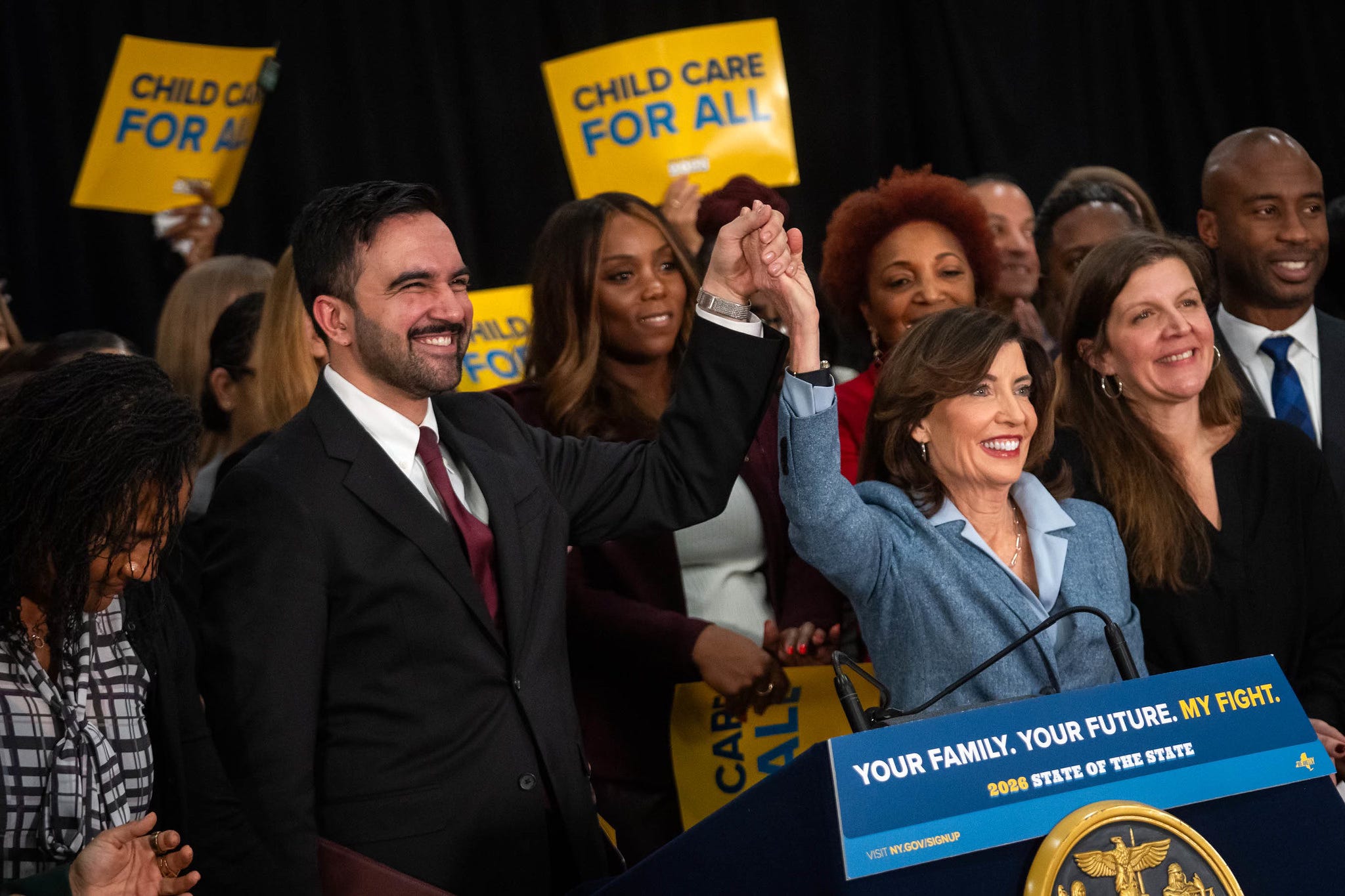
The other major news was Governor Kathy Hochul’s announcement that she plans to fully fund the first two years of the Mamdani Administration’s rollout of its universal 2-Care plan at a cost of half a billion dollars over the next two years, from existing revenues, assuming the state legislature approves it, as part of her statewide affordable childcare plans.
This coming fall, under the mayor’s plan, the city would create 2,000 new seats at a cost of $75 million to the state, building on the Adams administration’s $10 million pilot for the under-3 care, which is expected to provide about 200 seats in high-needs neighborhoods this year. The following year, the state would fund roughly 10,000 additional seats, according to the NYT, at a cost of $425 million. Advocates estimate demand for around 55,000 seats citywide, but the care will not come cheap: the cost of providing those seats well exceeds 20,000$ per child, looking at the numbers announced.
If 2-care, like 3-K, were to be housed under the Department of Education, it could explain why Mamdani reversed his earlier opposition to mayoral control of schools. Officials involved in the de Blasio-era UPK and 3-K rollouts have noted that in order to implement an expansion on this scale mayoral control is essential.
The particulars of the childcare announcement mirrored the New Yorkers United for Child Care 2-Care blueprint (Which HellGate reports as him having adopted). The mayor also just announced the hiring of NYUCC co-founder, Emmy Liss, as his lead on child care.
But, as the governor emphasized, childcare is ultimately a labor issue. And while the issue is complicated, and setting aside the need to keep families in the city, here’s what struck me as I was looking at some data.
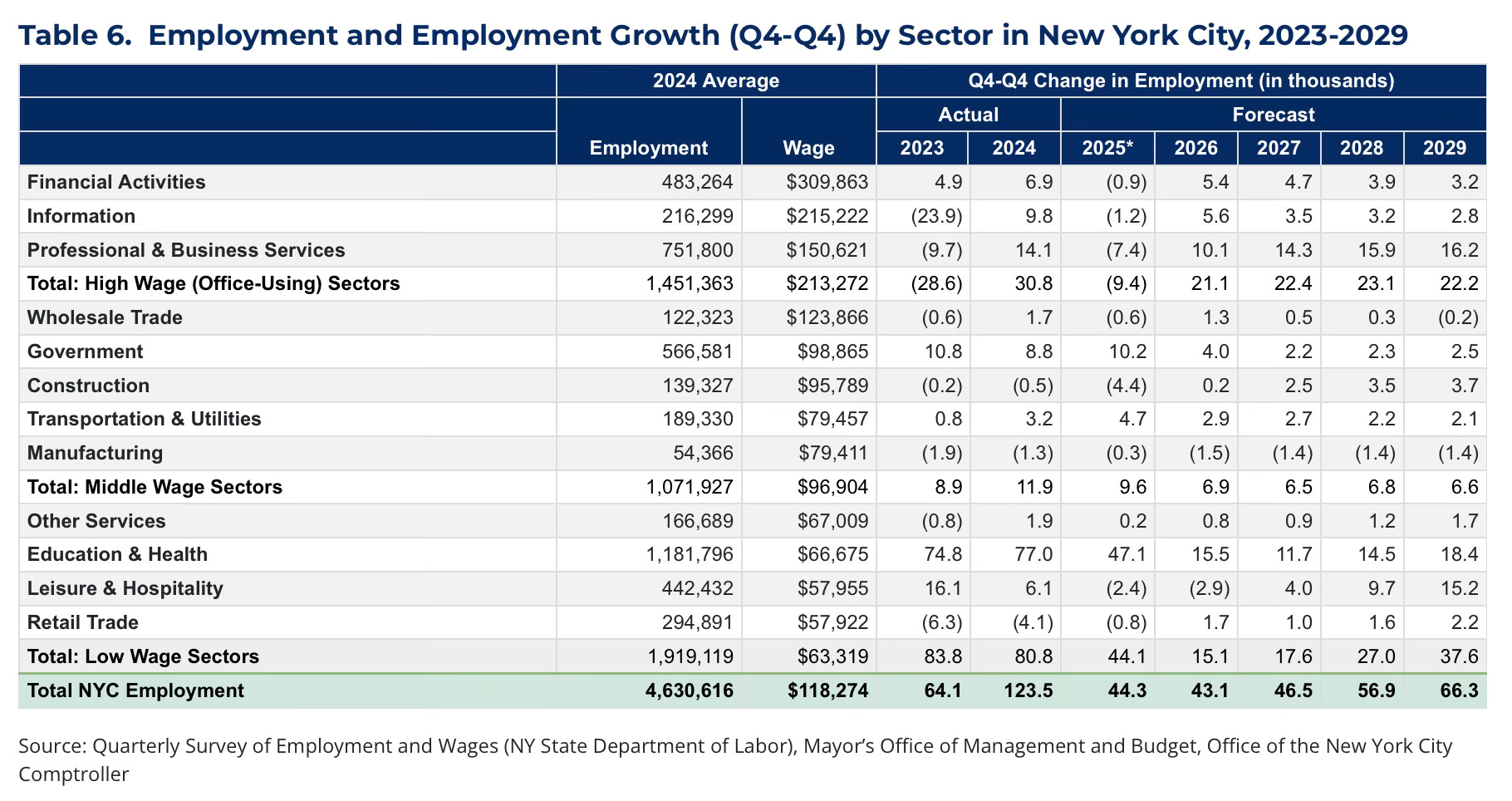
The city’s post-pandemic job growth has slowed overall, with gains concentrated in healthcare, home care, childcare, and social services — low-wage, female-dominated sectors that require fixed, in-person schedules and offer little flexibility when childcare falls through.
These are the jobs with the biggest shortages of workers, at wages so low that they’d be paying half their wages for childcare.
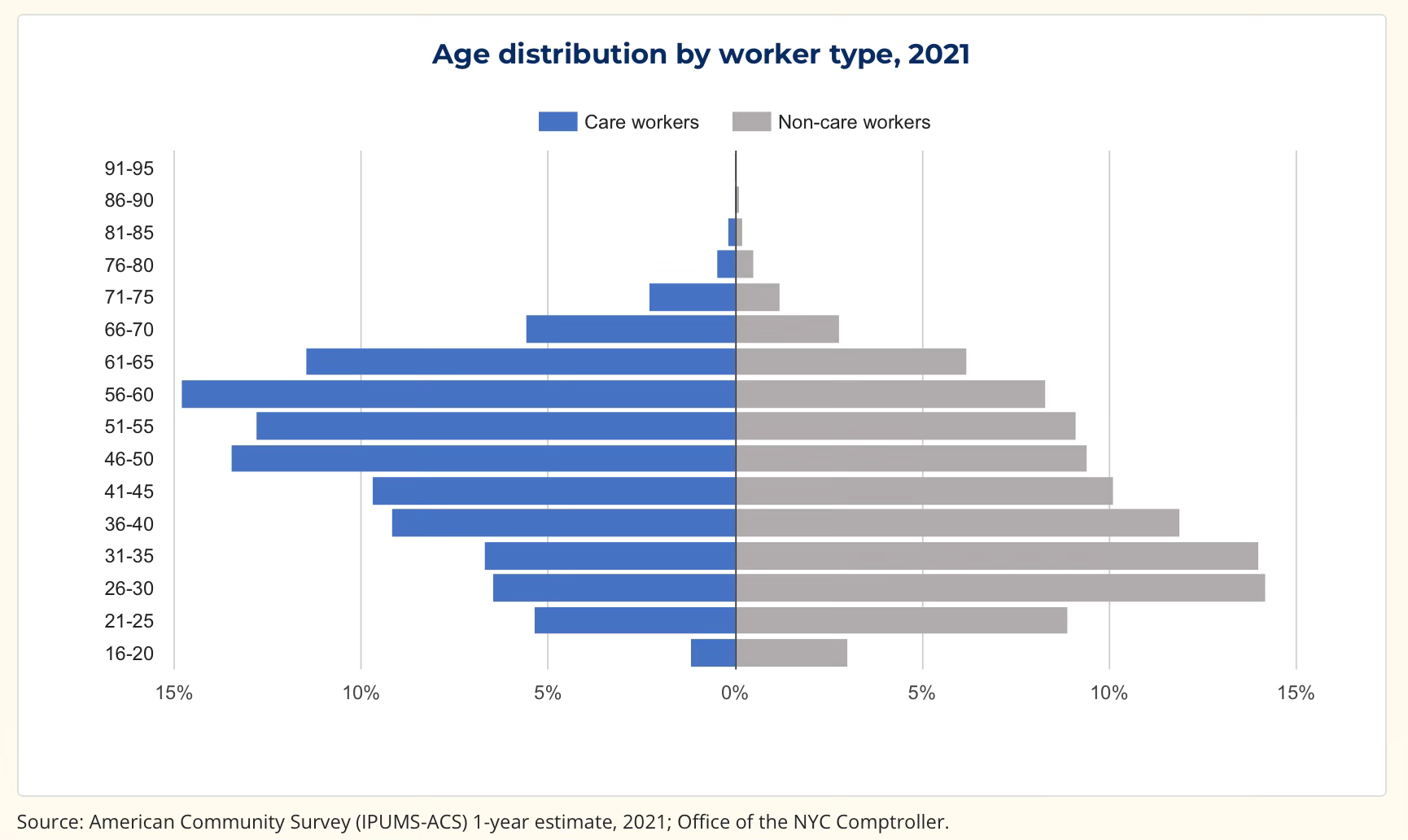
Women’s labor force participation is the highest it’s ever been, and women now make up roughly half of the city’s total workforce. So, in short, not only does New York need moms working — it may need grandmothers, who could be providing care, working too.
Other Reads
Socialism Made Easy: MI’s Nicole Gelinas had a thoughtful take on how Mamdani’s promises are likely to encounter market realities, whether he wants to acknowledge it or not.
Mamdani’s Affordability Dilemma: The Challenge of Making New York City Housing Less Expensive by Vicki Been and Ingrid Gould Ellen in Vital City.
Mayor Adams’ Education Legacy. The role of a mayor in charge of education in a large city is twofold: ensuring students are learning and keeping the public school system financially and operationally sound, writes MI’s Danyela Souza Egorov. Mayor Eric Adams will be remembered for progress in the first area, and mistakes in the second.
Rigor over integration: “If Mamdani and Samuels are committed to bringing academic rigor to all the city’s schools, they should make this their sole focus, with a plan to hold schools and staff accountable for student outcomes,” writes MI’s Ray Domanico. “They should worry less about engineering the “right” racial mix of students in schools.”
Tal Roded of NYC Curiosity has some ideas on how the city could fund Mamdani’s political agenda:
