

Block by Block, the housing plan released this week by the Mamdani Administration may produce significant new construction and some useful reforms, but it remains constrained by ideological commitments that limit its ability to solve the city’s housing problems.
The plan only partially addresses the economics of mixed-income development, the financial distress of rent-stabilized housing, and NYCHA’s long-term capital crisis. As a result, new housing will come at considerable public expense, private investment will remain constrained, and major structural problems in the city’s housing system will persist.
New Housing, With Key Questions Left Unanswered
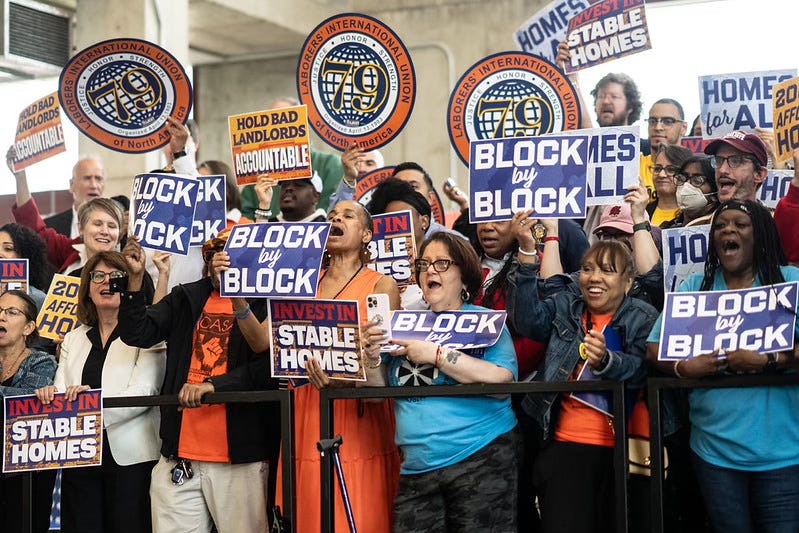
Mamdani is more open to private investment in new housing than in existing, rent-regulated housing.
He wants to build on the steps already taken to address the city’s shortfall in housing supply relative to household demand. These include the 2024 amendments to the state Multiple Dwelling Law lifting the cap on the size of new residential buildings, the same year’s “City of Yes” zoning reform, the 2025 amendments to the City Charter creating a shortened review process for specified categories of new housing proposals, and the 2026 expansion of categories exempt in state law from environmental review.
The new plan promises to set five-year quantitative goals for new housing later this year, both citywide and by community district. For now, expanded capital spending will increase affordable housing production to 8,000 units annually in the next two city fiscal years.
To produce new mixed-income housing without cash public subsidies, the city will propose zoning changes focused on areas well served by public transit, which could include both subways and Bus Rapid Transit routes. There will be a citywide text amendment expanding the precedents set by “City of Yes,” neighborhood-wide zoning district map amendments, and targeted zoning map changes for smaller amounts of housing that can take advantage of procedural waivers and shortened approval timelines.
This seems good but avoids the question of reforms to Mandatory Inclusionary Housing (MIH), the city’s practice (which Mamdani promises to continue) of requiring that a sizable percentage of units in new buildings in rezoned areas be offered at below-market rents.
MIH functions as a tax on housing, restricting developers’ return on investment and requiring that market-rent units effectively subsidize the cost of building below-market units. New housing gets built only because these costs are offset by state-enacted property-tax exemptions, currently known as “Section 485-x.” This is unfortunately less generous than previous versions for buildings over 99 units, where the tax exemption is required not only to fund the low-rent units but also to underwrite “prevailing” (union-scale) wages for construction workers.
This provision has created a de facto “99-unit cap” for 485-x projects, undermining the city’s housing production goals in rezonings. To make the finances work in many cases, either the prevailing-wage requirement needs to be amended (unacceptable to the pro-union mayor) or MIH needs to require fewer below-market units (probably no more to his liking). Thus, his plan is silent on this issue.
The plan also says nothing about how rezonings will produce new mixed-income housing in neighborhoods where the underlying economics of new construction do not work, even with Section 485-x tax exemptions, because market rents are too low. It is likely that the moderate-income White Plains Road area in the Bronx, currently under study, is one such neighborhood. Imposing MIH in such areas deters, rather than promotes, new housing.
A positive aspect for attracting more private housing investment is the proposed appointment of an “Affordable & Efficient Code Reform (AECR) Task Force” to “identify specific areas of the NYC Construction Codes for cost-saving measures that can be achieved without compromising safety.” Elevator-size requirements and plumbing standards are specifically called out for reconsideration. Such reforms are long overdue.
The Plan Is Weakest on Existing Rent-Stabilized Housing
The problems in this sector are well-documented and concentrated in older privately owned buildings in neighborhoods where pre-2019 deregulation had little effect, as well as in government-subsidized affordable housing run by nonprofits. Together, these two categories account for more than 600,000 rent-stabilized units.

Mamdani campaigned on a rent freeze for rent-stabilized units, which would exacerbate economic distress in these rent-stabilized buildings. Earlier this month, the Rent Guidelines Board approved preliminary rent increase ranges that accommodated the mayor’s position.
Ideally, the plan would explain how the city would protect against housing disinvestment by enabling building owners to break even on operating costs. Before the plan was released, the Wall Street Journal reported that for non-profit owners, the city would be willing to use existing regulatory authority to adjust rents on vacant units, providing more income to owners. This led to an exchange at the mayor’s Gowanus press conference that amounted to something less than a denial.
That move would be positive, should it happen.
For private for-profit landlords, Mamdani is offering modest offsets to a likely rent freeze. The city will invest $100 million in a previously-announced insurance fund. Exactly how the fund will work and how it will reduce costs for rent-stabilized buildings remains to be determined. A Water Board program to provide predictable water and sewer rates will be expanded. The city will streamline facade inspection requirements and reduce the need for costly sidewalk sheds. Finally, the state legislature has extended the J-51 program, which provides a property tax exemption for major capital improvements. These are worthwhile but modest measures that do not resolve the underlying revenue problem.
Fiscal distress in private rent-stabilized housing is therefore likely to persist, especially if a rent freeze takes effect. That sets up a battle in the legislature next year for at least relief on vacancy rents. Nothing in Mamdani’s plan indicates he will be helpful to landlords in this quest. It is likely that, in the medium to long term, the city will face even more pressure to expand subsidies for private rent-stabilized housing. Mamdani seems happy to do this, since it places even more housing under city regulatory agreements. However, the city can ill afford such subsidies at scale, given other budgetary pressures.
NYCHA Remains the Largest Unresolved Problem
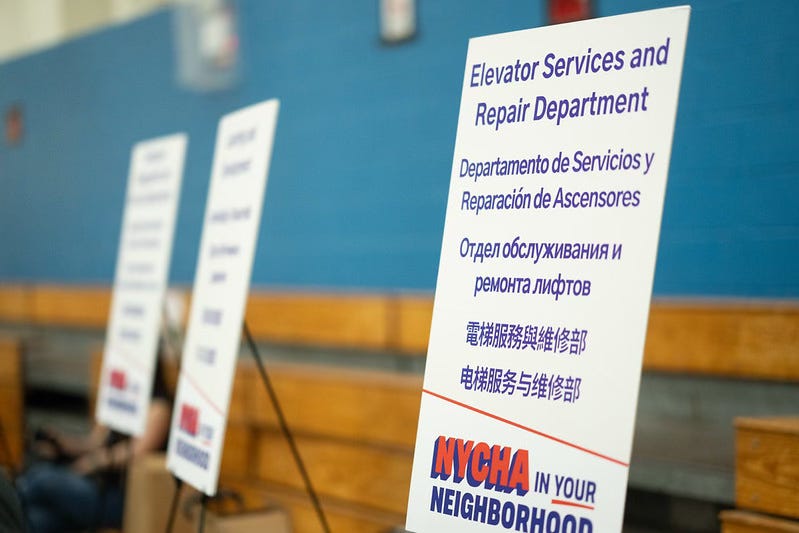
A third category of distressed housing is represented by the 177,000 units owned by the New York City Housing Authority (NYCHA). Here, Mamdani is allocating resources from the expense budget to accelerate repairs on both occupied and vacant units. To address NYCHA’s vast backlog of capital (major rehabilitation) needs, Mamdani is carrying over programs initiated by his predecessors: PACT, under which NYCHA retains ownership but private managers are brought in, and the Public Housing Preservation Trust, under which the trust undertakes building rehabilitation but NYCHA continues to be the management entity. Both utilize enhanced federal subsidies to finance rehabilitation.
The problem is that both programs can, at best, treat only a fraction of the NYCHA stock. New York City could easily spend its entire housing capital budget upgrading dilapidated public housing buildings, but no mayor has been willing to do that, including Mamdani. Like his predecessors, he is under pressure to support the vast affordable housing new-construction industry the city has built over the years. In addition, Mamdani does not want to let the federal government off the hook for public housing’s capital needs, despite the manifest lack of interest from the current president and Congress. Even if Democrats capture one or both houses of Congress in 2026, and the presidency in 2028, their spending priorities are likely to focus on restoring cuts in health care and food aid rather than on new commitments to public housing.
The upshot is that public housing residents continue to live with deteriorated conditions. Not surprisingly, tenant activists were critical of Mamdani’s plans but lack the political clout to make public housing an overriding city priority.
In summary, at considerable public expense, Mamdani’s plans are likely to result in significant new housing construction. Useful reforms may happen, but private investment will be held back by impractical, ideologically driven restrictions.
Existing rent-regulated housing will continue to exhibit substantial levels of financial distress that will drain city resources. NYCHA will remain a political orphan, with problems too large for any level of government to accept full responsibility. Better outcomes would require policy reversals and funding commitments well outside the current political consensus.

The whole mess needs to be deregulated. We need a true free market in housing. The encrusted rent limits, regulations, wage minimums, subsidies — the whole mess — needs to be peeled off and removed.
100% of the housing problems are due to government intervention. A truly free, private housing market would produce abundant, reasonable cost, quality housing. Not a penny of taxpayer money would be required.