


The Pooper Scooper Law clearly does not work.
Almost 50 years ago, the city passed a law that owners were to pick up after their dogs, only to expand it this summer in response to the ballooning number of 311 complaints about dog waste.
The idea is to do more than just issue $250 DSNY tickets for those caught in the act.
The city now plans to curb the dog poop problem with further negative reinforcement, like signs that state the rules and educate about the risks of dog feces and fear of public health risks from dog poop.
It also wants to make it easier to do the right thing through free waste bags and dispensers, which NYC Parks has already said it does not have the capacity to administer, and to clean up when people do the wrong thing by deploying volunteer pooper scoopers.
Despite good intentions, these legislative measures are unlikely to make a dent in the dog poop problem.
Any type of lasting change requires more than just telling people what they should do, or threatening a consequence that probably would not occur.
The environment shapes behavior, and behavior changes based on what the environment makes easy, what happens after someone breaks the rules, and what people see others get away with. Therefore, signs can prompt behavior but will lose their power when they are not paired with strong social norms or meaningful consequences.
There is also an immediate payoff for doing the wrong thing. Walking away means avoiding the hassle of stopping, picking up something unpleasant, carrying it around, and then finding a trash can. The reward is instant.
The $250 fine, by contrast, may exist but enforcement is so rare that most dog owners are unlikely to actually expect it. If someone can continually walk away without anything happening, that is what the environment continues to teach them.

Using behavioral science to tap into emotions beyond fear to shift civic culture isn’t a new idea, but it’s one that New York leaders have seldom tried.
Humor helps develop, reinforce, and sustain social norms.
Cities that mirror New York’s population, complexity, and crime rates have used humor effectively to reshape civic behavior. Mexico City, Lima, La Paz, and Bogotá have all reduced urban traffic fatalities by up to 50% using costumed characters—dancing zebras, mimes, gyrating humanoid traffic cones.
One borough in Bogotá took on its stubborn dog waste problem with the help of a personified poop.
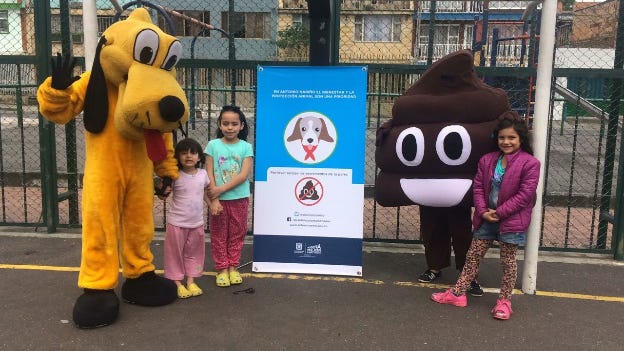
Accompanying an outreach team to local parks and special events, a photo-worthy moment with this cheerful costumed character provided a shareable reminder to pick up dog waste that transcended the wrist slap of a fine.
We could choose to push back against classic New York cynicism with humor.
Instead of defaulting to punitive measures and policing tactics, we could choose to make people laugh, improving recall, engagement, and motivation for people to do the right thing.
Research has found that messages with humor can hold people’s attention longer, improve their memory of the message, and even, under the right conditions, make a message more persuasive. It can also make a familiar message harder to ignore, increasing the chance that people will actually respond to a cue that they may otherwise ignore.
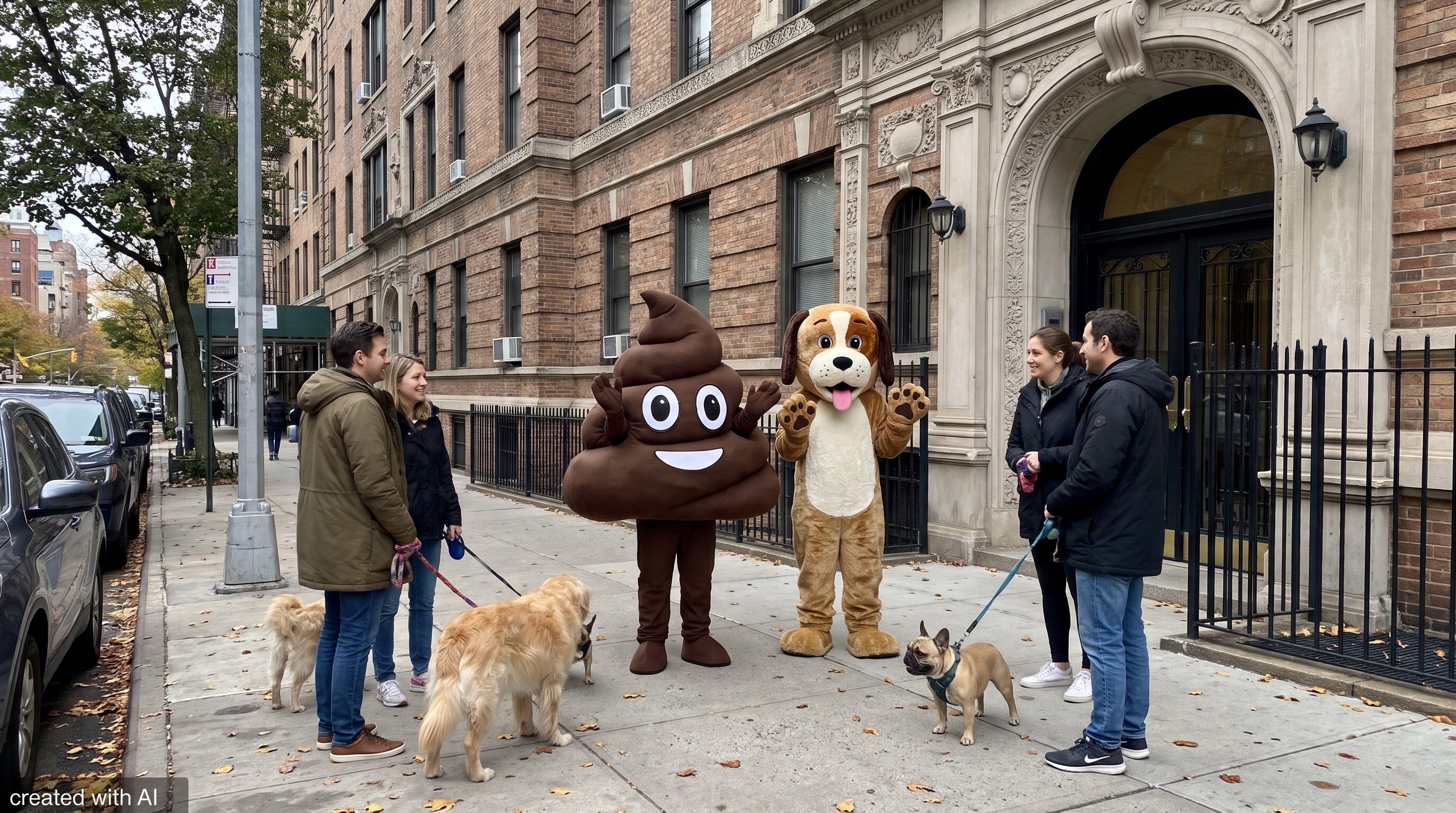
Imagine meeting a human-sized “poop” emoji—the brown pile of crap with googly eyes, a smile, and a swirl up top—posing for photos, handing out poop emoji cupcakes, and reminding your neighbors to pick up their messes? Would it be ridiculous? Yes. Would you remember it? Probably, if nothing else, for an Instagram post about how ridiculous it is that the city procured a poop emoji costume.
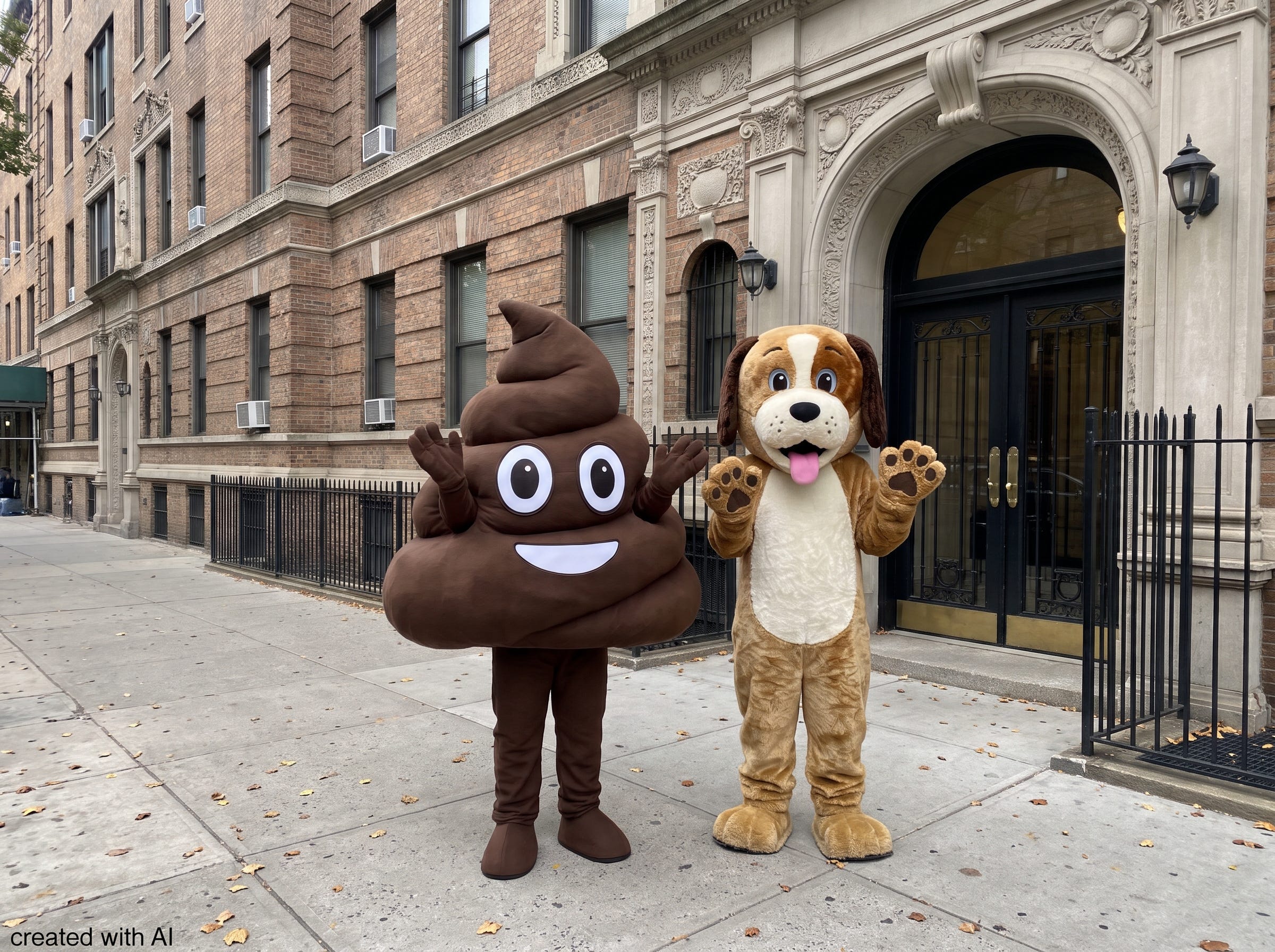
Would it reduce the problem? Maybe. Maybe more than the two DSNY citations issued in 2025 did. The poop emoji costume worked for a borough president in Bogotá, Colombia - there’s only one way to find out if it could work in New York, and Mayor Zohran Mamdani should try it.


Or you could install a lot of street cameras in Upper Manhattan, with feeds on the web. In case the building supers don't already know.