

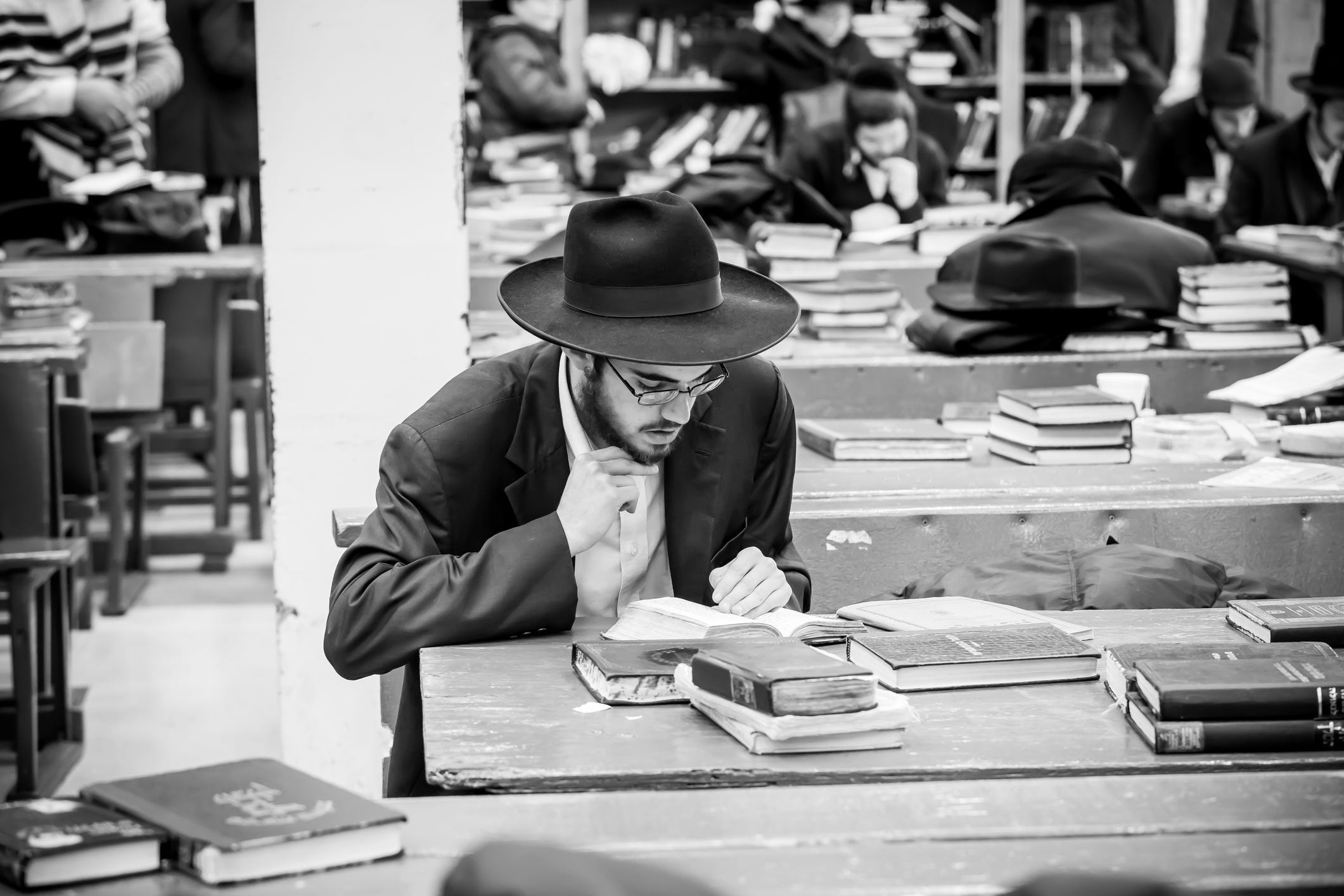
New York City, home to more Jews than any city in the world outside of Israel, is experiencing a rise in antisemitism on its streets, in its schools and in public statements and actions. Against this rising tide of hatred, Jewish groups of all types are rising to support and strengthen their community.
I have come to know one of these groups, Chabad-Lubavitch, because its boys’ schools have been caught up in the struggle between religious freedom and New York State’s legal requirement that private and religious schools offer a curriculum substantially equivalent to that of local public schools.
Based in Crown Heights, Brooklyn, since 1940, Chabad Lubavitch’s mission is to provide religious support to Jews across the world, regardless of their level of religious observance or non-observance. Its story centers on education: after-school programs, day schools, classical yeshivas, and post-secondary seminaries.
Some schools, including the Tamim Academy network, combine Jewish and secular studies for a diverse Jewish student body; Chabad’s classical yeshivas are single-gender and more fully Hasidic, with boys’ schools focused heavily on Torah, Talmud, and Hasidic texts, while girls’ schools generally include a broader secular curriculum.
Today, Chabad has more than 6,000 emissary families working in 3,500 Chabad houses, centers, schools, social-service programs, and campus centers across one hundred countries. That work depends on Chabad’s elementary and secondary schools, including thirteen affiliated schools in Brooklyn that enroll about 2,600 boys and 2,100 girls from pre-K through twelve, along with post-secondary programs that prepare young men and women for religious and educational leadership.
Chabad boys’ schools, along with those of other Hasidic groups, have drawn scrutiny from the New York State Education Department because they do not provide a full secular curriculum, aligned with that of local public schools.
That scrutiny centers on Hasidic and Haredi boys’ schools in Brooklyn and parts of upstate New York and was propelled by a former Hasidic yeshiva graduate, who claimed that his Yeshiva education did not prepare him adequately for college or for the secular world more generally. He has since recanted his original complaint as misguided and announced that he deeply appreciates the Orthodox way of life and the valid role of Hasidic schools.
However, the state continues its efforts to enforce the substantial equivalence law in these schools. What that effort lacks is a recognition that schools like Chabad’s are training grounds for its mission to support Jewish communities across the globe.
Chabad’s reach is sizeable and well beyond the Orthodox community. Pew Research Center’s 2020 survey of Jewish Americans reported that 38 percent of U.S. Jews had engaged with Chabad in some way, with 18 percent reporting that they “often” or “sometimes” participated in Chabad’s activities and an additional 20 percent reported minimal engagement.
Its work is rooted in scripture, the Talmud, Hasidic teaching, and the writings of the seven Rebbes; these sources form the curriculum in its elementary, secondary, and post-secondary schools for boys and young men. These schools in the U.S. and elsewhere help produce graduates who sustain its worldwide network of religious, educational, and social-service work, offered to Jews across all levels of observance.
New York should therefore approach these schools with respect, restraint, and a willingness to consider outcomes as well as inputs. Under that approach, there would be little rationale for punitive action against parents who choose Chabad schools for their sons. The state’s highest court has ruled that the locus of enforcement of substantial equivalence is the family, not the schools themselves.
Today, schools of all types face a myriad of technological, cultural, and pedagogic challenges. Artificial Intelligence promises to solve the information input side of education, or encyclopedic function – any kid with a smartphone has access to more information than they can absorb.
But children will still need to be able to reason, discern valuable information from bad, and to develop as fully formed moral, emotional, and analytic beings. As technology advances, our society’s problems are increasingly human. Despite having infinite information, kids are more isolated, lonely, lost, and anxious.
As AI’s presence grows, the test of our education system will be in what kind of human beings our schools, public and private will form. A machine cannot build a community, lend a helping hand, or stand up for what is right.
Chabad’s schools show us that when we trust parents and protect religious freedom, a religiously traditional educational system can produce what its community needs in the modern age – resilient, family-oriented adults who spend their lives serving others and strengthening their community.
New York should recognize that in an era of both rising bigotry and technological advance into uncharted territories, moral, religious and cultural formation are valid foundations for education.
