

New York is known for its neighborhoods. Walkable, safe neighborhoods are also the built environment most likely to produce capable participants in democratic life, political theorist Elly Long suggests. In a walkable city “a child learns on the sidewalk that not all strangers are threats, that a neighborhood contains people like and unlike his parents, and that he can navigate a busy world without an adult driving him through it,” MI’s Carolyn Gorman writes.
Street safety is a big part of that freedom, and the city is cracking down on the sales of illegal e-bikes, scooters and motorcycles.
But walkable neighborhoods are also expensive, with few affordable, family-sized apartments for rent. And rents hit a new record high across the city last month. Solution? We need to build more housing that enables more children to grow up in walkable neighborhoods.
This brings us to this month’s crucial fight in City Hall. Mayor Mamdani has nominated an architect of his predecessor’s pro-growth City of Yes, John Mangin to chair the Board of Standards and Appeals. Mangin was also behind the City Charter changes that gave the mayor a greater say in what gets built over council objections — voters agreed. Some council members still have concerns, even though the council passed City of Yes. The BSA is a technical body that has built in safeguards against overreach, and fears of massive, non-contextual development may be overstated.
Will that and free childcare be enough to keep families in the city? MI’s Jennifer Weber argues that until we fix our public schools, families will keep leaving.
All that and more below.
Where Are American Children Supposed to Learn How to Become Adults?
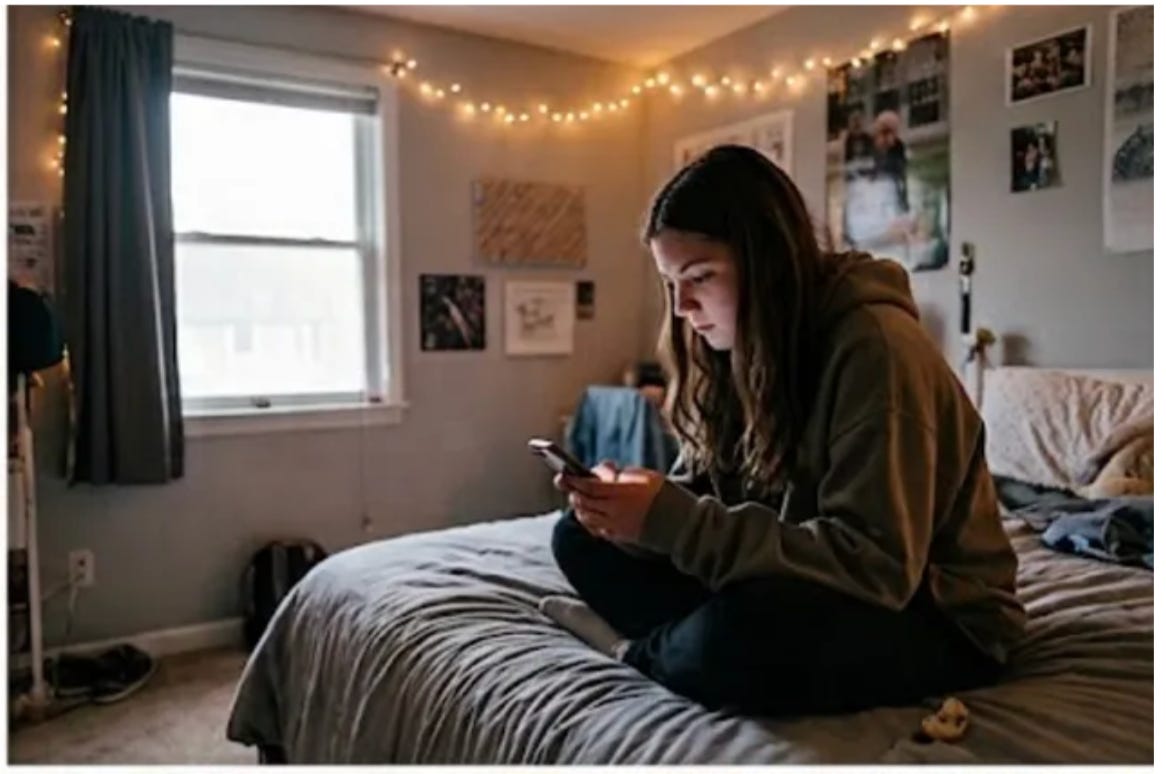
While debates over children’s civic development tend to pit parental authority against state institutions, political theorist Elly Long suggests a neglected middle ground: the built environment of walkable, mixed-use neighborhoods.
Unlike suburban "car hell"—where single-use zoning forces kids into social isolation and digital screen dependence—safe, walkable environments foster independence by allowing children to safely navigate physical spaces, encounter diverse community members, and learn self-reliance.
Related: Should Letting Children Play Alone Outside Be a Crime? (NYT)
Street Safety and Micro-Mobility
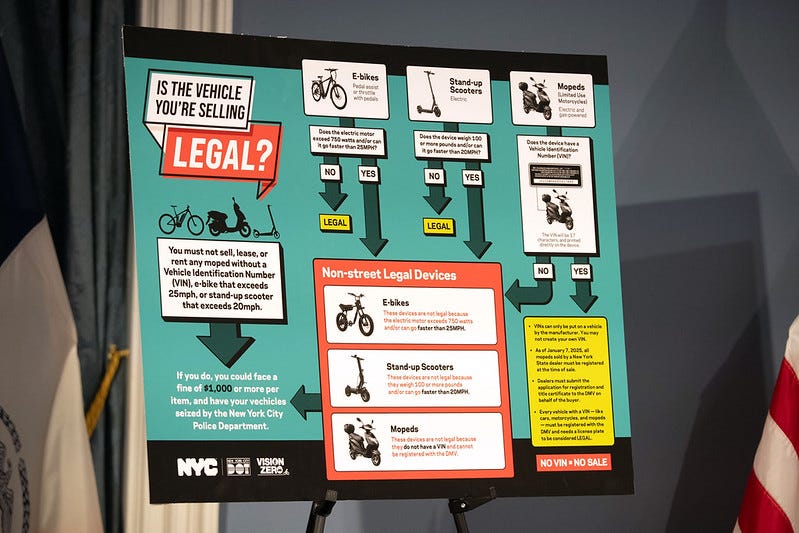
The city is cracking down on the sales of illegal e-bikes, scooters, and mopeds — heavy, fast-moving vehicles increasingly involved in more tragic crashes.
Transportation Commissioner Mike Flynn writes on his Substack that an estimated 620,000 daily trips are taken by these micro-mobility means — which is to say that they are firmly part of the city’s infrastructure as an alternative to cars.
Urban planners are right that cars cause almost all fatal crashes, but “not getting killed by an SUV” is a pretty low bar for urban livability. One should be able to navigate the city safely and pleasantly on foot. After all, walking is the main form of transportation in the city.
Yet instead of protecting and expanding sidewalks, many of which are already past capacity, the city is focused on the safety and comfort of the fastest-expanding mode of transportation: two-wheeled vehicles.
Bike-heavy European capitals, frequently cited as examples, work because both pedestrians and bicycles yield to each other. In New York, pedestrians operate under the informal yet inalienable right to read the street and cross whenever they deem appropriate — aka the recently decriminalized jaywalking. These free-range pedestrians are also making micro-mobility trips dangerous in the process.
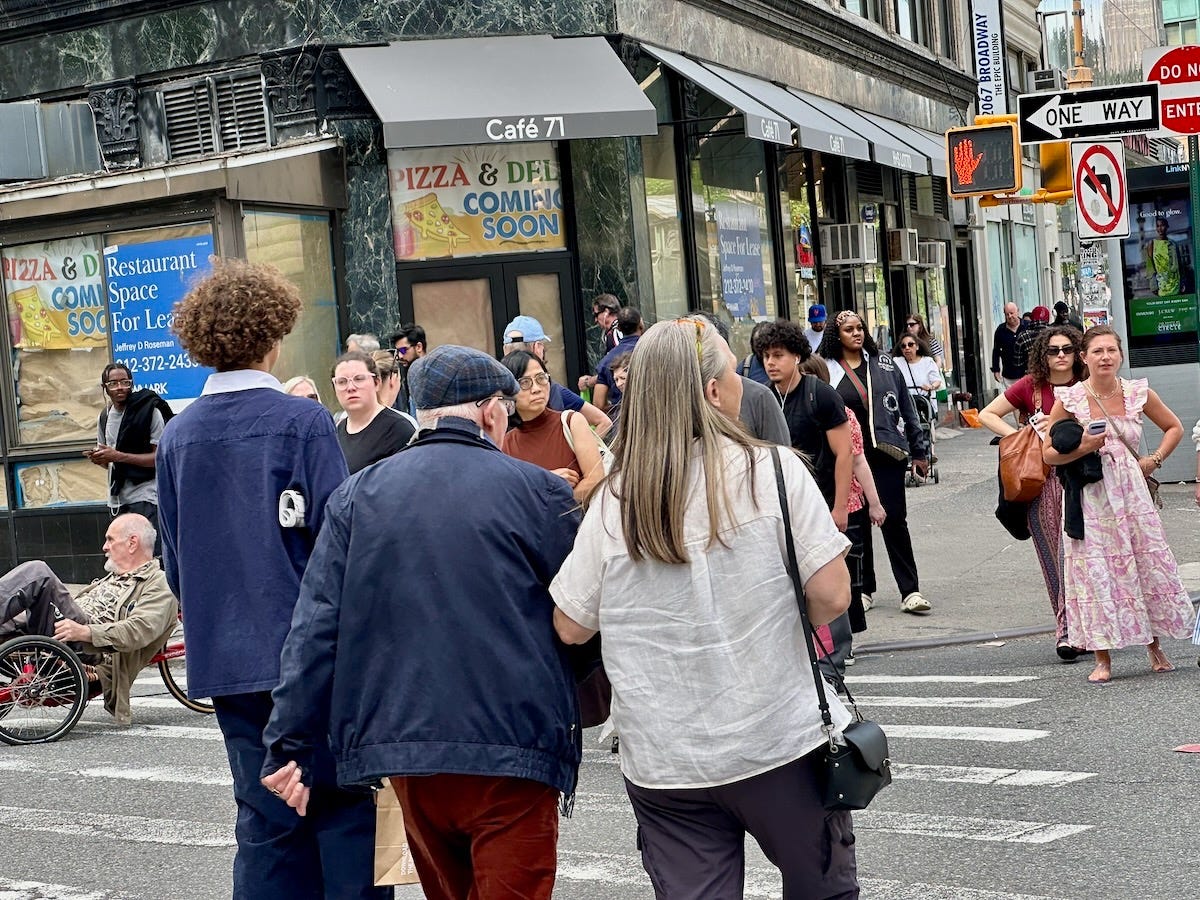
Micro-mobility vehicles seem to think of themselves as pedestrians, too, often disregarding traffic regulations. Conflict between the two becomes almost inevitable, so while the city’s efforts to bring some order are a welcome development, to keep the city walkable and safe, more remains to be done.
Related:
Some of the bills to be considered at the council’s Sept. 30 hearing about e-bikes, scooters and mopeds (Streetsblog). More background and data on the issues (NYT).
Cheaper Citi Bike Will Need More Than Public Subsidy. (Streetsblog)
Free Child Care Won’t Keep Families in New York

Last week, the Mamdani administration sent letters to parents of 2,000 two-year-olds offering them free daycare placements. The administration says that 5,700 applications have been submitted and a lottery will be used to allocate any offers families don’t accept. Little beyond that was made clear, including how many of these seats are existing seats that are now funded through the city’s program, how many are new seats added to the system, and who the providers will be.
This week, the mayor announced that the city will be funding the share about 22,000 families were expected to contribute to childcare under the state’s childcare voucher program, and various existing city programs requiring sliding scale payments. More than 100,000 children aged 6 months to 13 years are currently in the programs, and the subsidy will cost $5.2 million.
But this is unlikely to stem the exodus of middle-class families, for whom rent is still a significant burden, and free childcare not the only consideration when deciding to stay in the city. Quality of the K-12 education plays a big role in “whether parents believe those years are worth the price of staying,” MI’s Jennifer Weber writes.
Related:
Regulations are keeping families smaller than they want to be (City Journal)
NYC’s unexplained test score swings prompt experts to question reading results (Chalkbeat)
NYC’s school system is built for a city that no longer exists (Searchlight)
Data Point
How Much Higher Will the Rents Go?
It seems there is no limit, and the families with children are paying the steepest price.
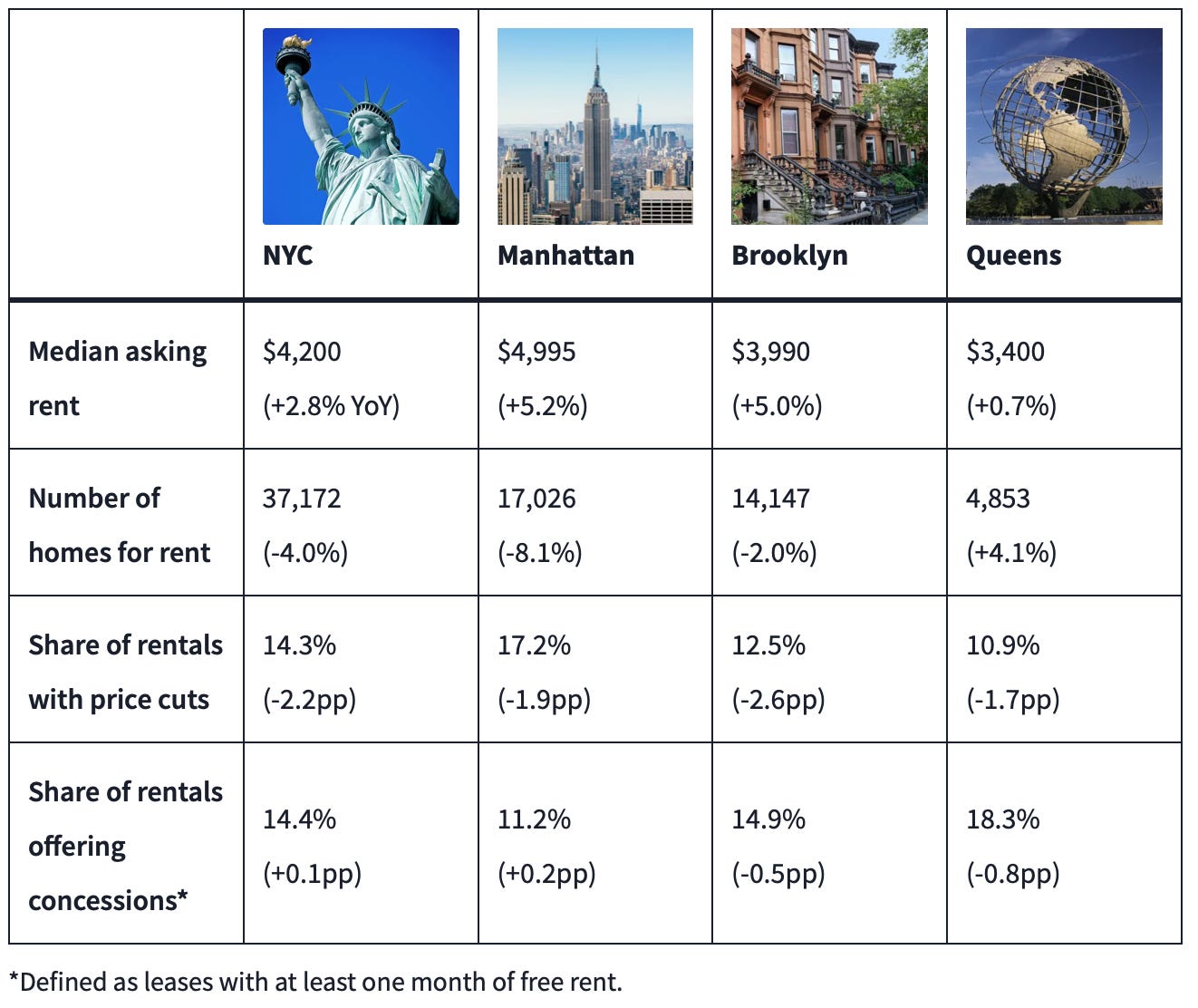
In NYC, 53.4% of families spend more than 30% of their income on rent, and on a median family income of $88,937, a two-bedroom apartment (median asking rent of $4,750/month) would consume 64% of annual earnings.
And that’s if they can find such an apartment for rent in the first place: the number of available multi-bedroom units is down 38% from 2019, with those with three bedrooms falling almost 20% in the past year to just over 3,000 units, according to a StreetEasy report that complements Zillow’s national report, out this week.
Extra! Extra!
Mamdani backs delivery worker bill that Amazon says will cost jobs and raise prices. (Crain’s, NYT)
NYC DSA is 60% white, internal survey says. (City&State)
No “bright red lines” between Mamdani Administration and DSA? (NYT)
New York Needs New Ornamental Architecture (Vital City)
Privately owned public spaces were featured in a NY1 segment that left me wondering about the challenges their private owners face in keeping them maintained and orderly in a city that struggles with those same issues in its publicly owned spaces.