

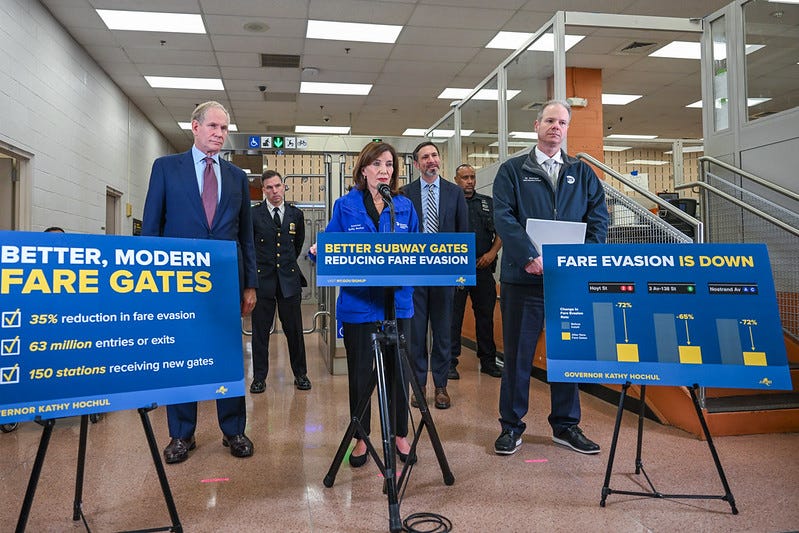
The MTA is successfully tackling fare evasion, but subway crime is up 26% since Labor Day, and counterfeit goods vendors on Canal Street are still vending.
Governor Kathy Hochul’s announcement that New York will participate in the new federal scholarship tax credit program, and Mayor Zohran Mamdani’s decision to fund 10,000 childcare vouchers are in line with what parents want. A new survey reports on what the city’s parents say they need when it comes to childcare.
Plus some thoughtful pieces on homelessness policy, why Americans support involuntary treatment, and on communism and compassion.
Fare Evasion Down
Fewer passengers are skipping the fare, the MTA said, announcing that it will be installing the new fare gates at 20 more stations. The harder-to-circumvent fare gates have succeeded in reducing fare evasion by 35%, and some stations have seen reductions of over 70%.
Similar efforts in San Francisco’s BART system not only resulted in a reduction of fare beaters, but also increased the cleanliness and safety of the system, with crimes against riders falling 67%.
But NYC has a long way to go on that count.
Subway Crime Up
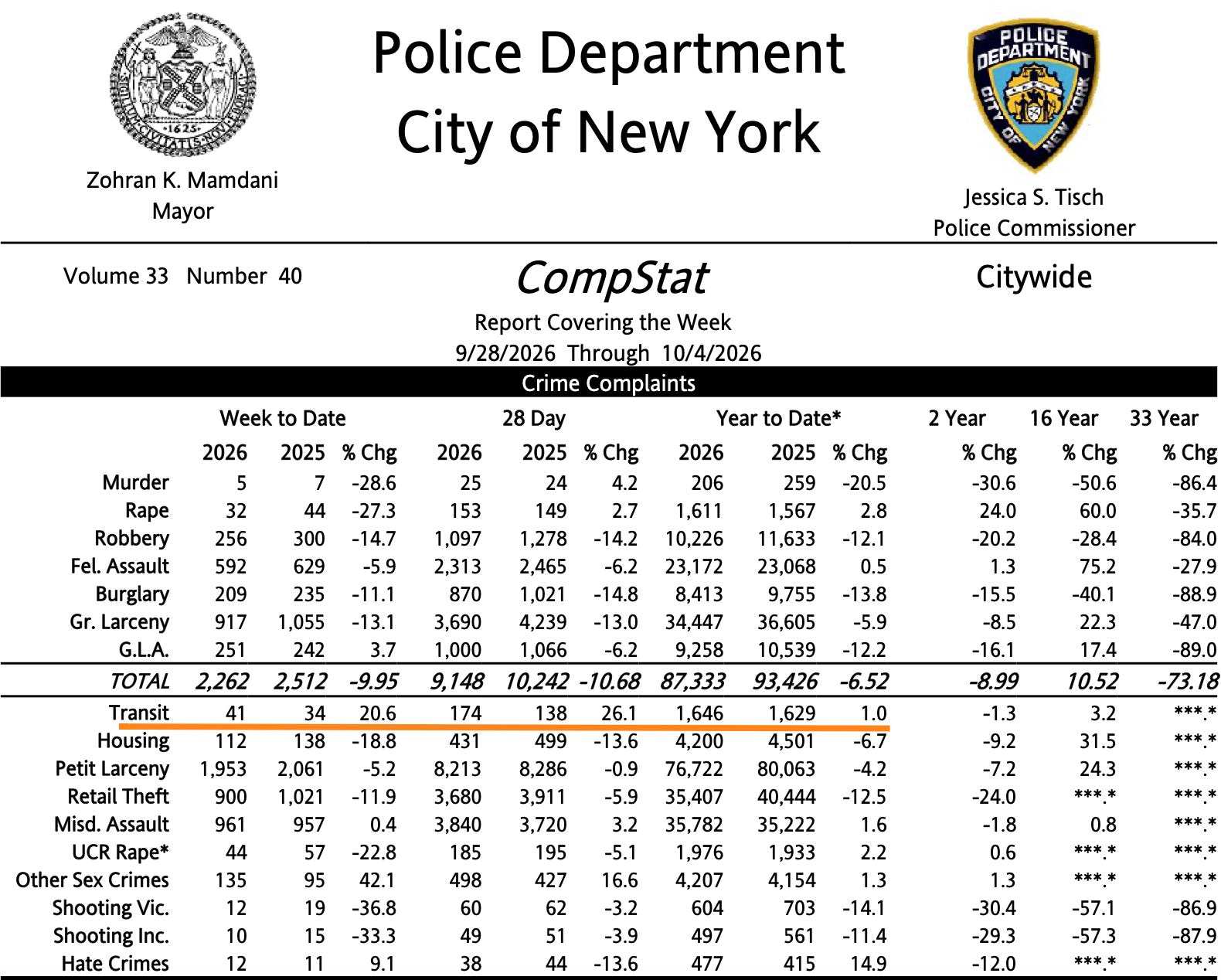
The NYPD reported that while overall crime in the city is down, major crimes in the subway system were up slightly (0.9%) year-on-year as of the end of September.
However, major crimes in the transit system were up 26% in the four weeks since Labor Day, and in the week ending on October 4, they were up 21%.
“From 1997 to 2019, the decades before Albany implemented criminal justice ‘reforms,’ New York City experienced an average of two transit murders each year,” MI’s Nicole Gelinas wrote in the New York Post this week. “But from 2020 through last year, perpetrators have killed an average of seven mass-transit riders annually — and we’re on track to meet or exceed that figure for 2026. Through August, felony assaults are up 10% from last year, to 435 — a total that’s 84% higher than the comparable figure from 2019.” So far this year, we have already had 6 murders in the subway system.
More than half of the 734 people arrested for major crimes in the subway system this year had been arrested at least three times before, and 214 of them have been arrested at least three times in 2026 alone, according to the police.
Repeat offenders are a big part of the problem, Police Commissioner Jessica Tisch stressed at a press conference discussing the latest numbers. “In the category of felony assaults, we have real challenges with recidivism,” she said. “So, one of the things that we have to do is work with the other stakeholders in the criminal justice system to address those issues.”
Related:
MI fellows have written repeatedly on the issue of recidivism in NYC. Here’s a recent piece by Charles Fain Lehman.
Congressional testimonies from 2022 offer interesting insights from across the country on public transportation, challenges and opportunities for change.
Vital City looked at subway crime trends in detail last year.
Why New York Can’t Shut Down Canal Street’s Counterfeit Vendors
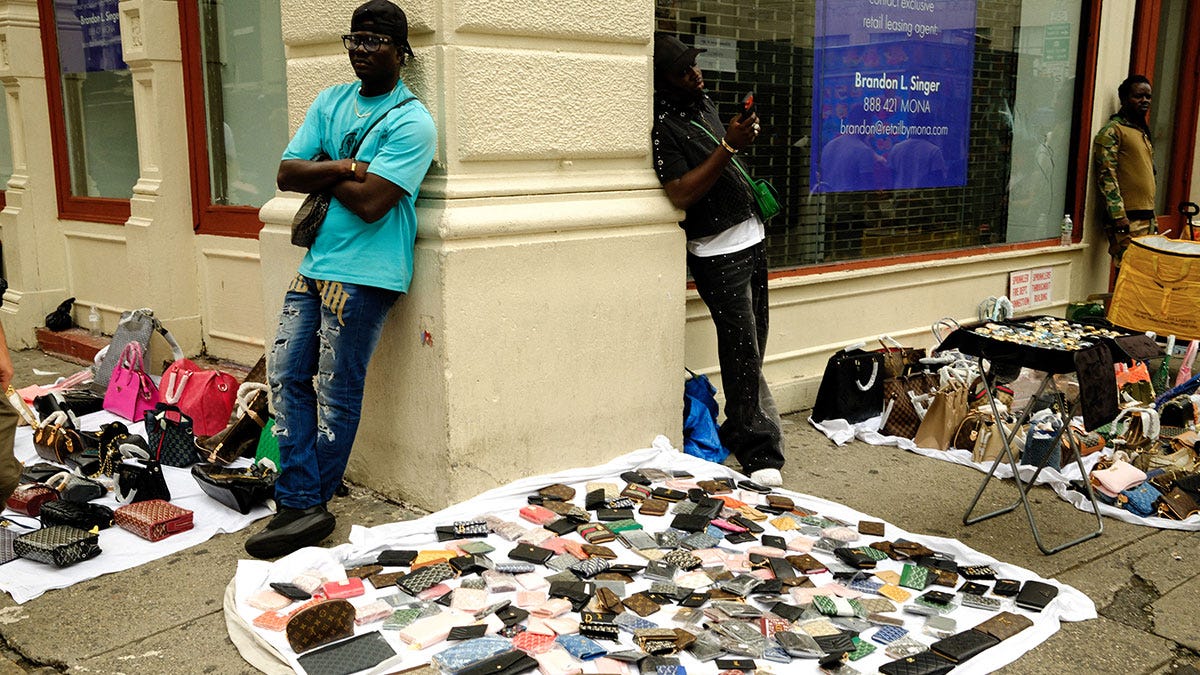
The city has lost control over Canal Street, where counterfeit goods vendors rule the sidewalks, so we looked into the reasons behind it more closely.
“Thanks to civilian complaints against cops, a felony threshold nobody can prove, and lax prosecutions, the market hasn’t missed a day of business,” reports MI’s Daniel Edward Rosen.
Federal Scholarship Tax Credit and Teachers’ Unions
Gov. Kathy Hochul announced that New York will participate the new federal scholarship tax credit program, despite objections from the teachers’ unions.
The tax credit lets taxpayers deduct up to $1,700 ($3,400 for joint filers) in federal taxes for donations to approved scholarship granting organizations starting in 2027.
As a result of the governor’s decision, New York’s students will be able to receive scholarships to fund qualified education expenses, from books and tutoring to tuition. Otherwise, these tax dollars would have gone to other states. (We discussed the tax credit on our podcast last week and MI’s Danyela Souza Egorov wrote about it in City Journal.)
This tax credit could potentially raise as much as $26 billion a year nationwide by 2030, according to the Treasury.
Parents Want Flexibility and Choice in Childcare
A survey the Mamdani administration commissioned this spring, after applications for 3-K stayed about the same despite a big outreach campaign, on what families actually want and need when it comes to childcare, was released yesterday.
Turns out, parents want to take care of their young children themselves; need flexibility and the ability to choose the provider that works best for them, and, most importantly, one they trust to take good care of their child. And yes, childcare is expensive.
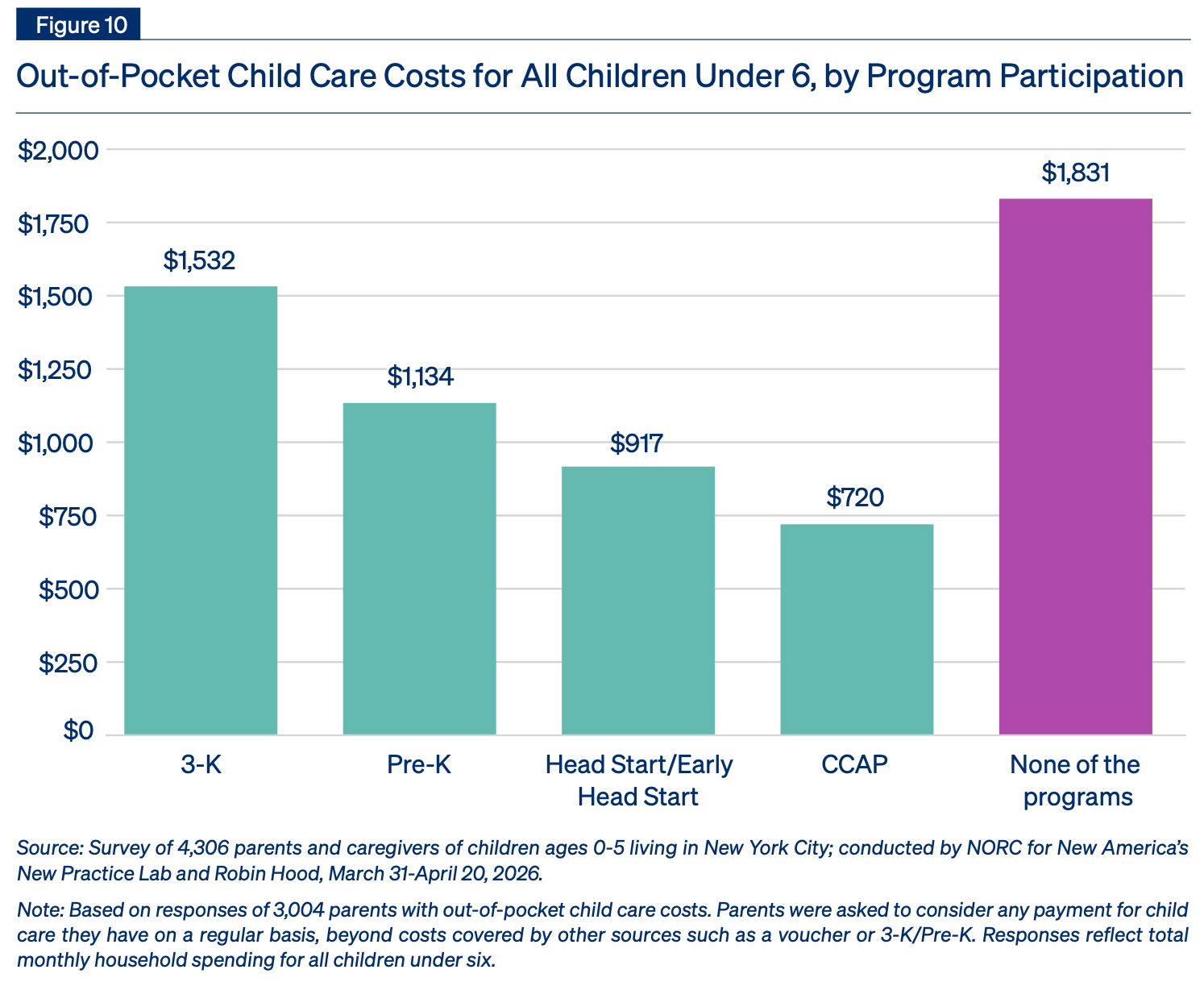
However, while the average childcare expense for all children under 6 (not cost per child) for families who do pay for care comes to $19,452 a year, the report did not say how much the median family pays. Only 60% of all families with children under 6 pay for regular childcare.
The report found that the demand for formal care for 2-year-olds was higher in the more affluent neighborhoods, and that the more affluent parents are the ones paying the most for childcare.
The authors conclude that the city’s universal childcare program needs to be more flexible than currently designed, and that the city should work with the state to broaden and extend paid parental leave as part of its universal childcare strategy. New York State currently mandates 12 weeks of parental leave.
Choice Over Seats: Mamdani’s Childcare Pivot?
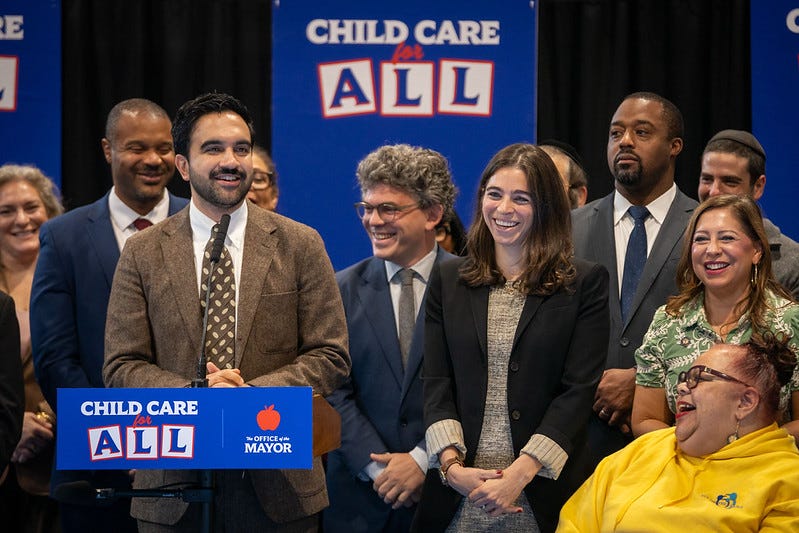
Whether or not influenced by the findings of the report mentioned above, the decision to fund 10,000 more childcare vouchers that Mamdani announced last week is a good move, MI’s Jennifer Weber wrote earlier this week. The vouchers enable parents to obtain exactly the kind of flexible care arrangements their work responsibilities require.
The city’s funding is matched by the state for these means-tested vouchers, where the waiting list of qualifying families had grown to 29,000—the only childcare support program in the city to see growth in demand. Meanwhile, the city funds about 21,000 empty seats across its 3-K and Pre-K programs.
Homelessness Policy at a Crossroads
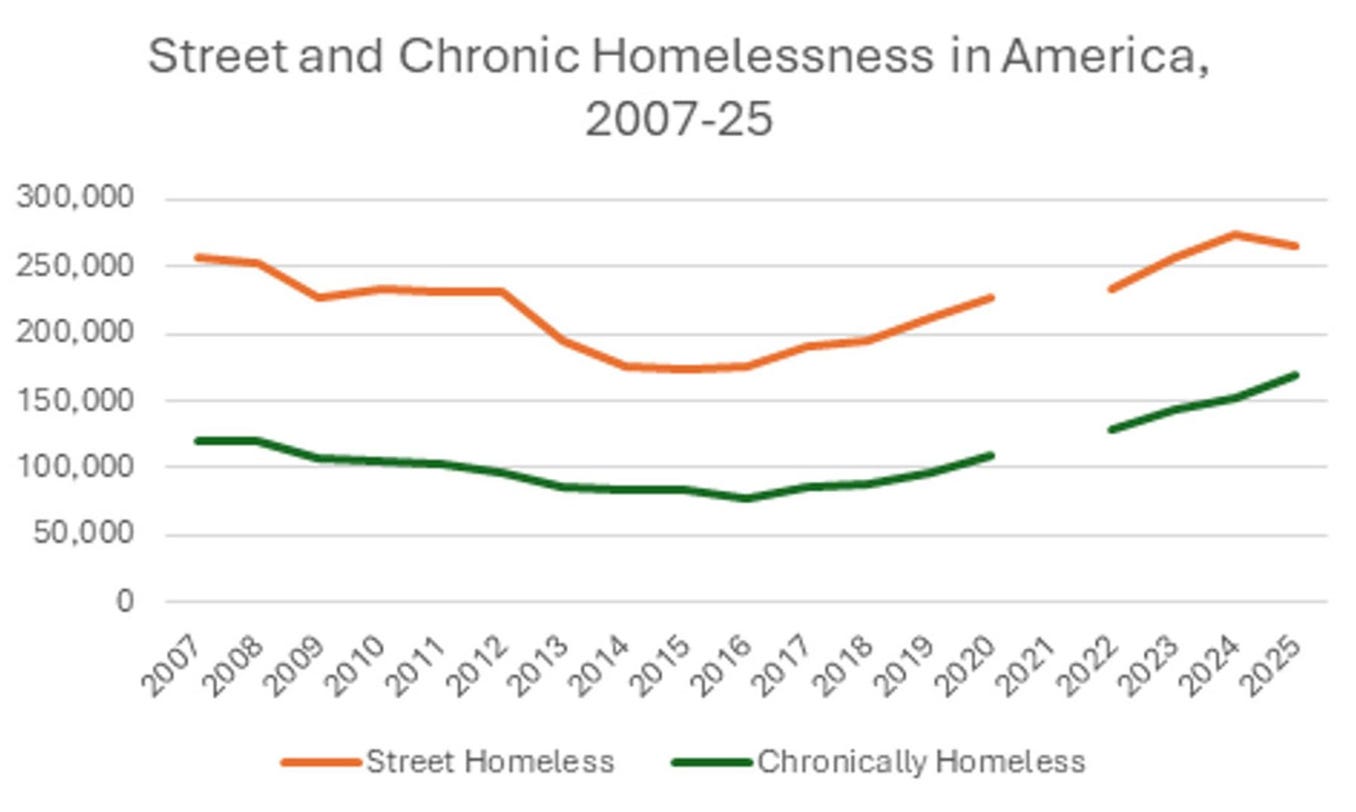
MI’s Stephen Eide took a look at national trends in homelessness policies and argues in City Journal that what comes next will depend on “how much voters care about the issue in blue states, where homelessness is truly a crisis” and affordability has come to dominate public concerns, and that a decisive midterm win could pit moderate and far-left Democrats against each other on this issue.
“Far-left Democrats in Congress will want to countermand Trump’s reforms to the Continuum of Care. Many centrist liberals don’t want a revival of Housing First, but it will take political courage for any Democrat to defend policies backed by Trump. The center-left has thwarted homelessness policy reform before,” he writes.
Why People Support Involuntary Treatment
Some advocates reject involuntary interventions because they believe the cost of added stigma from linking mental illness and violence outweighs the benefit of access to treatment. But it turns out, Americans support involuntary treatment first of all because they believe it works, MI’s Stephen Eide and Valerie Franchitti write, reviewing a new study from Arizona State University, which concludes that advocates overstate the role of fear in the public response.
“Of course, it’s one thing to note that the public’s overriding concern is “treatment effectiveness,” Eide and Franchitti note. “It’s another thing to build a system that meets that standard. Perhaps conservatives, who occupy the other side of the debate from progressive advocates, also have lessons to learn from this study. More sustained attention to mental-health reform—and yes, more money—will be required to develop more effective involuntary interventions.”
How Communism Kills Kindness

“Nearly half of the members of the Democratic Socialists of America’s (DSA) leadership body identify as communists. As Stu Smith reported earlier this summer, ‘Members with Communist political tendencies now significantly shape the DSA’s leadership.’ In their December 2025 newsletter, members of the DSA’s Red Star Caucus celebrated Mao Zedong’s 132nd birthday,” MI’s Robert Henderson writes in The Free Press. At least seven DSA backed candidates are likely to head to Congress this year, three of them from New York City.
Henderson questions where this romantic notion for fundamentally cruel regimes comes from and where it could lead.
“Why does kindness die under communism? In Mao’s China, the first sign was that kindness itself became suspect. Sympathy was allowed, but only for the right people,” he notes.
Extra! Extra!

Inside New York’s October 7 Pro-Intifada Protests—MI’s Josh Appel in City Journal.
Confrontations over ICE in NY, following shooting during arrest of Oscar Belgal in NYC—The Post
The air is a little cleaner in lower Manhattan. A new study by the Columbia Climate School looking at first full year data of congestion pricing finds that a 13% drop in fine particulate pollution in the congestion area mirrors the 11% reduction in traffic, accounting for other factors.
To Deliver Public Excellence, Mamdani Must Challenge Public-Sector Privilege—MI’s Ken Girardin in Searchlight.
Left Flank Riles Union Old Guard as City Contract Talks Loom—The City Reporter
New York And The Value of Smart Risk-Taking—Searchlight talks with MI’s Allison Schrager.
‘A different ballgame’: Housing fast-track shifts political pressure to City Planning—Crain’s (paid)
Suburbs devised before the car may have the answer to doing transit-oriented development right. (Planetizen)
Is Central Park a victim of its own success? The park is wildly popular with pedestrians, runners, bicyclists, dog owners and users of various e-mobility devices, and crashes among them are piling up — three people have died since June. (Gothamist)

