

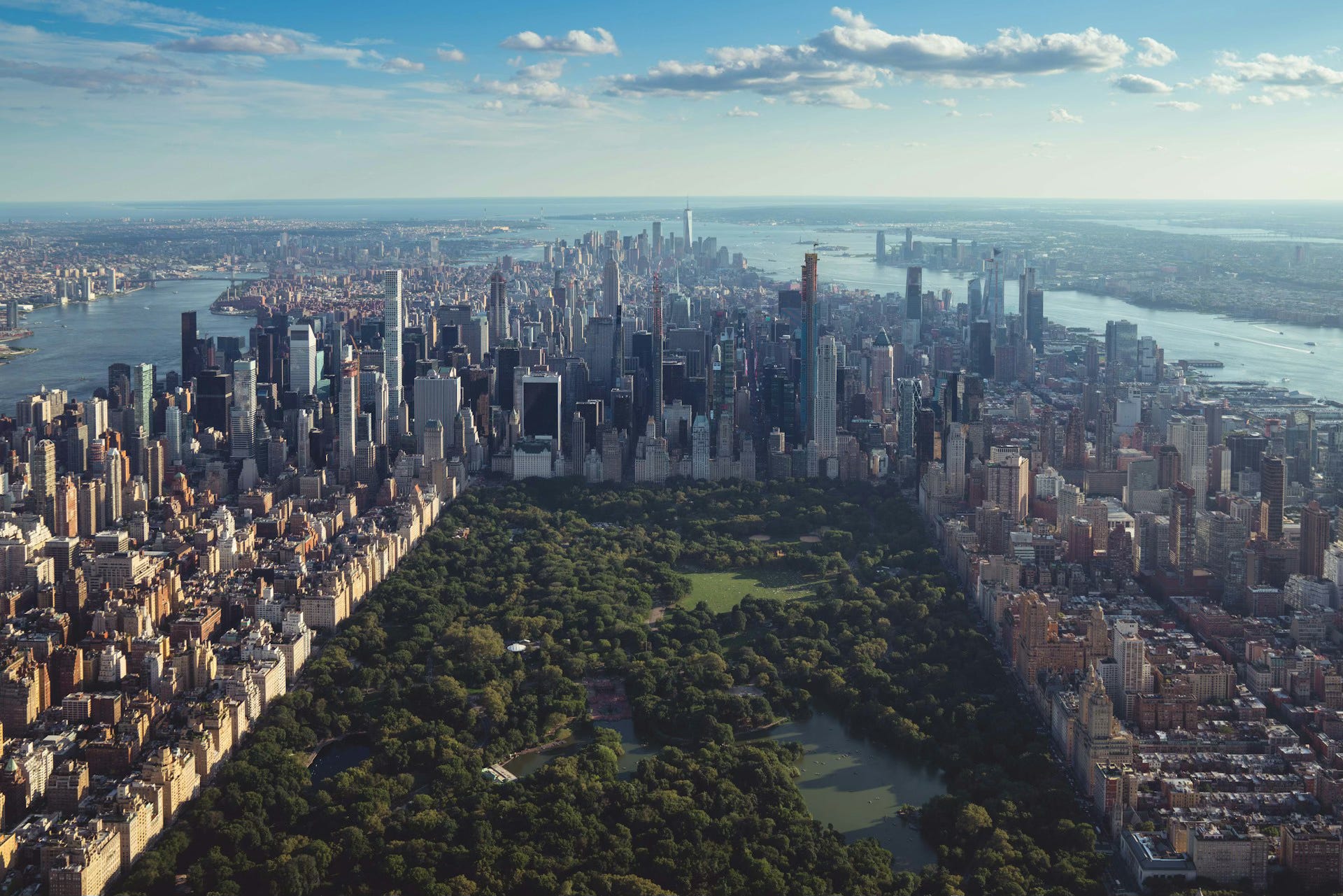
This week came with the news that at the city’s most prestigious independent schools tuition will exceeded $70,000 a year this fall. Meanwhile, Manhattan rents hit their third-highest level on record, up nearly 8% from 2025 and more than double the annual inflation rate, with no signs of slowing. The median rent in Manhattan was $4,695 last month.
When it comes to luxury sales, the first week of February marked the most weekly contract signings for homes asking eight figures since October 2024, The Real Deal reports. “Of the 36 contracts signed for homes asking at least $2 million the first week of February, 13 were for properties priced at $10 million or higher.” An unprecedented 64% of Manhattan’s condos and co-ops sold in 2025 went to all-cash buyers, according to Douglas Elliman, almost 90% of Manhattan sales over $3 million were paid for in cash, the NYT reports.
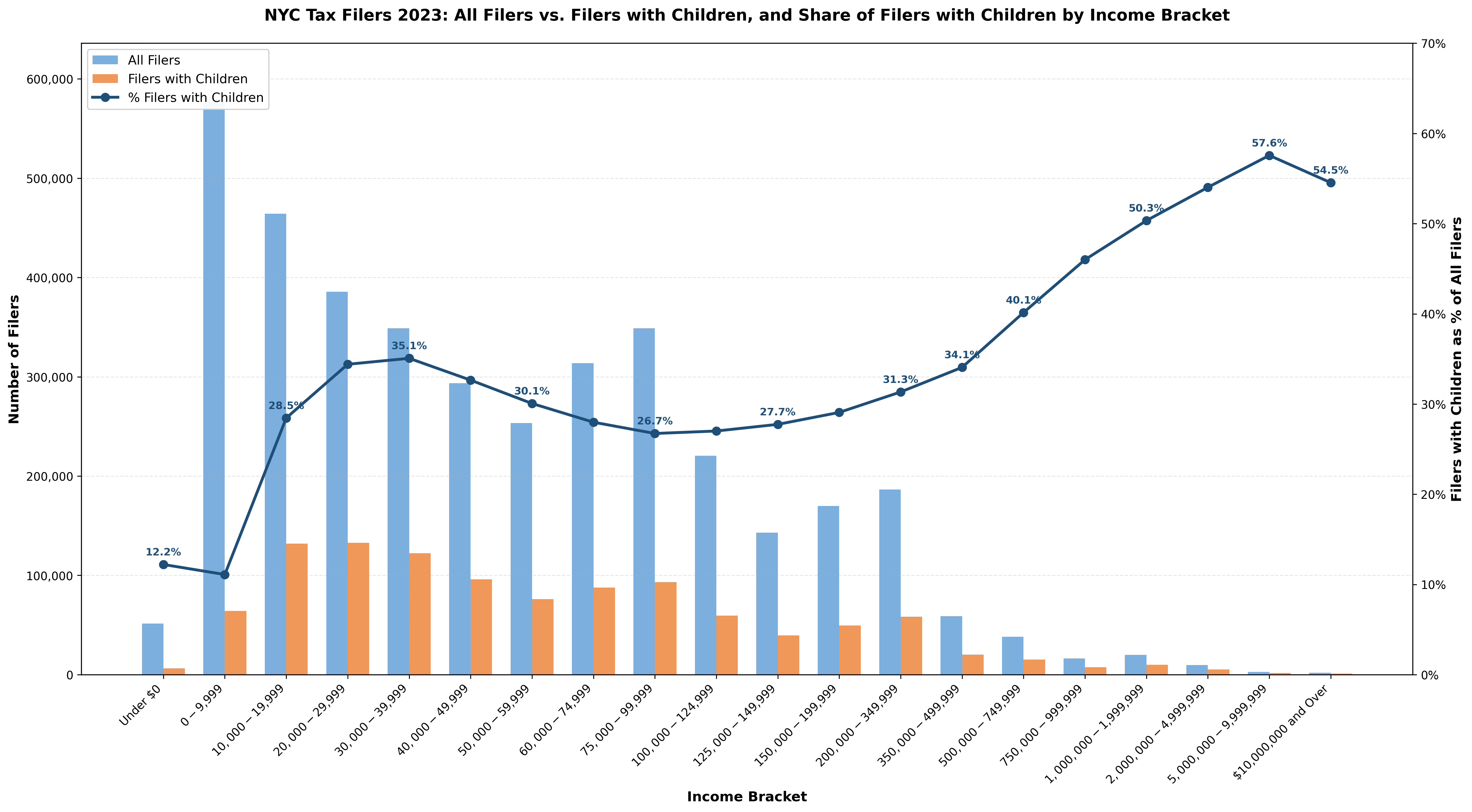
The people laying out for expensive condos and private school tuitions also appear to be the families having the most children. The most recent personal income tax return tables (from 2023), show the relationship between New Yorkers’ income and how many children they have:
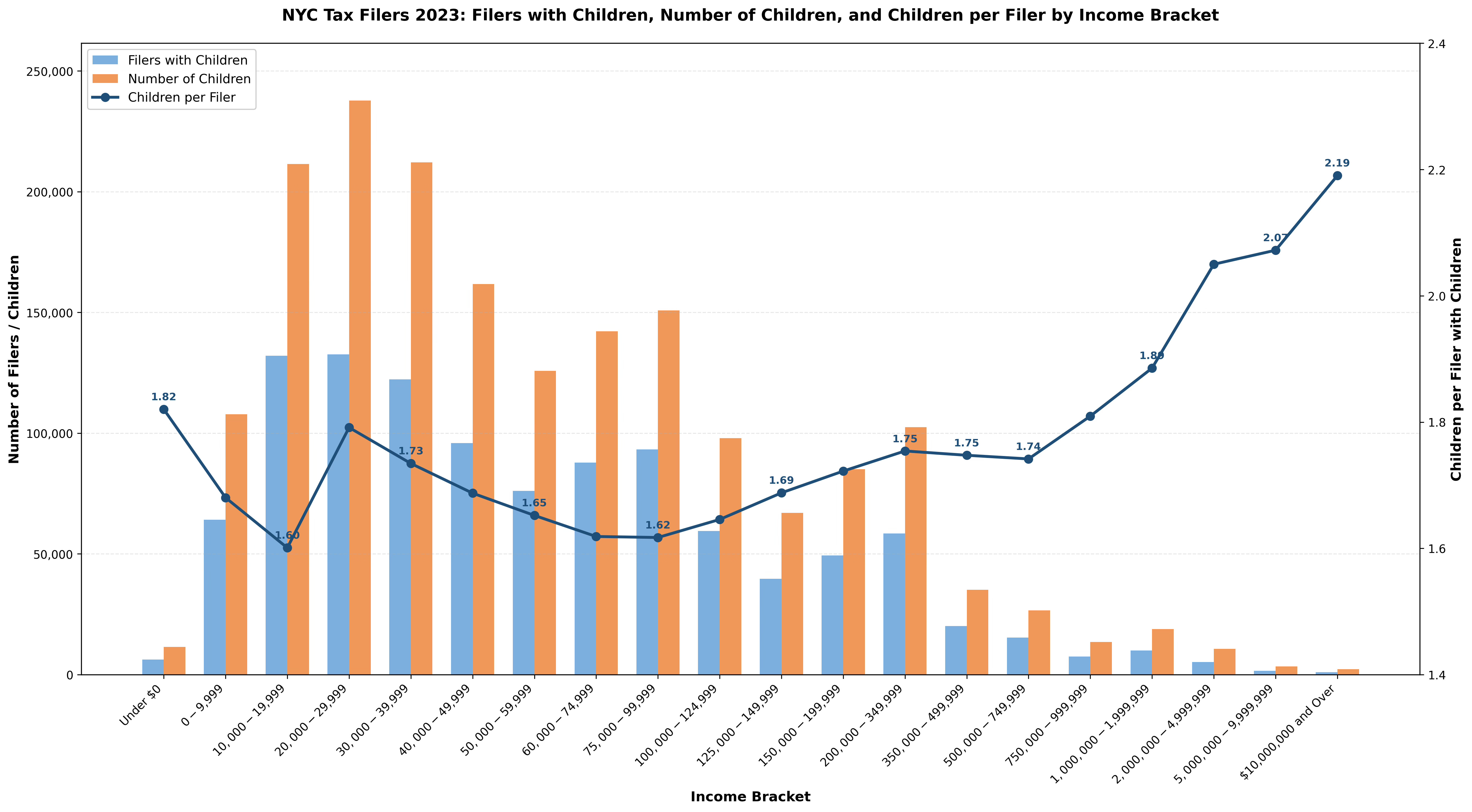
Once plotted, it is easy to see that the more financially secure you are, the more children you are likely to have. In NYC, that security comes from government support at the low-income end, and high incomes.
This feels counterintuitive, as we’re used to the notion that poor people have more kids than the rich. But it’s actually a return to norms: for the millennia of human history through the 18th century, the richer you were, the more children you had.
“In countries at the forefront of the Industrial Revolution, and the revolutions in living standards and life expectancy that followed, birth rates fell. Within these increasingly wealthy countries, it was the affluent and educated — with education becoming a key marker of status — who led the way in reducing family size,” Justin Fox writes in Bloomberg. “Researchers have been finding more and more evidence that, among and within countries that have already passed through what’s generally called demographic transition, the old, positive relationship between status and affluence on the one hand and number of children on the other is beginning to reestablish itself.”
The best-off New York families have more children than the rest, and more of the wealthier families have children, even though the absolute numbers are tiny by comparison.
I’m not suggesting anyone pity the poor rich. But as the “affordability” debate bubbles on, it’s remarkable how far up the income bracket you can go and still feel squeezed.
According to the City Comptroller, one needs to have an income of about $350,000 to comfortably afford a child in New York. If you plan to send your children to the exclusive independent schools, that number is likely double. And when you make that much money, you have some expectations about the kind of life you should be leading, which locks you in with higher fixed costs — an appropriate 3-bedroom apartment in a doorman building (~$120,000), the right schools for the kids (~$140,000), and you have already spent half of your after-tax income.
While having a big family may be the ultimate status symbol, even the wealthy tend to move out of the city once they have 3 kids, realtors tell me. Finding the ‘right’ 4-bedroom property, and getting into the ‘right’ school in New York is hard even when you have the money.
Local News
Mamdani reversed his stance on rental assistance vouchers, a program known as CityFHEPS, which has exploded in cost to over $1 billion.
It seems the administration cannot decide on the balance between pragmatism and ideology in city planning — the department still does not have a commissioner.
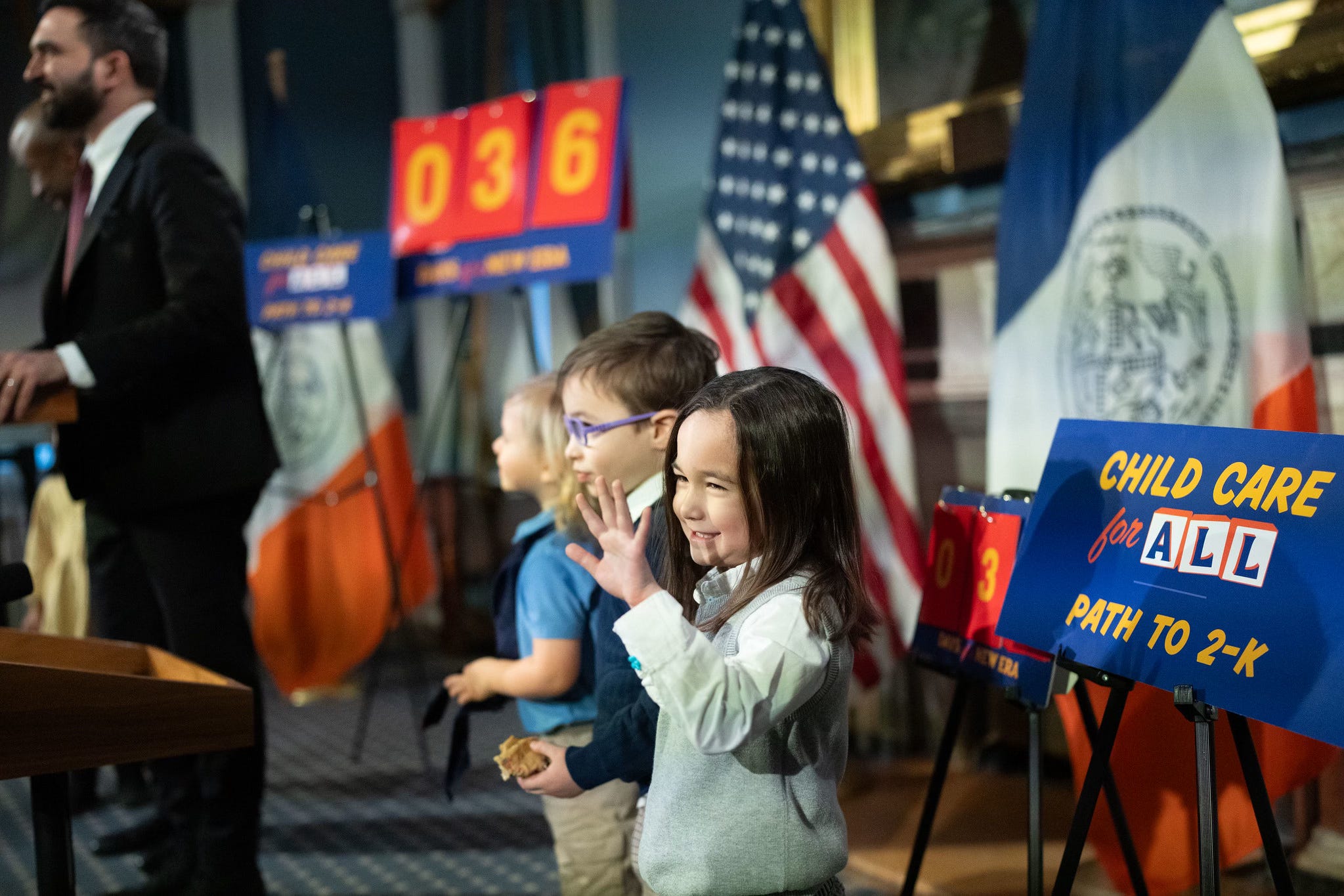
The city is soliciting interest from new childcare providers to expand their childcare offerings to 2 and 3-year-olds, giving potential providers just two weeks to apply. Mamdani plans to deliver 2,000 2-K seats by the end of this year and to expand to 12,000 seats next year. There are already more than 10,000 means-tested seats for kids 0-2 in the city, of which more than 4,000 were unfilled in 2024.
Unexpectedly Dangerous Pedestrian Streets
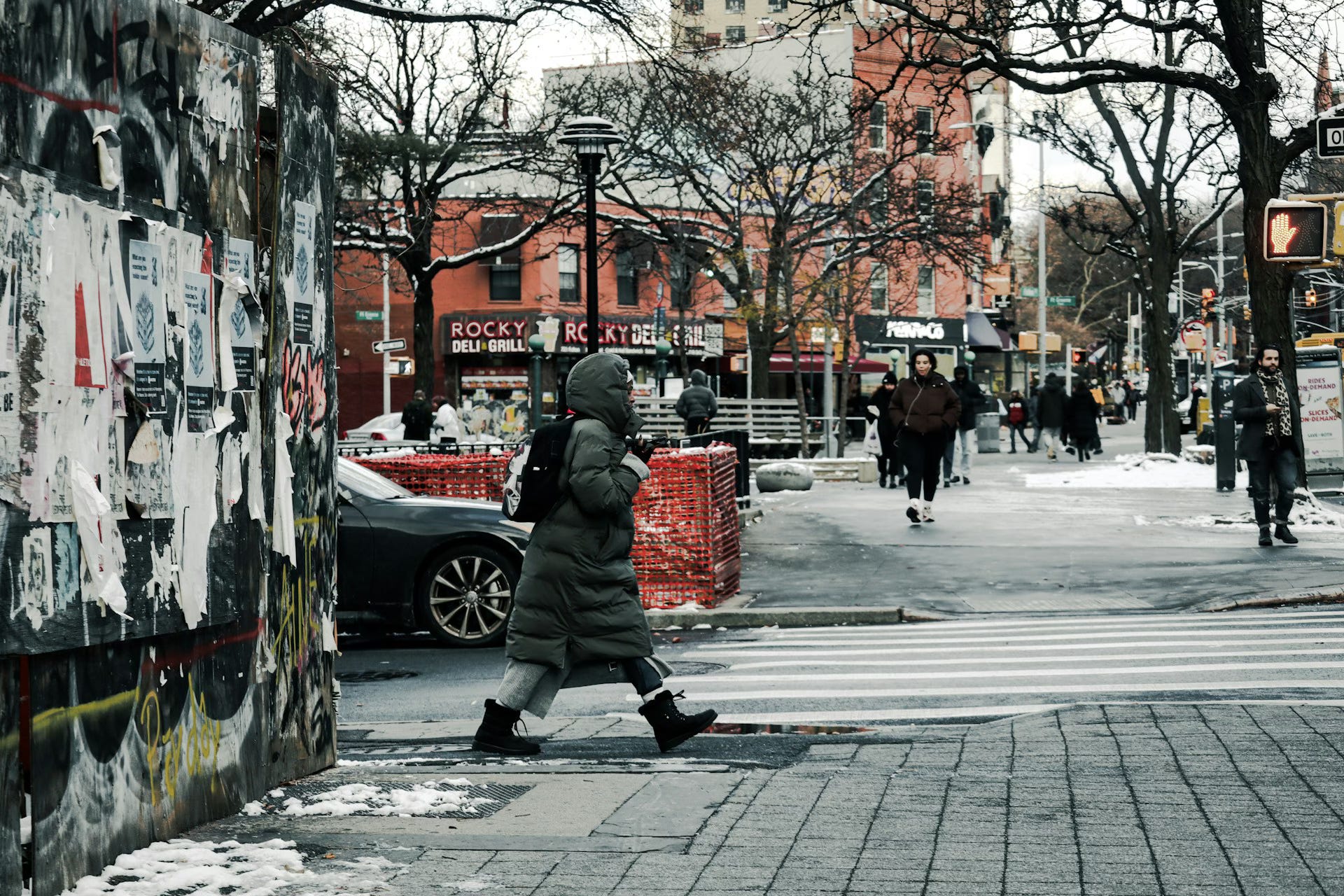
MIT researchers have created the first detailed, citywide map of how people walk around New York City. Cities closely track cars but generally don’t have a clear picture of where people actually walk.
By combining walking data with crash statistics, the researchers found that even though Midtown Manhattan has the highest pedestrian volume, pedestrians are actually more likely to be hit by a car in Rosedale and Jamaica, Queens; Canarsie in Brooklyn, and a handful of neighborhoods in Staten Island.
“Very few cities make plans for pedestrian mobility or examine rigorously how future developments will impact foot-traffic,” Andres Sevtsuk, who led the study, says. “But they can. Our models serve as a test bed for making future changes.”
Right now, Los Angeles and the state of Maine are working with the MIT team to evaluate pedestrian movement in their cities, and, hopefully, NYC will heed its findings as well.
Teacher Quality over Quantity

MI’s Jennifer Weber wrote earlier this week about the dangers of carelessly hiring thousands of new teachers to comply with the class size mandate.
New York City plans to spend $602 million to hire 6,000 new teachers to meet a state-mandated class-size cap. But simply reducing class size won’t necessarily improve student achievement. Research shows that teacher effectiveness matters far more for learning than the number of students in a classroom.
Hiring thousands of new teachers is challenging — and without strong retention, the city risks a revolving door of inexperienced educators that could hurt learning. Effective instruction takes time, training, mentoring, and stability, so New York should focus on recruiting, developing, and retaining high-quality teachers rather than just meeting numerical staffing targets.
From MI Fellows
John Ketcham writes in the New York Post about how Mamdani aims to keep NYC’s migrant crisis alive forever. On the campaign trail, Mamdani vowed to end migrants’ shelter-stay limits — and he appears to have quietly made good on that promise.
“He’s ordered the city’s homeless services agencies to start dismantling the migrant shelter system, setting a Feb. 19 deadline for their plan — while simultaneously letting asylum seekers continue staying in city shelters without time limits, as indefinite long-term guests of the taxpayers,” Ketcham writes.
Jason Riley writes in the Wall Street Journal that New York City’s charter schools are delivering exceptional results, particularly for low-income students. Citing a report from The 74, he notes that although charter schools made up just 9.5% of the state sample, they accounted for 38.5% of the top-performing “bright spot” schools, taking all of the top 10 spots statewide for serving disadvantaged students. Nationally, charters comprised 7% of elementary schools studied but 11% of those achieving exceptional reading outcomes relative to student poverty rates.

Given these results—and a New York City charter waitlist of 163,000 students—Riley argues that policymakers should expand high-performing charter schools. However, state lawmakers maintain a cap on the number of charters, and Mayor Zohran Mamdani opposes lifting it.
Extra! Extra!
Maybe America needs some new cities, NYT wonders.
Gothamist tested those gross piles of snow on NYC’s sidewalks.
The musician dorms of Midwood is a story about the power of a regular landlord to enable communities, including affordable ones for artists.

