

Mayor Zohran Mamdani heads into budget season with his popularity holding steady as he pushes tax hikes on the rich, a $70 million city-run grocery plan, and new but costly childcare seats. Yet his administration struggles to handle the basics, from vacant NYCHA apartments and broken park bathrooms to soaring special-ed costs and mental-health issues, in a city that seems better at redistributing wealth than creating it.
Local News
Mamdani’s still popular — the latest Siena poll shows his overall favorability flat at 47%, he remains strong with Democrats, across income brackets, and his favorability is roughly evenly split upstate. In NYC, 63% view him favorably, and 62% of the city’s residents support raising taxes on the city’s millionaires. Margin of error +/- 4.5%.
Mamdani wants to spend $70 million on his city-run grocery store initiative—planning five locations, one per borough, the New York Post reports.
A federal judge upheld New York’s congestion pricing plan.
Mamdani’s First Deputy Mayor Dean Fuleihan said expanding paid parking is not off the table to help raise revenue, though it would not meaningfully contribute to closing the city’s $5.4 billion budget deficit.
Education
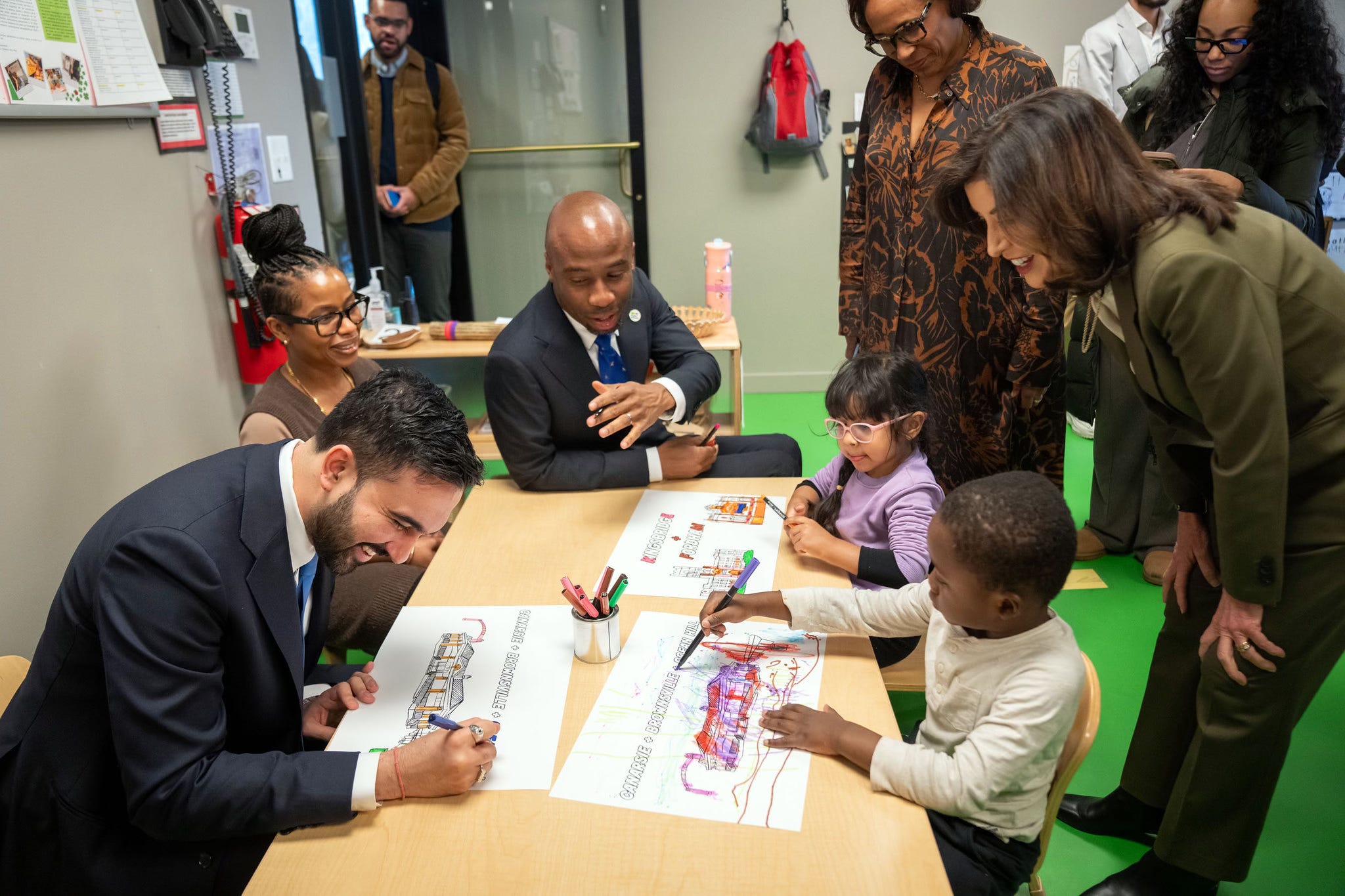
Mamdani announced with great fanfare which of the city’s neighborhoods will get the 2,000 new 2-Care seats this fall. They seem to fall into the slowly gentrifying category, aligning with his promises of a bit for everybody. At a cost of $36,500 a seat, though, they are much more expensive than the $23,000 market rate parents currently pay for toddler care.
The deadline to enroll in the city’s free 3-K and UPK programs was February 27, and as of a February 25 press release, “over 75,000” (does that mean fewer than 76,000?) children were enrolled. Last year, a total of 100,913 children were enrolled, while 23,169 seats sat empty, the NYS comptroller reports. It will be interesting to see the impact of Mamdani’s new outreach efforts when the final numbers are released.
Meanwhile, demand for the city’s fanciest private daycares exceeds supply to a degree not seen before, New York Magazine reports.
And, returning to the budget hole Mamdani needs to close, MI’s Jennifer Weber suggests looking at the exploding cost of Carter cases, where the city pays for private education of children with special needs. The cost has ballooned from $45 million in 2000 to $1.3 billion last year.
Housing
Squatters have taken over more than 600 vacant NYCHA apartments. The number of empty public housing units awaiting renovation has increased from 2,800 to 6,700 in just over two years, frustrating the 165,000 applicants stuck on the authority’s waiting list, THE CITY reports.
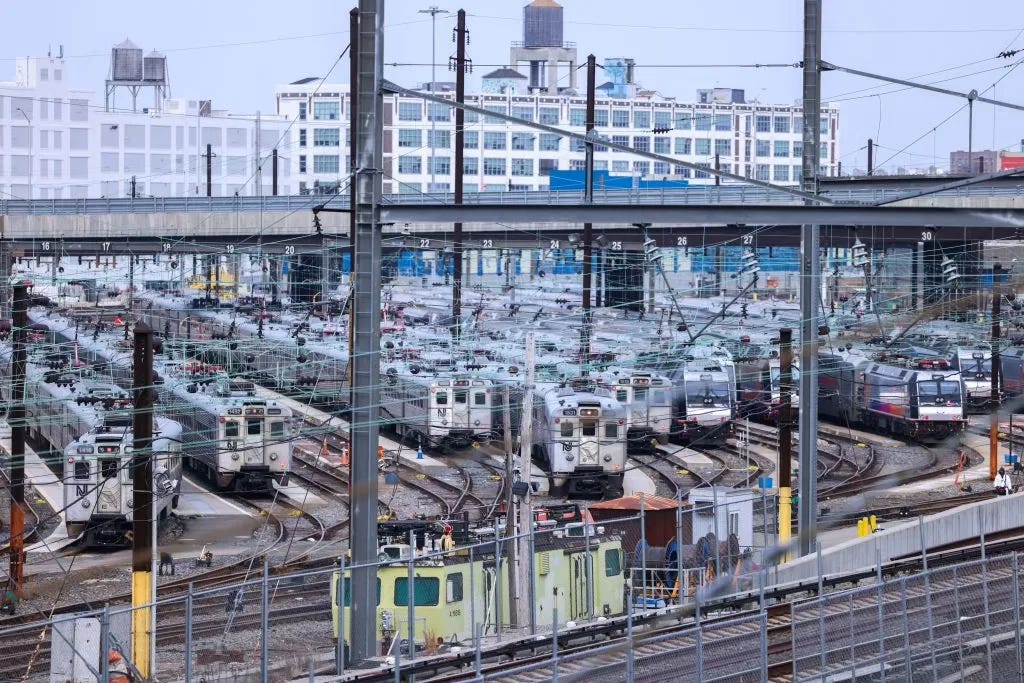
There are currently more empty public housing units than the 6,000 the city wants to build as part of the 12,000-unit Sunnyside rail yard affordable housing project, which Mamdani went to Trump for $21 billion in financing for. Renovating these 6,700 apartments could be done much faster and at a fraction of the cost, one hopes.
To MI’s John Ketcham, the Sunnyside rail yard housing project is a $21 billion distraction from the housing reform NYC needs.
From MI Fellows
The Problem Isn’t Who Knocks on the Door
New York’s fight over whether police officers or mental-health clinicians should respond to crisis 911 calls to apartments obscures the fact that the city does not have nearly enough appropriate places to treat, stabilize, and house people with serious mental illness, MI’s Stephen Eide writes.
New York’s leaders are overemphasizing optics and responder models while underinvesting in expanding hospital beds, supervised housing, and long-term treatment options. Changing the responder mix alone will not significantly improve outcomes for the most vulnerable or enhance public safety.
The Local Rate of Wealth Formation Matters
New York’s political class spends too much time obsessing over whether local tax hikes will prompt the wealthy to flee, instead of asking whether the city is doing enough to generate new wealth in the first place, MI’s Daniel Golliher argues.
New York’s increasingly anti-growth policies are eroding its ability to generate new businesses, industries, and fortunes, so unless leaders shift from squeezing existing taxpayers to fostering broad prosperity, the city will end up merely redistributing a shrinking pool of wealth.
Poll
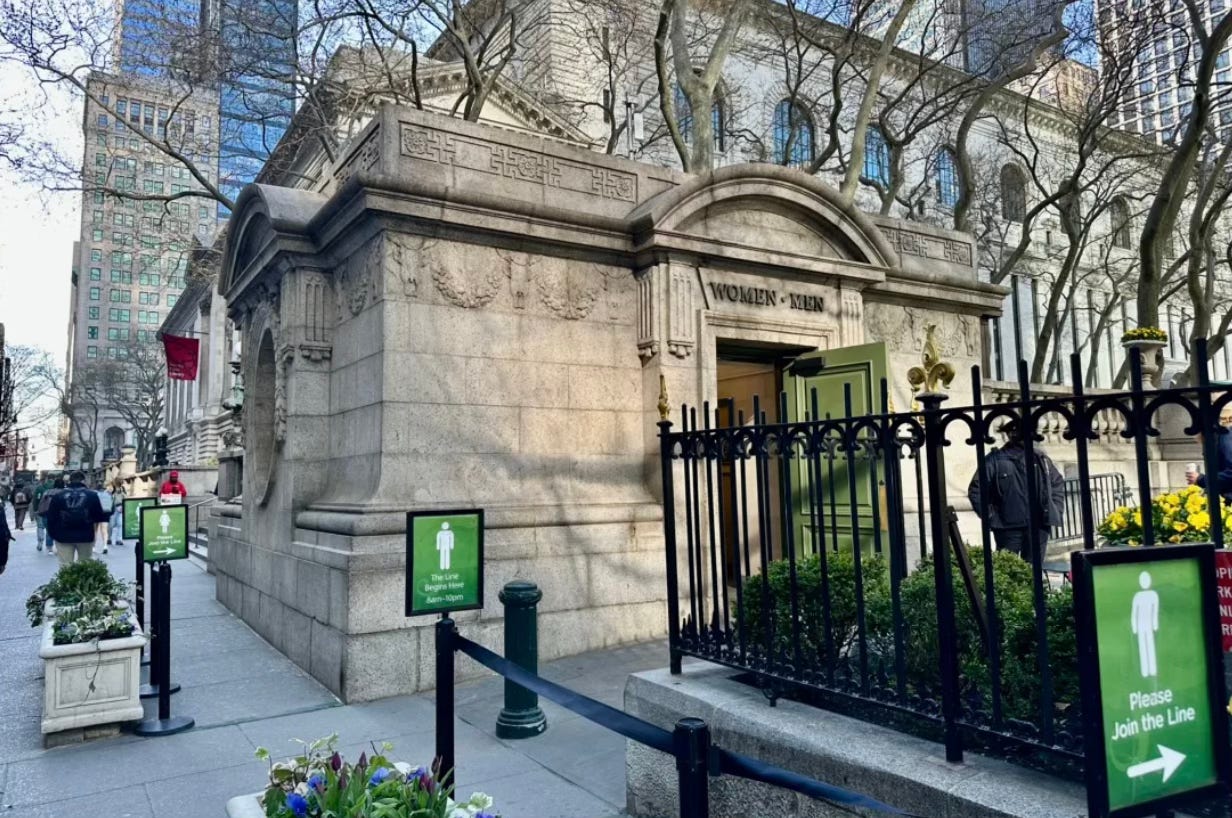
NYC is terrible at providing public bathrooms, and the few that exist are mostly tucked inside parks or libraries, locked outside during limited daytime hours, and many are currently closed or in awful shape, THE CITY reported this week.
The Council has ordered the total doubled to 2,120 by 2035, even as traditional rehabs can run into the millions, and earlier “Portland Loo” pilots landed around $1 million per toilet. Mayor Mamdani’s answer is a $4 million call for proposals to install 20 to 30 modular, above-ground restrooms that don’t need to hook into sewer and water, which works out to about 200,000 per restroom (these are just the fixed costs).
An even cheaper solution was tried and tested a few summers back. A few enterprising folks dropped off and staffed port-a-potties at the end of the Brooklyn Bridge. Visitors were relieved to find them there, a suggested donation of $1 kept them in “pristine” condition and in business — a quick, temporary, if somewhat unsightly solution to the bathroom issue that pays for itself. It was promptly shut down by the city.
So, how do you think the city should approach dealing with the bathroom shortage?

