

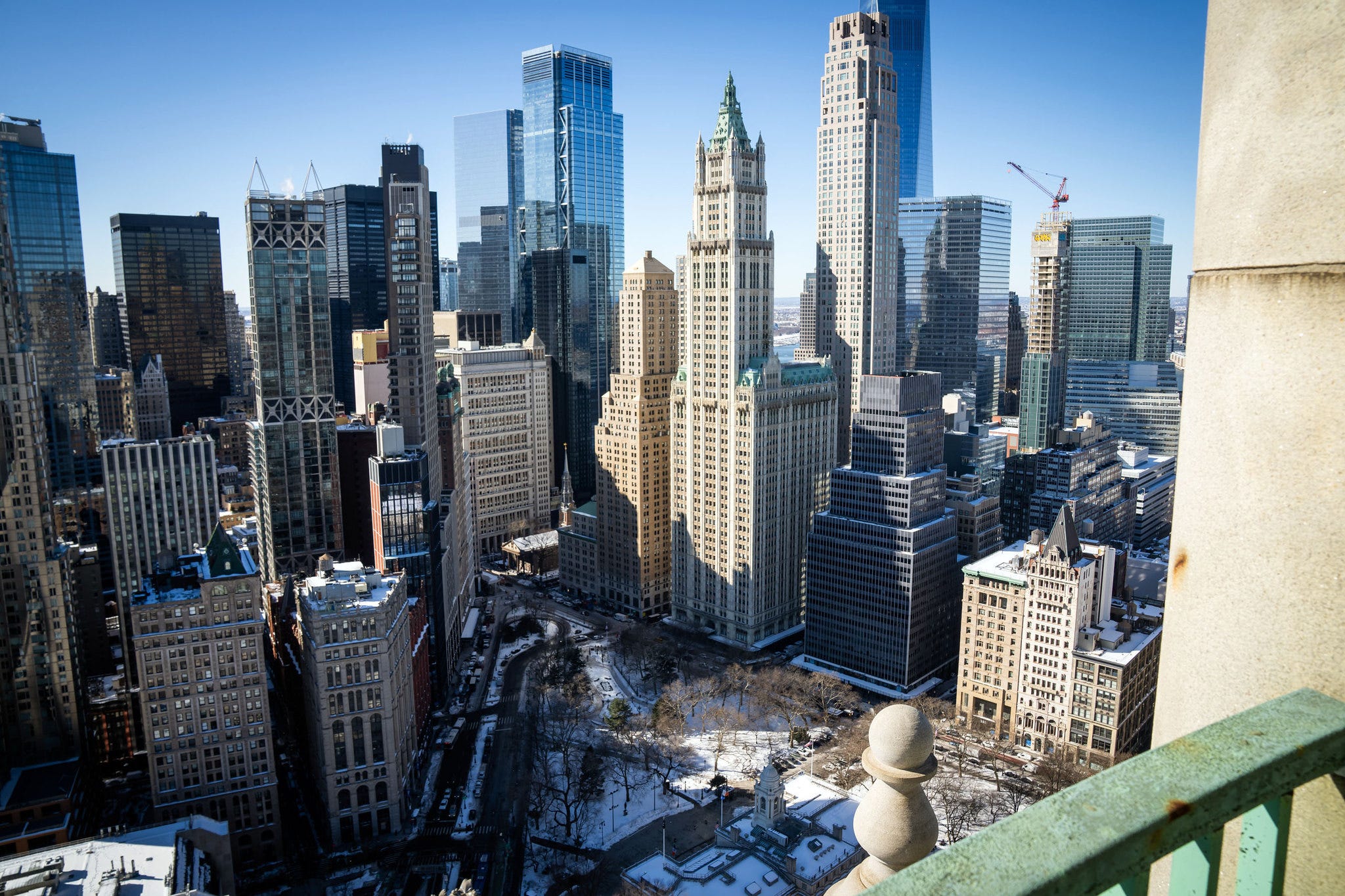
From the gleaming, mostly empty stores under the soaring Oculus at the World Trade Center to the struggling retail near Penn Station, something about old-fashioned “retail corridors” isn’t working anymore.
Last fall, Crain’s reported on the dilapidated former grandeur of West 34th Street, where, on some blocks, as many as 40% of storefronts sat empty. Despite some glimmers of hope, West 34th Street is still struggling.
“Upper Fifth Avenue, Times Square, Herald Square and FiDi comprise a relatively small portion of Manhattan’s retail inventory,” the New York Post reported this week. “Yet, REBNY found, they account for 60% of all the borough’s available storefronts and have the most vacancies of over 10,000 square feet.”
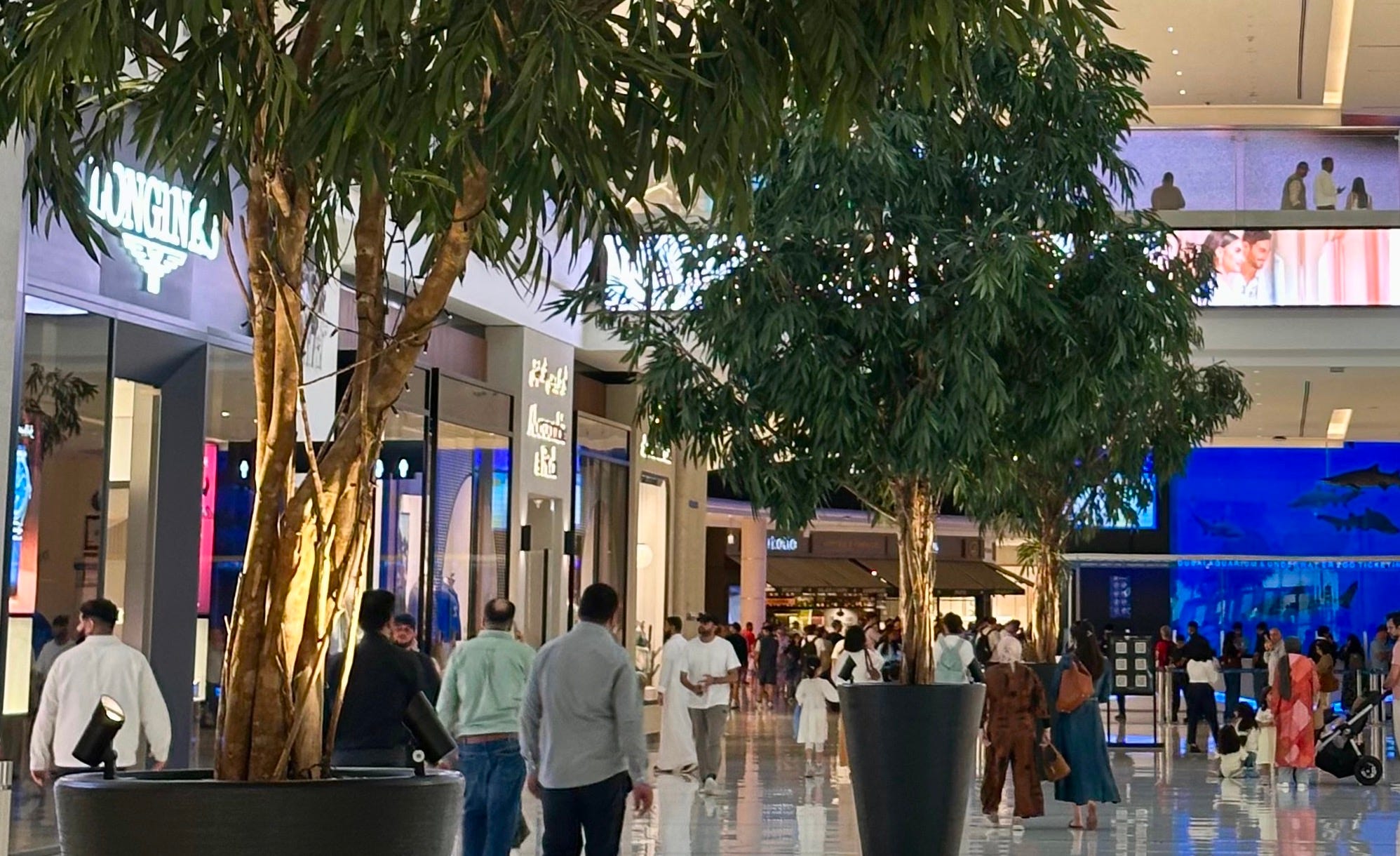
I happened to be reading about this at a cafe somewhere between steps 6,000 and 7,000 in the Dubai Mall, perhaps the world’s most successful retail location, and it struck me just how radically urban shopping has changed as most people have become glued to their mobile devices.
What stood out in Dubai, beyond the spectacle and scale (and the schools of fish in the multi-story aquarium!), was how effectively the experience held shoppers’ attention.
Almost no one was on their phone. People were browsing with friends and family, talking, lingering at cafés. Dubai Mall, like other successful malls, is a destination — deliberately designed to capture attention for long stretches of time.
New York’s streets are the opposite.
Analysts, rightly, blame e-commerce and declining foot traffic resulting from hybrid work for the decline of retail. But in the old retail corridors, most of all the ones near transit, distraction is another threat.
Most days, locals move quickly with headphones in, phones in hand, navigating obstacles and obligations. The street is something to pass through. We pause at traffic lights, sometimes, and experience the city distractedly, always in motion.
What we need and get in our neighborhoods is increasingly limited to literal necessities close by home — groceries, pharmacies, gyms, and cafes. Everything else can be ordered online, and clearly is, judging by the volume of package and food deliveries clogging city’s streets.
This is bad news for commercial corridors that are not destinations — long stretches that lack density, variety, and the small storefronts that make browsing worthwhile. Who wants to walk blocks and blocks just to discover there’s nothing to compare? According to a recent Real Estate Board of New York retail report, some destination districts are seeing rising rents, while others — despite strong pedestrian volumes and tourists — continue to struggle with vacancies.
The difference is not how many people pass through, but how their attention is engaged.
The phone is one obvious culprit. Attention is finite, and shopping requires more of it than most daily movement allows. Successful retail districts have always depended on attention, sociability, and density. They need to be interesting enough to get you off your phone and keep you off it. Malls learned this from city streets. Now cities must relearn it.
Local Politics
As of Thursday, the death toll for New Yorkers found outside during the record cold stretch had climbed to 17, of whom 13 likely froze to death, testing Mamdani administration.
With Mamdani’s support, DSA member Diana Moreno sailed to victory with almost 75% of the votes in the special election for his old Assembly seat. “Moreno is a longtime organizer with NYC-DSA and will bring an organizer’s approach to Albany. In office, Moreno will work with the statewide democratic socialist movement and elected officials to tax the rich, enact universal childcare, keep New Yorkers in their homes, and fight back against Trump’s authoritarian regime as well as the oligarchic control of both major parties” NYC-DSA announced in a statement.
Mayor Mamdani endorsed Governor Hochul, who picked former city council speaker and mayoral candidate Adrienne Adams as running mate for the “grandma ticket”.
Deputy Mayor for Housing Leila Bozorg discussed a rent freeze, rezoning and how to help struggling tenants and landlords, in a wide-ranging interview with THE CITY. But battles with the real estate industry loom.
Socialists & Schools

In a thought provoking piece this week, my colleague Stephen Eide expressed concern that the rise of socialism in America’s large cities is coinciding with a declining interest in public education.
“De Blasio’s education agenda was defined by (1) what it was against (Bloomberg stuff), (2) using the schools to advance non-educational goals, such as racial equity, mental health, and access to social services. Yes, de Blasio pushed Pre-K forward,” he writes. “But that was an economic program, meant to provide school fee relief to families, more than a serious attempt to boost academic achievement. There wasn’t much of a distinct education-as-education policy that came out of the de Blasio years. The question is, where do you locate education in your ‘theory of change’?”
From MI Fellows
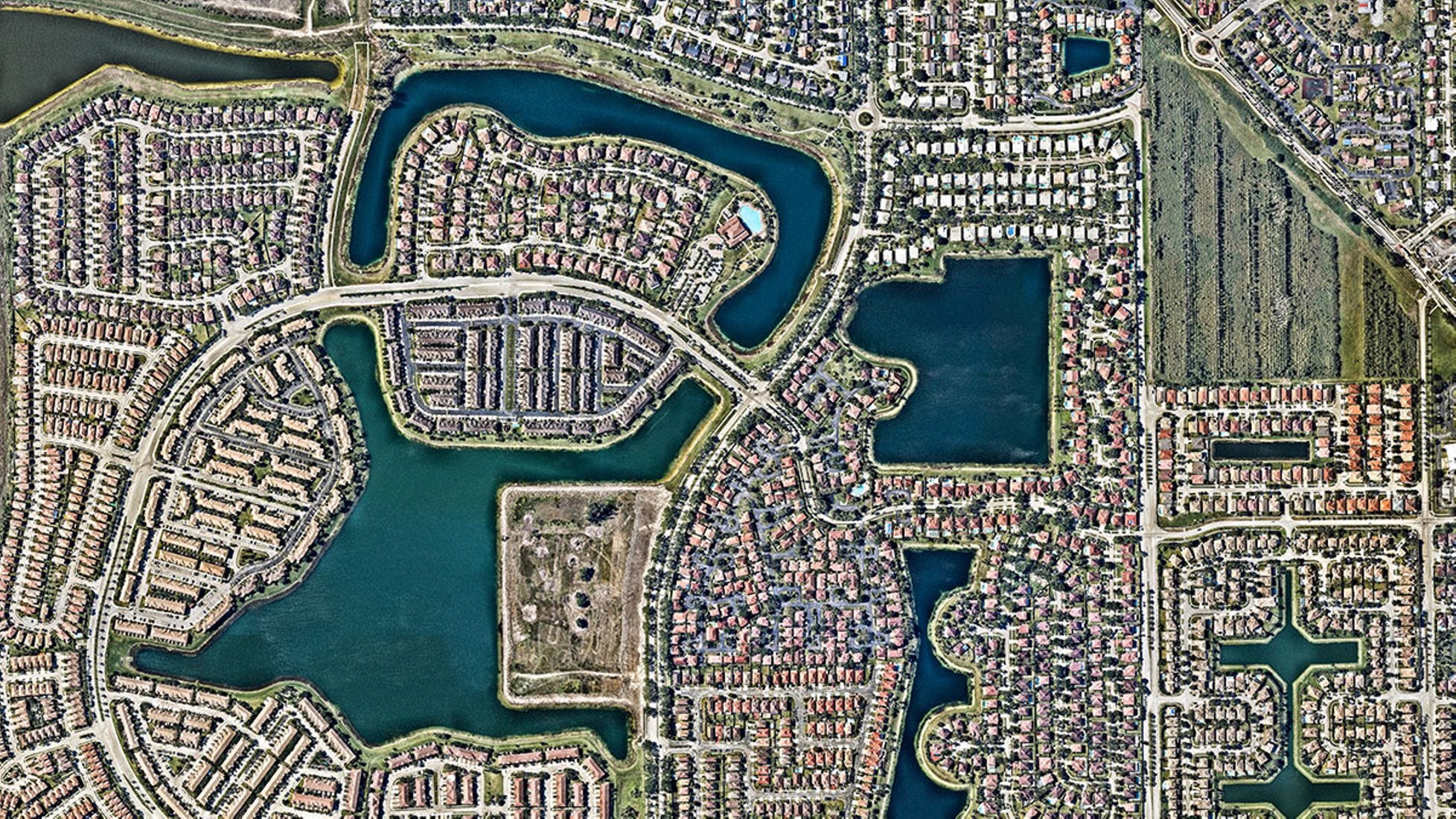
The High Cost of Stormwater Regulations, a new report from MI, argues that costs on developers and cities can be pared back or reformed with few, if any, effects on the environment.
“Often missing from the affordability debate is an appreciation of how public safety and order shape economic well-being. Policymakers seldom draw the connection, yet affordability and safety are tightly intertwined,” Rafael Mangual writes in City Journal. “When leaders fail on public safety, their constituents’ economic prospects decline with it.”
Facing a projected $10 billion budget gap, Mayor Zohran Mamdani should target efficiencies at the New York City Department of Education, where enrollment has fallen 10% since 2010 even as the budget has grown to $40 billion—pushing per-pupil spending above $42,000, the highest in the nation, writes Danyela Souza Egorov, offering some ideas how that could be done.
“Affordability arguments for making buses free would make sense only if New York’s transit costs were wildly out of line with those of other major American cities,” writes Josh Appel. They are not, as a detailed comparison shows.
Extra! Extra!

A look inside the new JFK Terminal 1 that is expected to open later this year. (NYT, gift link).
Waymo robotaxis could hit the roads in more than 20 cities this year, the company announced, with a $16 billion investment round fueling its global expansion plans. (Semafor).


The south side of 34th Street, especially between 6th and 7th Avenues, has always been terrible for shopping. My great grandmother lived in Manhattan from the 1880s and said it was awful in the 1910s and 20s. I don't think the phone is to blame.
Much of the traffic is flowing to or from Penn Station