

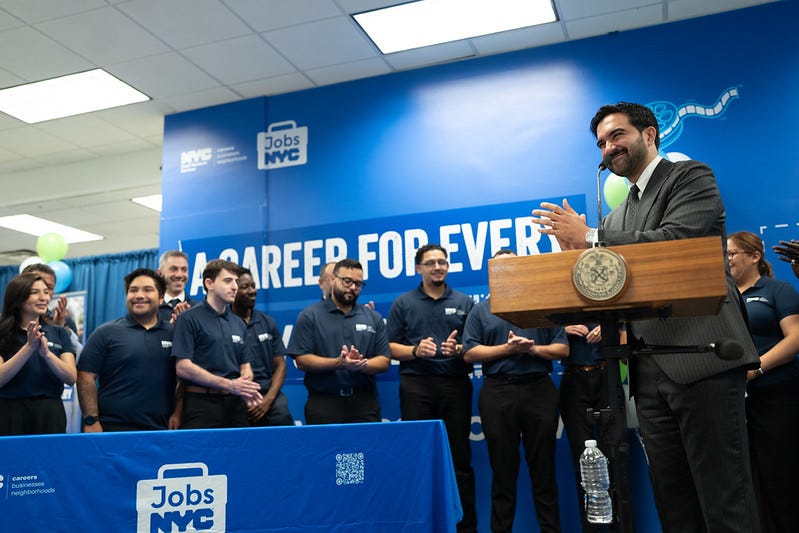
Last week, New York City’s contract with District Council 37, its largest municipal union, expired. The upcoming negotiations will be the first real test of Mayor Zohran Mamdani’s central campaign platform.
Mamdani ran on affordability: freezing the rent, free childcare, free buses, and public grocery stores. Each of these promised to put more cash into somebody’s pockets. None of these, except for groceries, were his to deliver.
That hasn’t stopped some of those promises from arriving, courtesy of others.
The Rent Guidelines Board, six of whose nine members Mamdani appointed, voted to freeze rents on about a million rent-stabilized apartments. Defending the freeze against a landlord lawsuit, in which Manhattan Institute has filed an amicus brief, his administration calls the board “an independent body.”
Governor Kathy Hochul agreed to pay for a 2-K launch in the city, and the MTA, by temporarily suspending its bus fare enforcement, made buses de facto free for anyone bold enough not to pay the fare, something almost half of the riders were doing anyway.
But Mamdani also ran on a $30 minimum wage.
Public sector wages are one affordability lever the city controls directly, and any increases DC37 negotiates for the roughly 90,000 of its members who fall under the city contract would set the pattern for most other municipal unions.
DC37 members’ wages have failed to keep up with inflation—raises over the last contract totaled 16%, while prices rose 26%. Health care cost, for which most city workers pay no premiums, rose by more than a third over five years1. Formal talks can’t even begin, a union representative told the New York Times, until the city settles who pays for cancer and specialty drugs once covered by a shared fund. Career retirees get free health care for life, a promise with $98 billion unfunded. Their pensions are guaranteed and exempt from state taxes.
DC37 leader Henry Garrido, whose members include some of the city’s lowest-paid workers, told the Times he will hold Mamdani to his $30 promise, and while it is Albany that sets the minimum wage, the city controls its own payroll.
Mamdani cannot afford much of a raise. He budgeted for 1.25% a year; each additional point costs more than half a billion dollars annually, and he is already looking at deficits of $6 billion or more.
He has also promised to deliver real efficiencies in how the government delivers its services, which is where, as MI’s Daniel DiSalvo wrote in Vital City in June, his alliance with the unions frays.
In a statement to the Times, Mamdani said the talks would “focus on supporting city workers, protecting their livelihoods and ensuring that emerging technologies like A.I. do not come at the expense of their rights or economic security,” and that he wants “an agreement that honors the service and sacrifice of our municipal workforce, while responsibly stewarding taxpayer dollars.”
How he squares that with his staunchly pro-labor convictions and affordability promises remains to be seen.
Related:
Public Sector Unions vs. Mamdani’s Ambitions (Vital City)
Unions to Press on A.I. Threat in Mamdani’s First Labor Talks as Mayor (The New York Times)
Mayor Mamdani: End Pattern Bargaining; Start Collaborative Bargaining (The Chief)
Building Collapse Questions
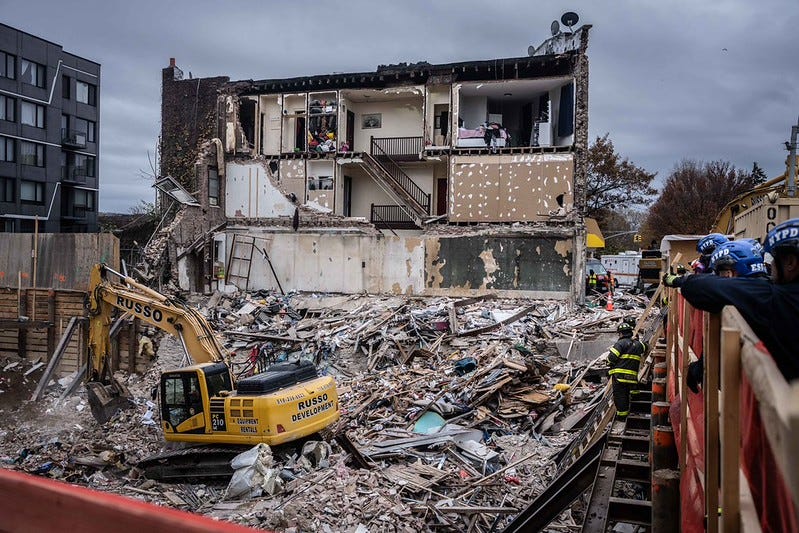
“If there is anyone or any entity operating in this city who is responsible for this, we will hold them accountable,” the mayor said at a press conference following the deadly collapse of a residential building into a construction pit next door that killed 8 and injured 18 this week in Brooklyn. It is now looking into 5 companies associated with the construction site and assessing compliance at their other project sites. Crain’s sheds some light on the owners of the two properties.
As part of the investigation, the city should also look at its own rules and processes—and consequences imposed for not following them—to see what could be done to minimize the likelihood of a similar tragedy unfolding somewhere else in the city.
Podcast: No Consequences
On this episode of the Bigger Apple podcast, Nicole Gelinas and I talked with our Manhattan Institute colleague Jennifer Weber about what happens when breaking the rules carries few consequences.
Shootings and murders are down in New York, but around Election Day, the headlines of random attacks did not make anyone feel safer: a jogger stabbed on the Shore Parkway path, a 15-year-old shot dead in the Bronx, a woman dragged into Central Park at knifepoint and raped.
Central Park has had 90 major felonies this year, the most since at least 2010. Felony assaults in the southern half of Manhattan are up from 1,330 at this point in 2019 to 2,096. Yet, as Nicole points out, the City Council’s big Central Park fight has been over horse carriages.
Listen to the full conversation above or wherever you get your podcasts.
The “State of Yes”: The Left-YIMBY Bargain Comes to Albany
MI’s Eric Kober has a new brief on legislative proposals that “might offer a path toward progress long considered politically infeasible.”
In August 2026, Manhattan Assembly Member Tony Simone, with support from a group of progressive legislators, proposed “State of Yes,” a package of 32 bills. At a news conference presenting the package, Simone argued that New York needs a bolder housing agenda and should stop making small, incremental changes.
“State of Yes contains the seeds of good housing legislation that New York’s progressive legislators could embrace. But the package also contains several provisions that would increase the burdens imposed on private landlords,” Kober notes. “Underlying the plan is an assumption that any “pro-development” policies must be traded for “pro-tenant” policies. This is the wrong approach. More housing is an inherently desirable goal that should not have to be part of a trade.”
Planning For IBX Neighborhoods
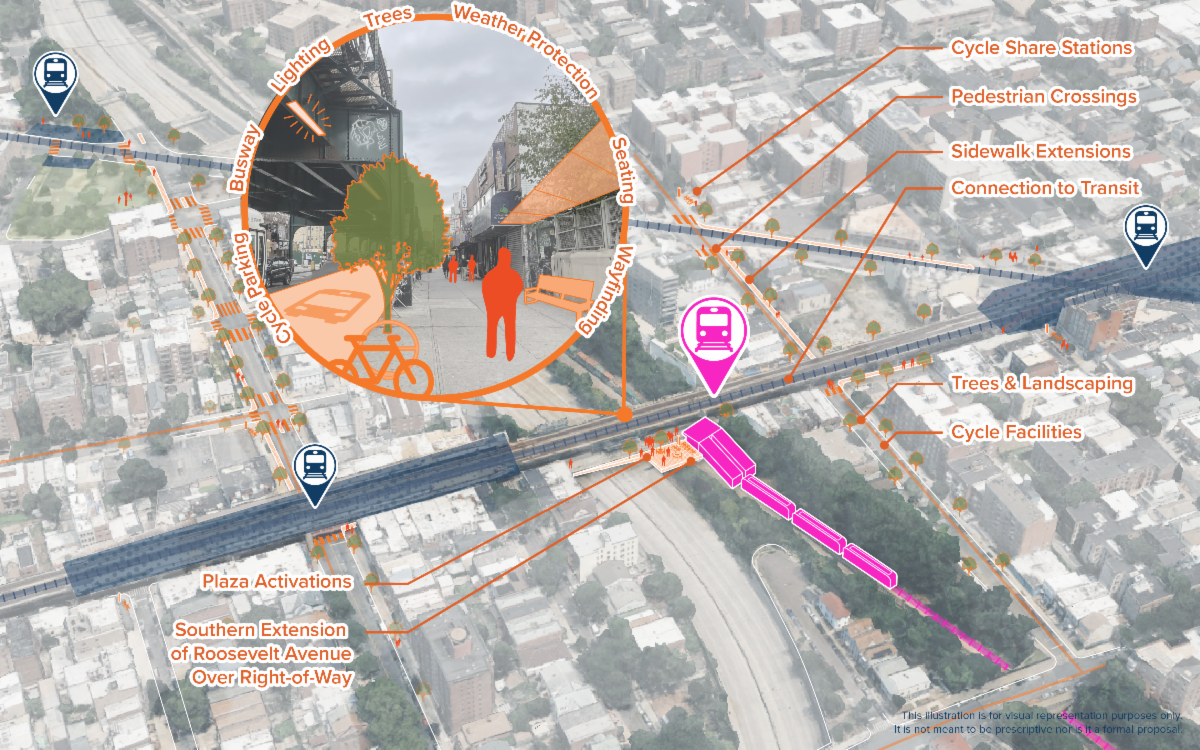
Once completed, IBX will serve nearly 900,000 residents along its route. For the city to reap full benefits of this investment, it should focus on making last-mile improvements that benefit surrounding neighborhoods, the Regional Plan Association argues in its latest report, “Planning for the Interborough Express Corridor, Part 1.”
“Traveling through this last-mile infrastructure—including sidewalks, pedestrian crossings, plazas, bus shelters, bicycle pathways, lighting, and green spaces—will be the primary way transit riders will access the new IBX stations from their homes, jobs, and public amenities,” authors write.
Extra! Extra!
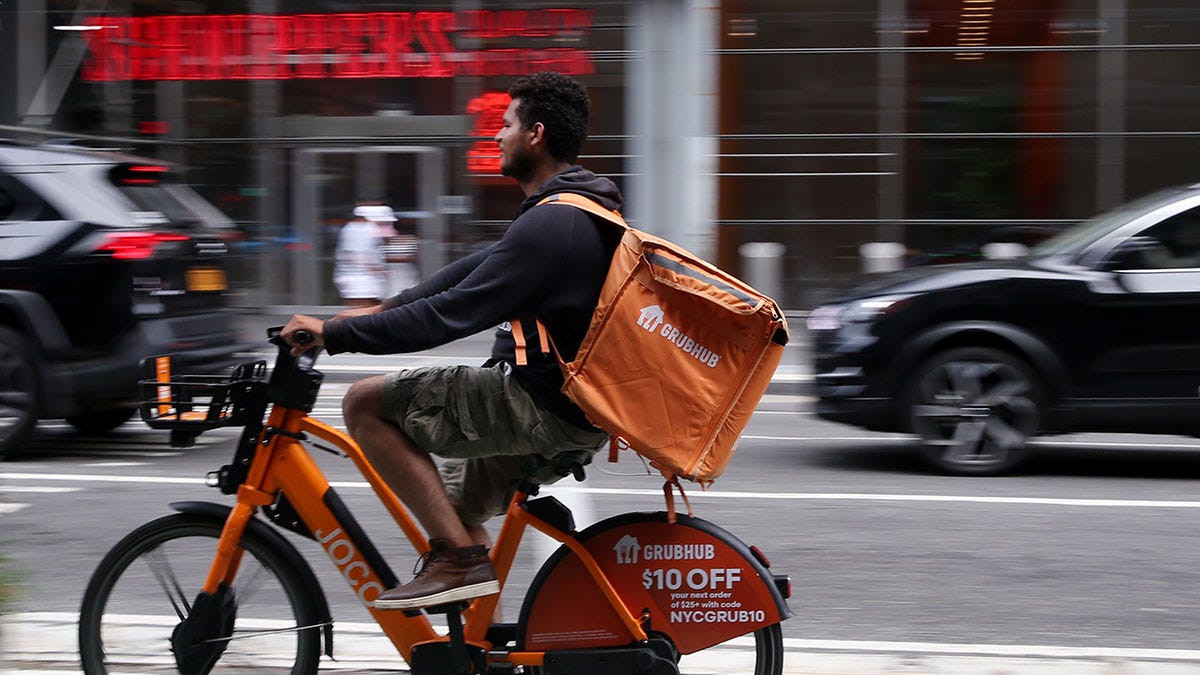
The Left’s War on Gig: Costly labor mandates are hurting the very workers they’re supposed to help (City Journal)
Will N.Y. Democrats Use Their Supermajority to Push Hochul to the Left? (The New York Times)
Mamdani Budget Floats on Wall Street Cash as Momentum Grows for New Taxes (The City Reporter)
Mamdani to disband controversial NYPD unit, announcement potentially as soon as Monday. (Politico, NYT)
Rent-stabilized buildings hit auction block, despite Mamdani’s efforts to intervene (Gothamist)
Hochul criticizes plan to drop Regents exams, renews push for control of state Education Department (Chalkbeat)
Clarification: An earlier version of this article said the city’s health care costs rose more than 70% over five years, citing state Comptroller figures. That figure covered only the portion paid with city funds, which was unusually low in 2021 because federal pandemic aid reimbursed part of those costs. The city’s year-end financial reports show total spending on employee and retiree health insurance rose by more than a third from fiscal 2021 to 2026, excluding a one-time accounting write-off, roughly twice as fast as wages.
<h1>test</h1>
Has the DC37-eligible payroll increased under Mamdani?