

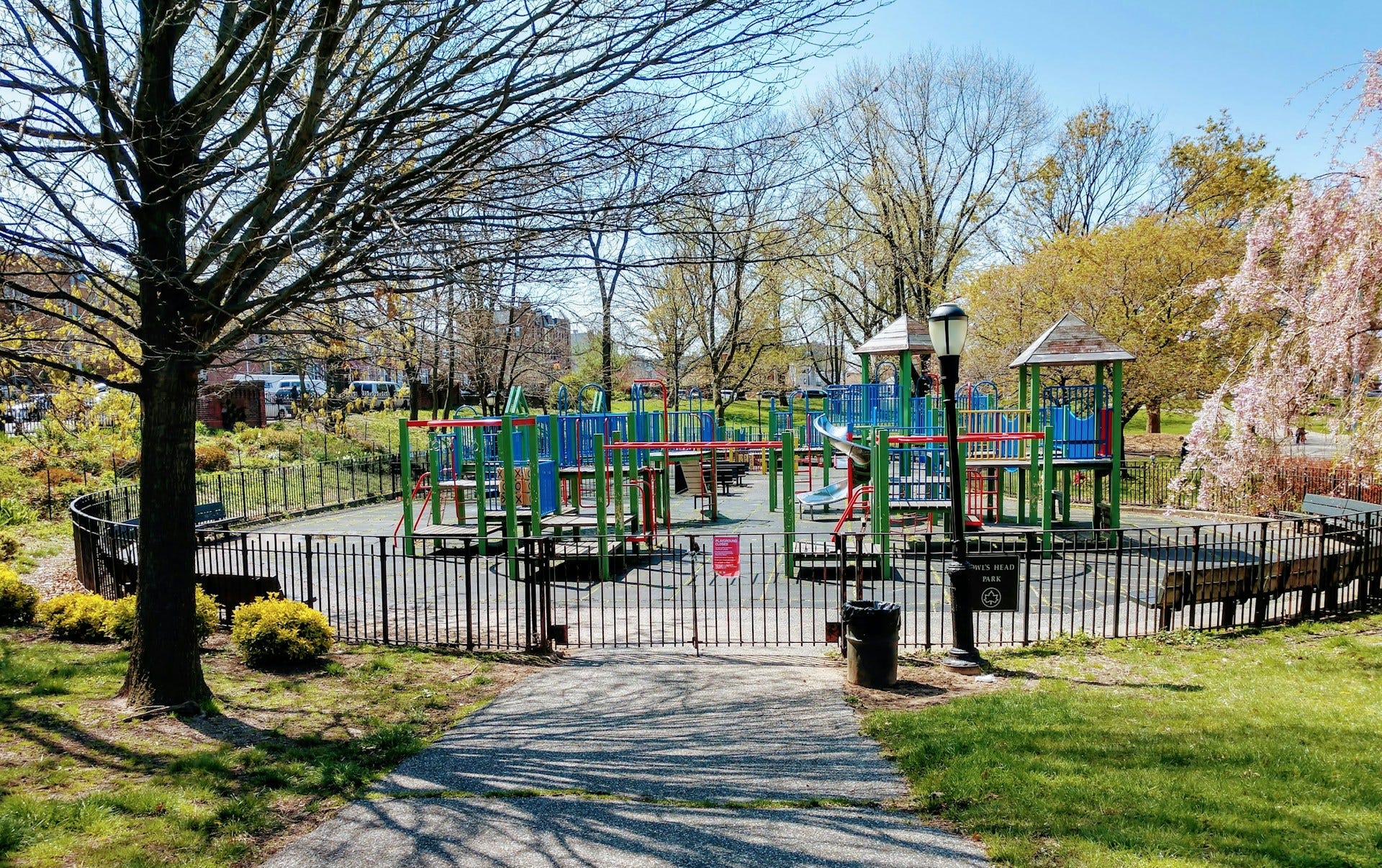
American cities are losing their families. Since 2020, the number of children under 5 has fallen by 7% in large urban counties. In New York, the number is closer to 18%. Chicago, LA, and San Francisco are not far behind.
In a new Manhattan Institute report, Connor O’Brien, a fellow at the Institute for Progress, and I looked at the reasons why and what cities can do.
We found three themes dominated.
Affordability and fit — family-sized homes and reliable childcare are scarce and expensive, and what exists is frequently the wrong size or in the wrong location.
Reliability — parents struggle to plan around systems that shift unpredictably, whether it’s childcare waitlists, school admissions rules, or unreliable commutes.
Time — parents are chronically short on time, small frictions accumulate, and can be the last straw that makes families leave.
While cities cannot remove every difficulty of urban life, there is plenty they can do to keep families from leaving.
They can reform rules to help build more housing faster; support the kind of flexible childcare and high-quality schools parents actually want; and invest in safe and welcoming public spaces where families need them most. (Read the full report.)
Podcast: Rafael Mangual On Rikers, Canal Street, And How To Judge Mamdani’s Success
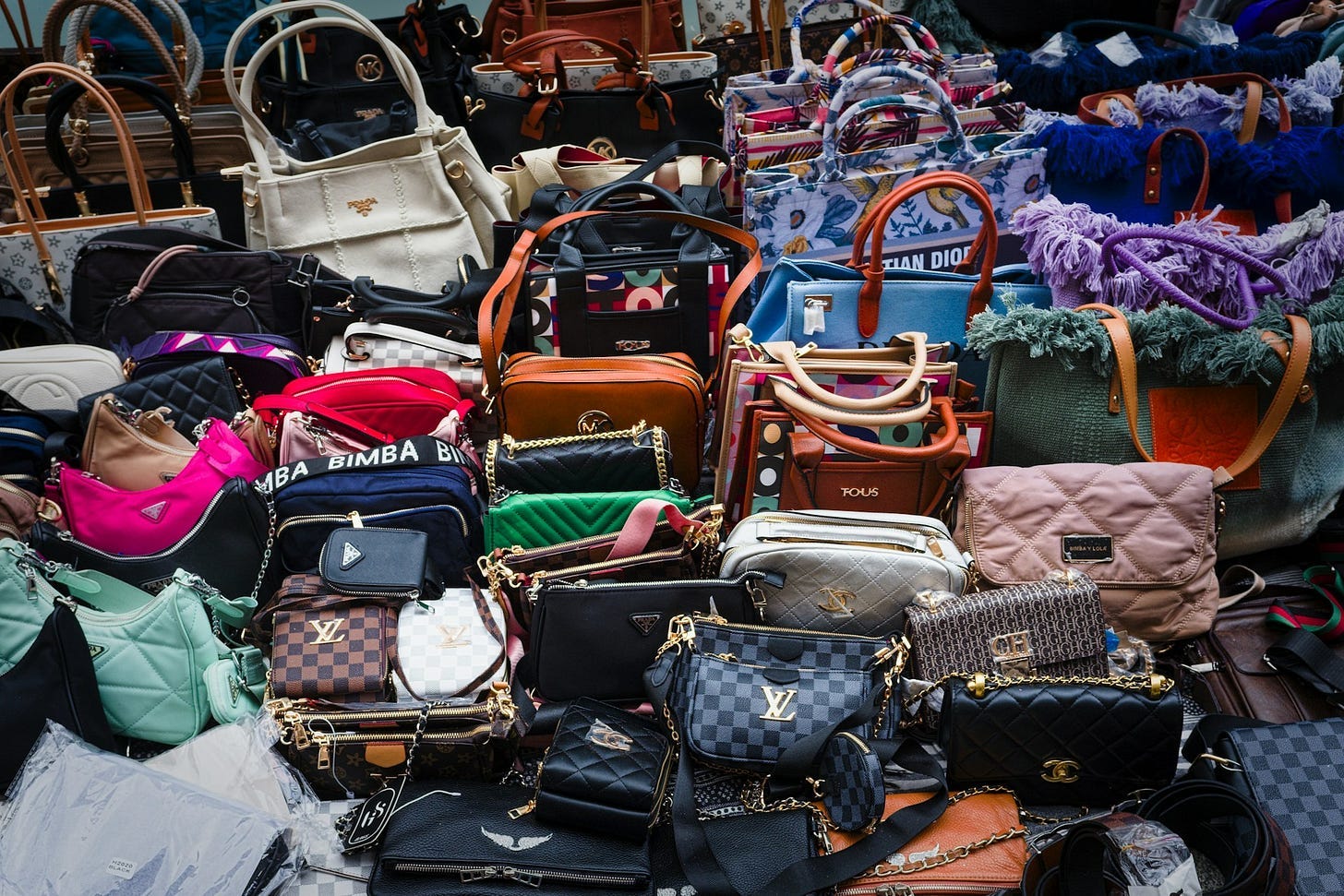
This week, Nicole Gelinas and I spoke with our colleague Rafael Mangual about the Raise the Age law and its role in rising juvenile crime, rising public disorder, Canal Street's counterfeit economy, and the legal and logistical chaos likely to unfold as the city's self-imposed 2027 Rikers Island closure deadline nears.
According to the latest stats, crime is down by 1.6%, but as the weather warms up, the gains may not last. How should we judge Mamdani’s success?
Listen to the full episode here.
Local
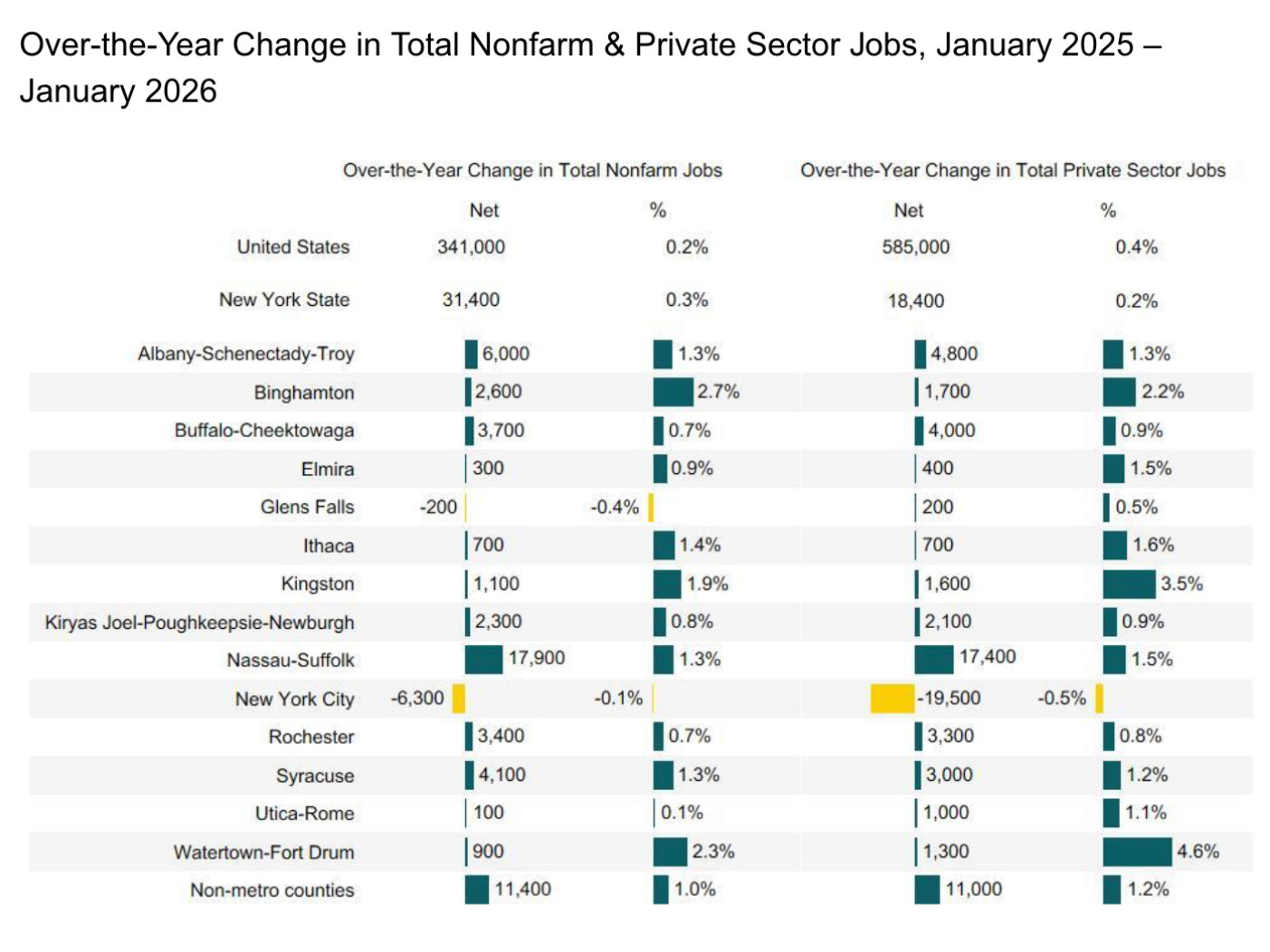
New York City lost almost 20,000 jobs in 2025, according to NYS Department of Labor — the city and state had expected an increase of about 40,000. Can Mamdani afford to keep focusing on redistribution rather than growth?
The City Council released its preliminary budget, and the gloves are off, as Mamdani takes to social media.
To extend his reach, Mamdani also lifted City Hall’s ban on using TikTok for outreach to constituents, privacy concerns be damned. At this point, I believe, he can reach more city residents to shape their perceptions of what’s going on and his own performance than anyone else in the city. So much for the Fourth Estate.
Not quite free buses for all, but the City Council wants them for nearly 1 million low-income New Yorkers. Our Nicole Gelinas thinks this is not a good idea.
 Nicole@nicolegelinasThis is a poorly thought through idea -- it would be massively expensive (a city budget contribution), it would make it difficult if not impossible to enforce against fare theft, it's yet another entitlement not tied to a work requirement, etc., etc. That this is mildly better
 Gothamist @GothamistNearly 1 million low-income New Yorkers would get free subway and bus rides under a budget proposal announced by the City Council: https://t.co/yQym8Fn6rT7:31 PM · Apr 2, 2026 · 5.24K Views6 Replies · 7 Reposts · 69 Likes


Can Mamdani Save His Way Out Of The Budget Hole?
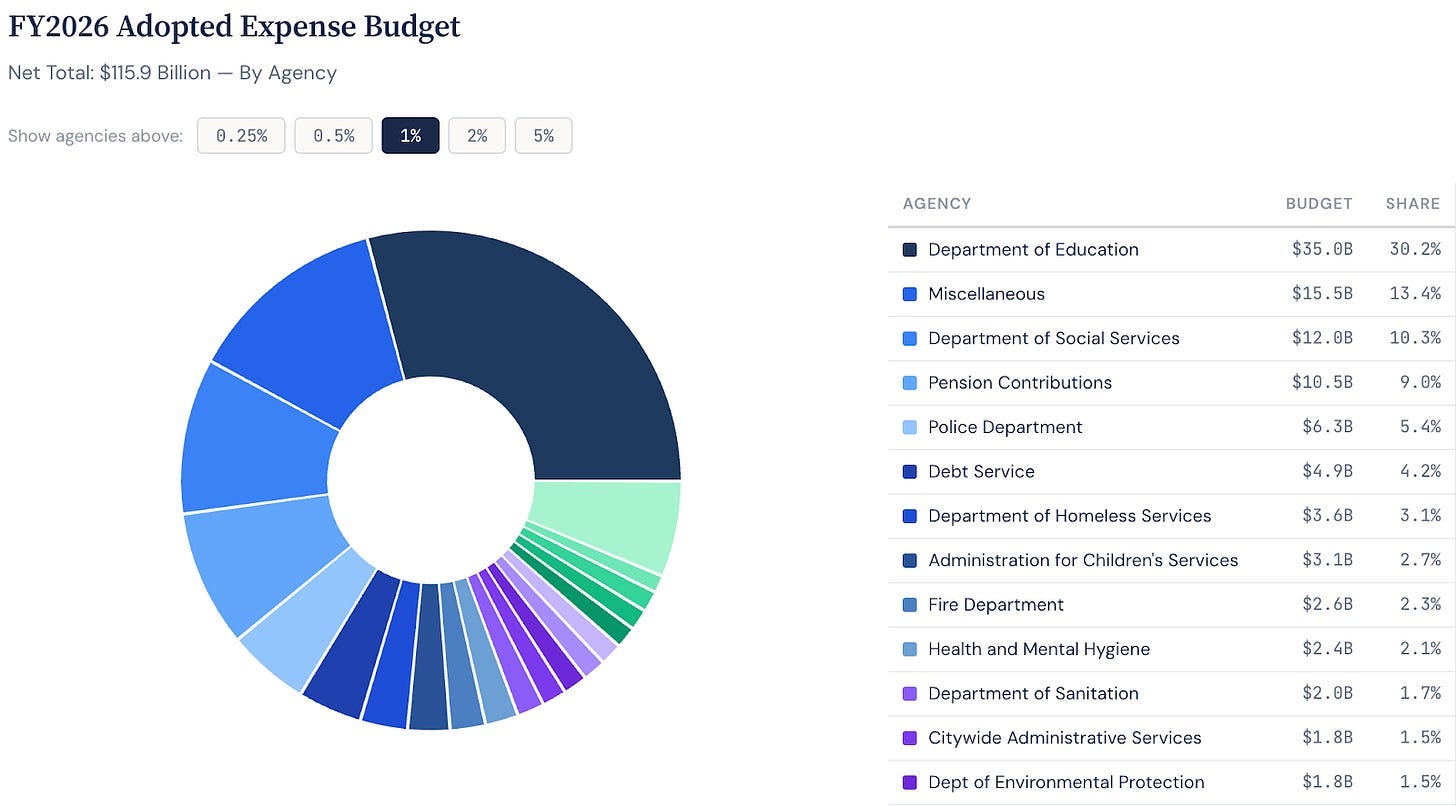
The city is spending more than it’s bringing in and, with long-term revenues uncertain, Mamdani has been trying to cut costs, but the $250 million in savings he’s announced is a long way from the $5.4 billion he needs.
Tal Roded looked at what the proposed savings tell us about Mamdani’s priorities and what he is likely to need to balance the books. Read the story.
New York Has Thousands Of Basement Apartments. Here’s Why Few Will Be Legalized.
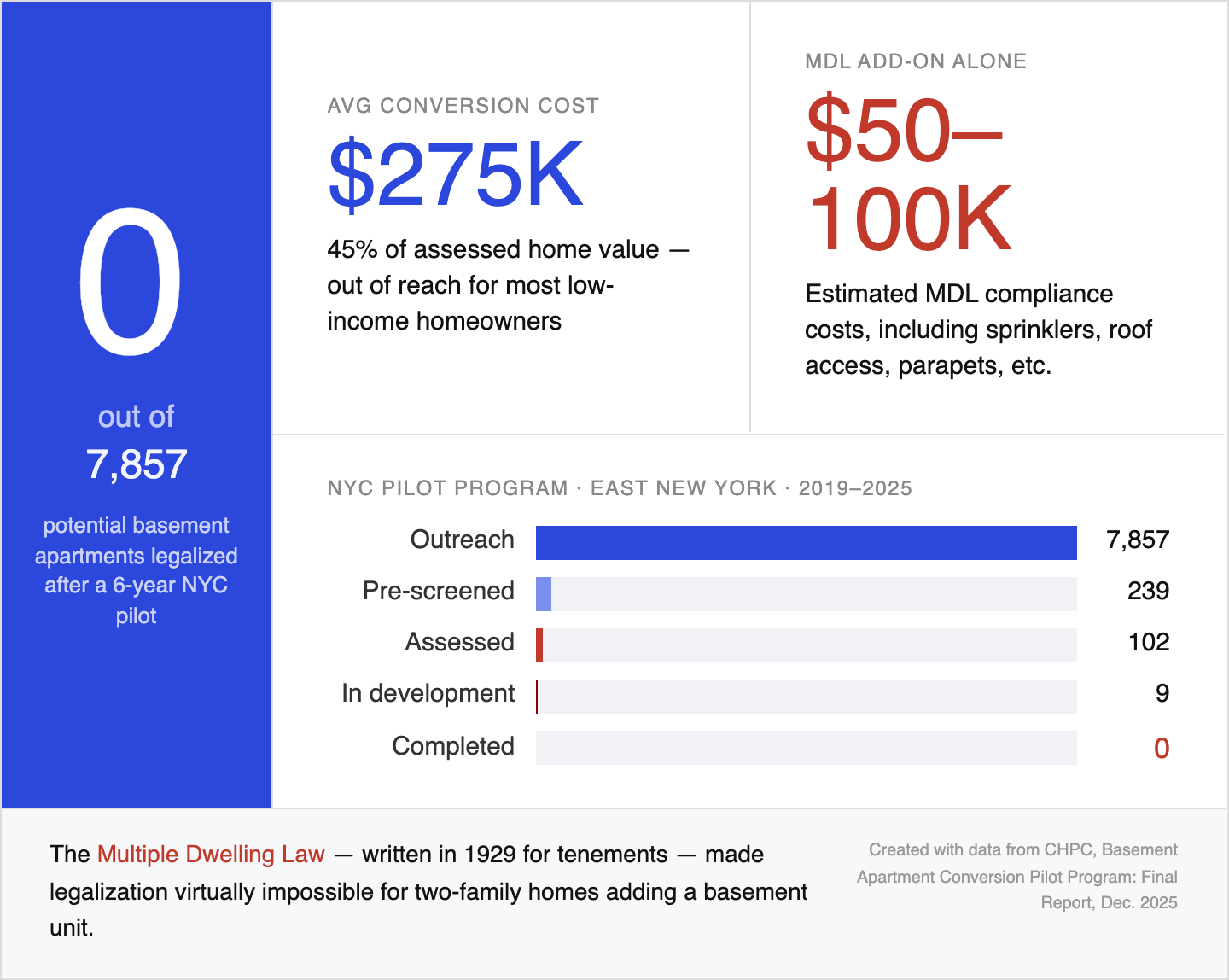
The Multiple Dwellings Law, written for tenements in 1929, is blocking thousands of NYC basement apartments from ever becoming legal. The city’s pilot to expand basement living in East New York produced not one legal conversion.
“New York City homeowners who wish to add a basement ADU [accessory dwelling unit] likewise trigger the MDL, requiring sprinklers and the law’s other requirements throughout the entire home, something that can easily cost north of $50,000,” writes MI’s John Ketcham.
Extra! Extra!
California’s proposed one-time 5% billionaire tax — intended to raise $100B for healthcare — is backfiring before it even reaches voters: just six confirmed departures (Page, Brin, Thiel, Spielberg, Hankey, Sacks) have already removed an estimated $536 billion from the tax base, roughly a quarter of what the initiative was designed to capture, MI’s Shawn Regan writes in City Journal. The lost future income tax revenue from departing billionaires could exceed what the wealth tax would ever collect — meaning California ends up poorer overall.
Stephen Fulop of the Partnership for New York City, the city’s leading business advocacy group, talked with the New York Editorial Board (of which Nicole Gelinas and I are members) about the city, the role of large business, and Mamdani’s performance so far.
San Francisco and Philadelphia homicide rates are at historic lows. The credit goes to a handful of Democratic mayors who broke with progressive orthodoxy on drugs and policing, Keith Humphreys argues in City Journal. “Those principles are simple: public policy should consider the impact of drug use on others, not just users; harm reduction alone is an inadequate response to drugs as a policy and a service; the best goal for addicted people is not mere survival, but recovery; it is socially just for police to prevent public spaces (e.g., playgrounds, sidewalks) from being taken over by drug-related commerce, drug use, or encampments; pressuring some people into addiction treatment is ethical and effective; and some publicly provided housing should require abstinence from substance use,” he writes.

