


Mamdani Watch
What was once floated as a near-billion-dollar public safety department became, this week, a roughly $260 million Mayor’s Office of Community Safety, consolidating existing B-HEARD mental health teams and the Office to Prevent Gun Violence under one roof.
Mamdani rescinded the NYPD policy of issuing criminal summonses for cyclists for minor traffic infractions, introduced under Mayor Adams. They will now receive ordinary traffic tickets. NYPD Commissioner Jessica Tisch, who said the previous policy was the only realistic deterrent to reckless riding, was absent from the announcement.
The city is hoping that with a bit of financing, outer borough homeowners will finally start building those ancillary dwelling units (ADUs) to help alleviate the housing crisis. But New York’s housing rules may be a bigger obstacle. More on that next week.
Manhattan rents hit $5,000 for the first time, and median rent in Brooklyn also reached an all-time high of $4,296 per month in February, Corcoran reports.
Would a raise help? A $30 minimum wage bill (something Mamdani campaigned on) has been introduced in the council. A fight is brewing.
The $100 Billion Question
$100 billion. That’s the minimum in additional costs New York taxpayers would owe over the next 30 years if Albany rolls back the pension reforms of 2009 and 2012, as the unions hope they will.
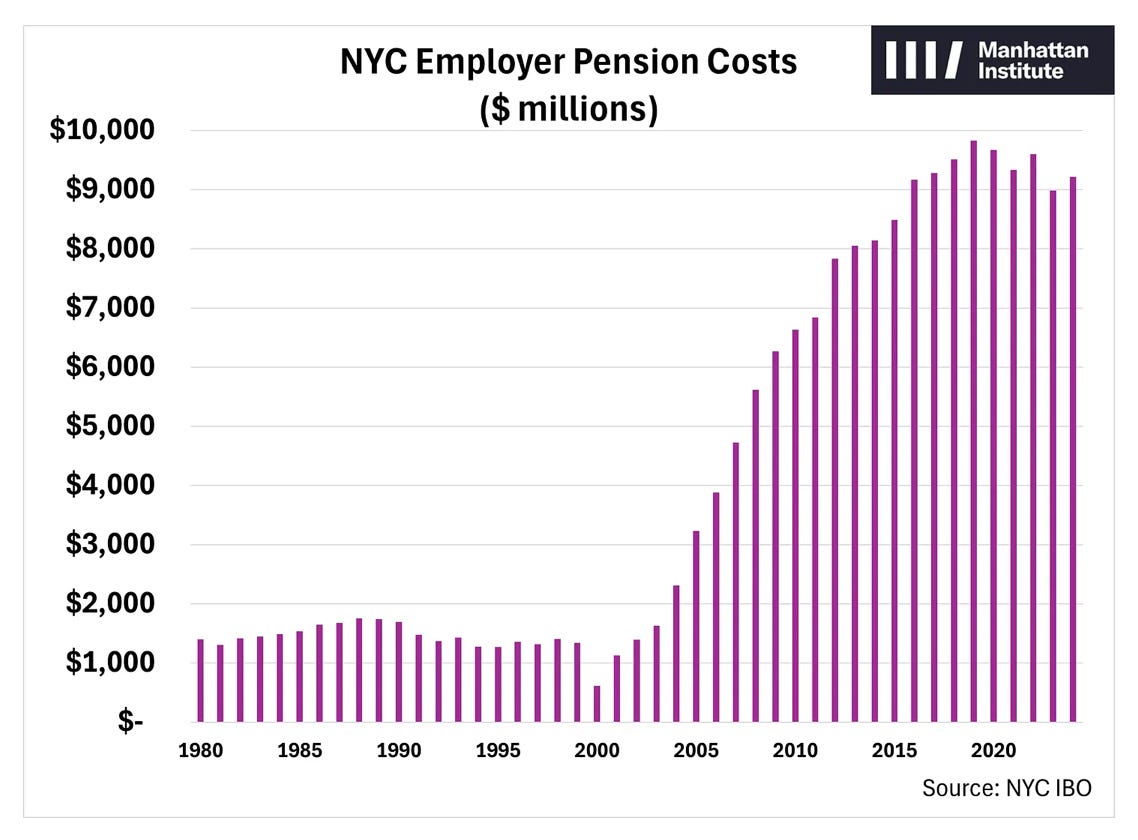
New York’s public pensions nearly broke the city in the 2000s, with annual costs surging from $1.4 billion to over $6 billion in a decade. Albany eventually passed reforms requiring new hires to contribute 3–6% of their salaries and pushing the full retirement age to 63 (from 55). Pension costs, now around $11.5 billion a year, were finally projected to bend downward.
Now the UFT and DC 37 want those reforms undone. If it passes, Mamdani will wake up to pension liabilities that have ballooned overnight. Moody’s has already moved New York City’s outlook to negative.
MI’s Ken Girardin has the full story. Read it here.
On The Podcast
Nicole Gelinas and I sat down with Ken Girardin to talk through two fiscal problems that don’t get nearly enough attention. The pension fight is one, and his story above is the place to start.
The other is the 2019 Climate Act, which effectively paused private energy investment in the state and left New York increasingly dependent on aging power plants and at risk of more frequent blackouts. (Apple/Spotify)
In the previous episode, we talked with former cop and John Jay professor Peter Moskos about what higher tolerance for disorder looks like (his new book is on New York’s 1990s crime fight, Back from the Brink). We also talked about cops responding to mental health crises, crime numbers, and more. Worth going back for. (Apple/Spotify)
Housing Isn’t Cheaper Than Shelter
A popular idea in housing policy holds that it’s cheaper for the government to put people in apartments than in shelter beds. New York has become the test case, and so far, the numbers show costs climbing rather than falling.
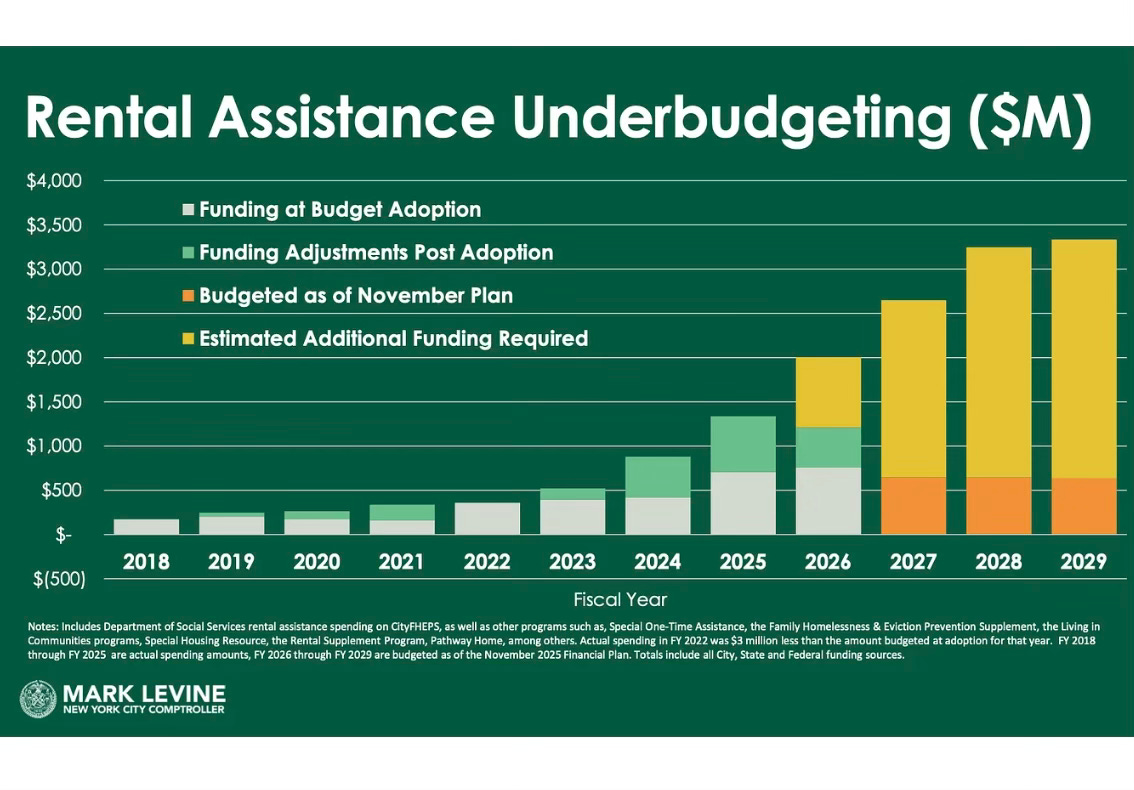
The main issue is duration. People in the city’s main shelter system stay, on average, just over a year. NYCHA tenants stay for decades. CityFHEPS, the city’s rental voucher program modeled on Section 8, is nominally a five-year benefit. However, households can get extensions, and in practice, the benefit stretches much longer.
When you account for how long people actually use each program, the supposed savings from “housing, not shelter” evaporate — and the city is left with a growing rental‑assistance tab instead.
MI’s Stephen Eide has the full analysis.
Extra! Extra!

The MTA announced it will purchase up to 2,390 new subway cars — the largest such order in the agency’s history - to replace roughly a third of its fleet.
NYC is doing everything possible to ruin its chances for a huge World Cup windfall (NYP)
Hudson Street storefront vacancies plunge following $13M streetscape revamp (Crain’s)
Ann Arbor Is Terrified of Becoming a Big City (Michigan Enjoyer)
Will the 'non-criminal enforcement' of two-wheel machines spread to the ATV/3-wheeler packs that menace some city avenues?