

While Mayor Mamdani schmoozed Donald Trump in Washington in hopes of building more housing, his aides here in New York launched a new series of “Rental Ripoff” hearings.
It was the first concrete move in a genuinely new approach to running City Hall, which began on Day One with the appointment of Cea Weaver, who helped pass the 2019 tenant protection law, to run the new Office to Protect Tenants. On Day Two, Mamdani appointed Tascha Van Auken, a longtime Democratic Socialists of America organizer who built the campaign’s field operation, to run the newly established Office of Mass Engagement.
As the hearings’ title makes clear, this is not a serious inquiry into why New York is so expensive. It’s an organizing exercise in attacking a pre-determined target, low-end landlords.
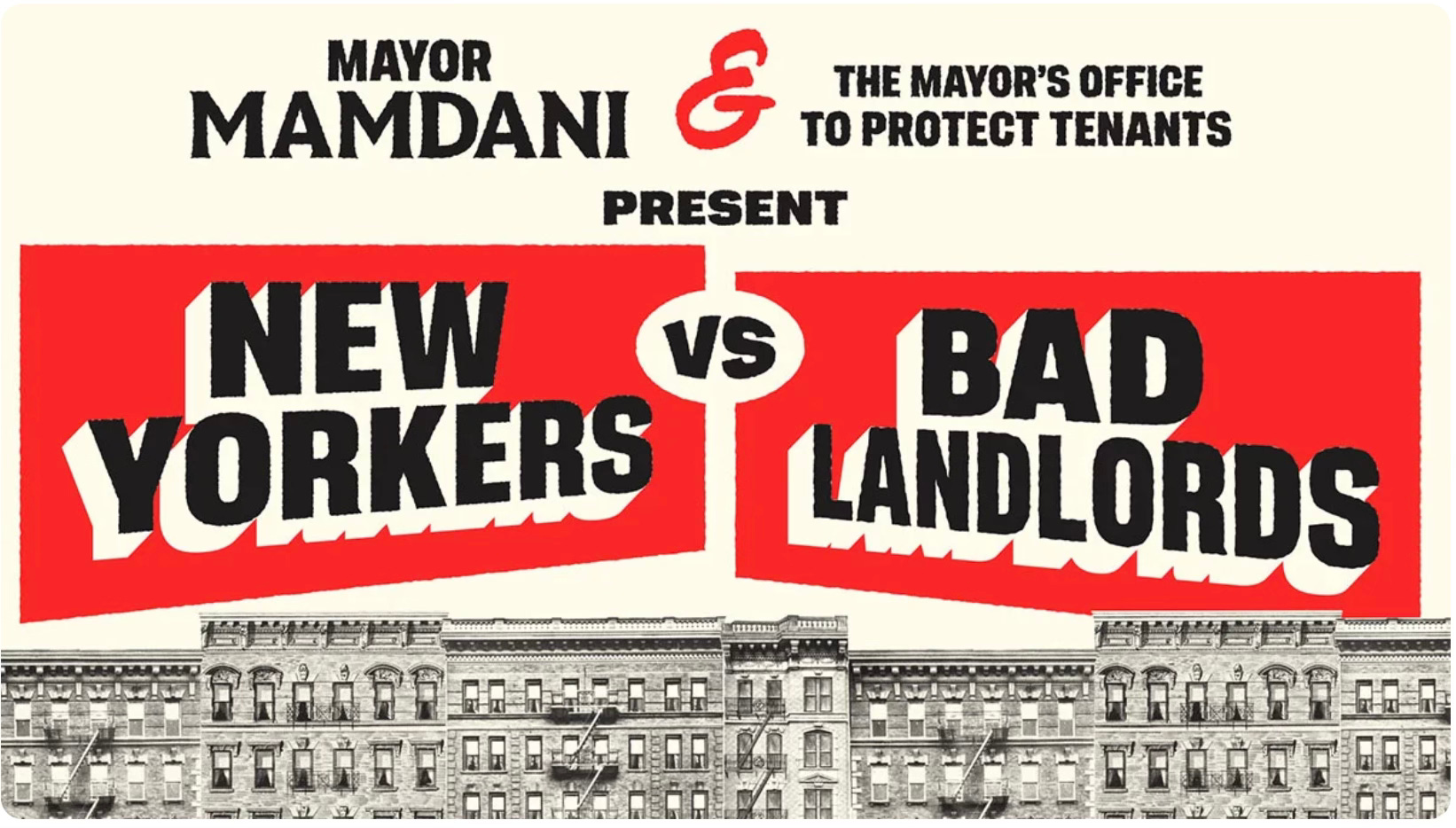
Perhaps that’s why this event was framed as “New Yorkers vs Bad Landlords,” despite the executive order inviting other stakeholders, like property owners and managers, to testify as well.
The format was not a traditional public hearing, despite what the name implied, but more of a resource fair, where concerns are recorded in one-on-one testimonies for the benefit of informing policy, City Limits reported.
Among ways to engage — a call to “Meet other New Yorkers and get support to organize with your neighbors!” Among goals — “Build tenant power across New York City.”
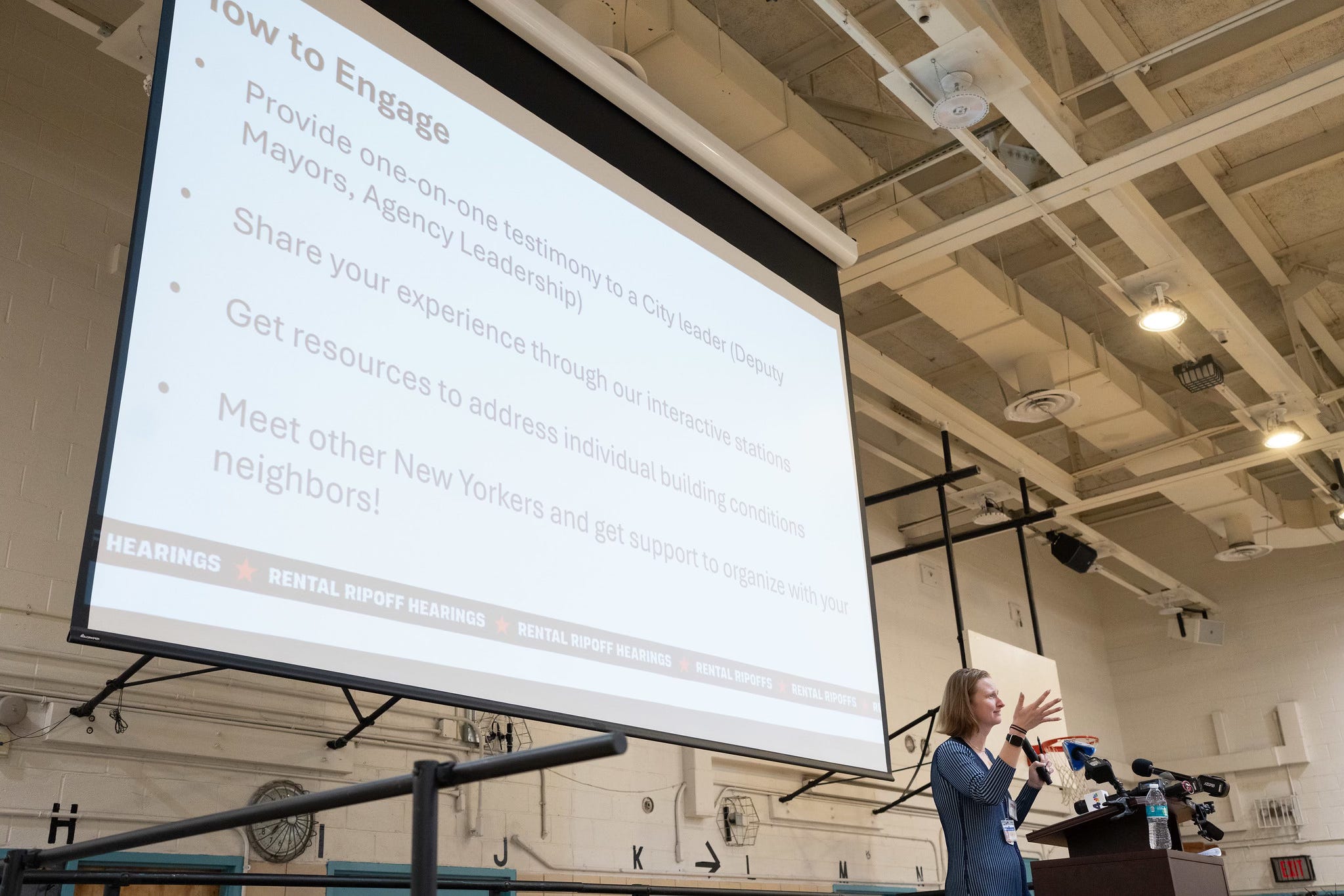
As my colleague Nicole Gelinas rightly noted from last night's meeting, it’s “not really a city job to ‘build tenant power’ any more than it would be to ‘build landlord power.’ [The] city’s job is to be a neutral mediator and enforcer for both sides of a transaction.”
This is an effort to engage — and organize — not to find facts. And as an effort in mass engagement, it certainly reached the masses thanks to Mayor Mamdani’s social media reach within the city.
The question then is, will the movement hear the villainized party?
The landlord group REBNY took a closer look at the rental market and unsurprisingly found that most landlords were not ‘bad’ landlords by their definition. Violations, evictions and complaints were concentrated in a small percentage of buildings, and the more rent stabilized units there were in a building, the more issues the building had.
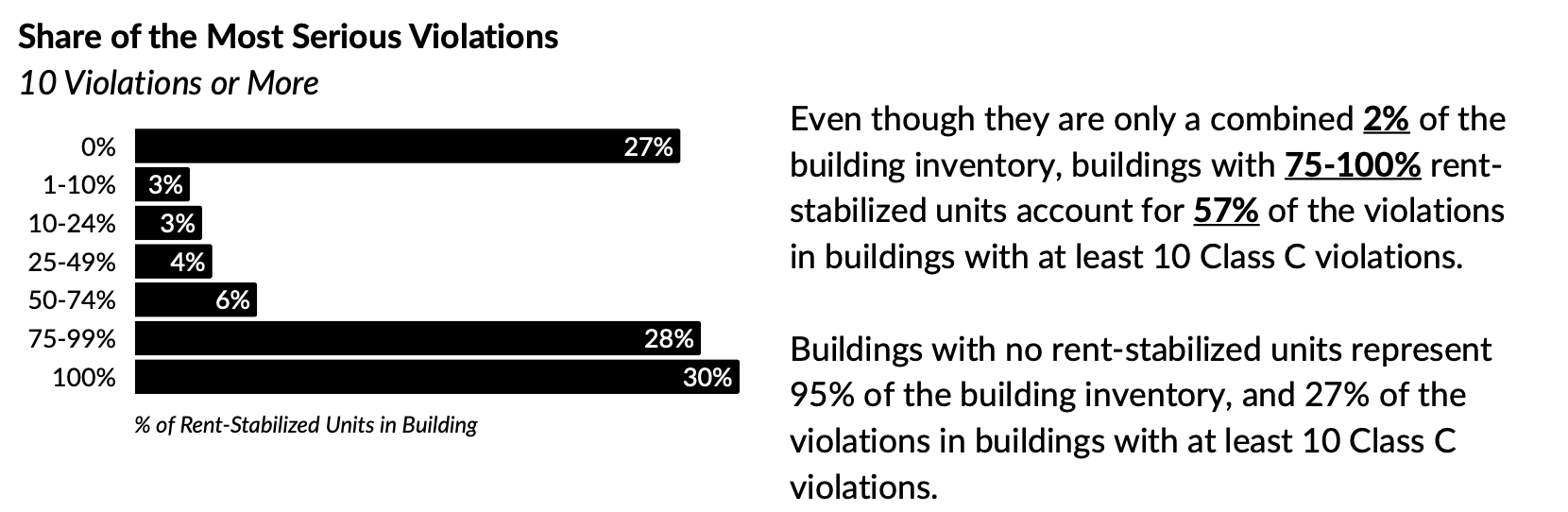
Many owners of buildings with a majority of rent-stabilized units are underwater, including non-profit affordable housing operators. When a building can’t cover operating costs, maintenance tends to give, and tenant complaints rise.
No doubt, there are some bad landlords, the city’s Public Advocate compiles the Worst Landlords list annually. But when it comes to violations, with about 180,000 units, the public New York City Housing Authority is by far the city’s biggest and worst landlord, yet there are no such public hearings scheduled to address its tenants’ issues. These are the residents who are unlikely to get a reprieve from having a very bad landlord.
The approach to go after landlords makes broad political sense for a mayor who was elected by tenants in a city in which 70% of people rent and who is a socialist steeped in ideas about class war.
But to really understand what’s going on here, it’s worth reading Alex Press’ recent article in the socialist magazine Jacobin (assuming you’re not already subscribed), which offers a remarkably clear outline of what Mamdani’s doing.
“I want to be very clear that this work has only just begun,” Mayor Mamdani told tenants on a Zoom call, Press writes. “I think of this fight frankly as the same as standing with nurses who are on strike or delivery workers seeking back pay.”
Cea Weaver, Press reports, ‘described the moment as an experiment in “mass governance and tenant leadership and city hall in a way that we never have done before.”’ Even Mamdani’s critics acknowledge he’s off to a surprisingly strong start as an administrator and Washington diplomat — but it’s equally clear that his long-term ideological project is marching on.
Local News


Last year, Mamdani liked to say he’d be Trump’s “worst nightmare” if elected. Now, on his second White House visit as mayor, he arrived with two concrete asks: $21 billion in federal grants to build 12,000 affordable apartments over Sunnyside Yards in Queens, and the release of several students detained by ICE, POLITICO reports.
Mamdani appointed an Equity Advocate as the director of the city Department of City Planning and chair of the City Planning Commission. MI’s Eric Kober thinks that Sideya Sherman, most recently Eric Adams’ commissioner of the Mayor’s Office of Equity and Racial Justice, will face a steep learning curve.
A Queens councilmember backed a housing project in her district after deciding it was better than being potentially overruled by a newly created appeals board, NY FOCUS reported.
Mamdani has been making a last push to get parents to register their kids for the city’s free 3-K and PRE-K programs ahead of today’s deadline. If enrollment stays at last year’s levels, he will be looking at excess capacity rather than expanding the programs.
OME: Mass Engagement or Power Building?
MI’s Daniel Golliher wrote earlier this week on the questions surrounding the role city’s new Office of Mass Engagement.
“We are all too familiar with wanting to participate in City government and not knowing where to go. On a daily basis, this limits the capacity of our government,” said OME’s incoming commissioner, Tascha Van Auken.
This is all fine as stated, but I wonder how much OME is about genuinely helping New Yorkers engage with their government in a civically neutral fashion, and how much it is an attempt to build a permanent campaign apparatus to manufacture consent for, and coordinate people to, lobby for the mayor’s policy agenda. I suspect it is some amount of both.
But how would one know?
Tax the Rich — Or Mamdani Will Tax You All
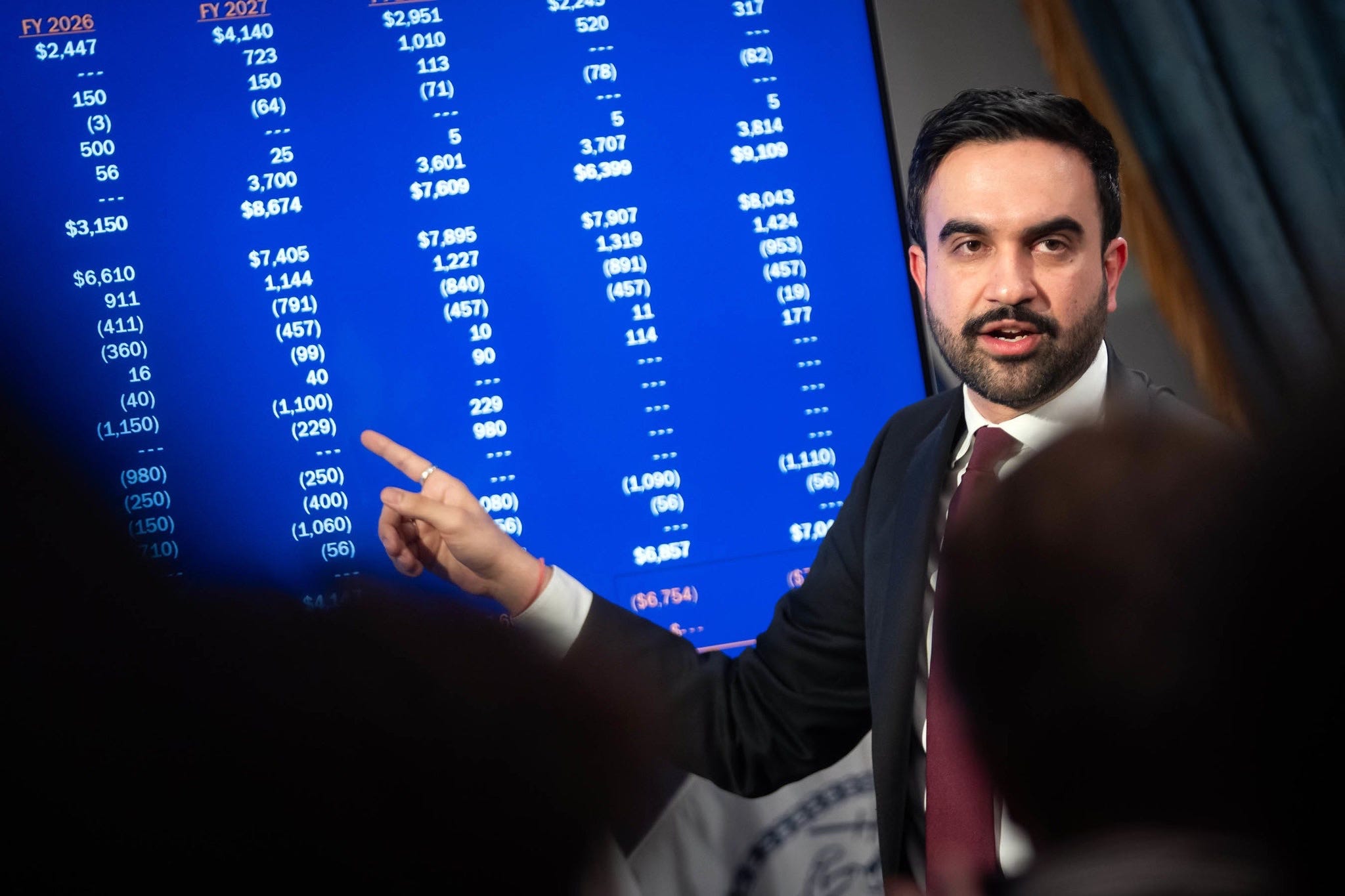
MI’s Nicole Gelinas wonders if Mamdani’s budget bluster may be his first political misstep:
“During last year’s mayoral campaign, Zohran K. Mamdani came off as an economic and fiscal fabulist, but at least he seemed politically astute. He was the only candidate who focused on rising costs, and he was authentic and fun. So the 34-year-old mayor’s first budget season has been jarring. The no-pain, free-stuff optimist has turned into a doomsayer who grimly warns that he may have to raise taxes on working- and middle-class New Yorkers, and that even such a tax hike may not be enough to pay for his promises.
The seeming personality transplant is, though, a calculated plan, just as calculated as his casual TikTok videos on the campaign trail. Mamdani hopes that by threatening a 9.5 percent, across-the-board tax hike on all city property owners, as he did last week, he can coerce Governor Kathy Hochul into supporting his proposed tax increases on seven-figure earners and large corporations instead. If Mamdani’s calculus is wrong, he will vaporize his aura of political genius, and New York’s more experienced permanent political class will discover that he’s not that good at this, after all.


