In five months in office, Mayor Zohran Mamdani’s rhetoric about “municipal socialism” has been meeting the practical constraints of managing a $100+ billion city government burdened by rules, regulations, and pre-existing commitments.
The result has been a mix of ideological ambition and politically pragmatic tactical improvisation without radical structural change. Mamdani himself tends to speak in terms of transforming how the local government serves the city.
“New Yorkers deserve a government that works as hard as they do—and a government as careful with their money as they are,” he said in announcing his new Commission on Government Efficiency this week. The goal, he said, is to cut through bureaucracy and deliver housing, transit, child care, and other services “faster, smarter and more effectively for working people,” restoring faith in government by proving it can produce results.
The emerging question, however — and the one that will define his mayoralty — is how he will balance the tension between a politically pragmatic, technocratic governing approach with his alliance with labor and his broader political coalition.
As Stephen Eide observes, the administration has treated the city’s fiscal challenges less as a constraint to be managed than as an opportunity to advance a broader project of class politics—mobilizing support around taxing the wealthy while deferring harder questions about long-term spending, particularly in areas like pensions.
To look at his budget, you wouldn’t know it was put together by a socialist mayor, Nicole Gelinas notes. Mamdani has been successful at getting support from Albany, but otherwise it is more ‘business as usual’, shifting costs to the future without addressing the structural issues that make the budget unsustainable in the long run.
Mamdani’s NYPD has been successful in keeping crime down, including through quality-of-life policing. He is under pressure to keep disorder under control as the World Cup and New York summer descend on the city, while his supporters grow increasingly unhappy about the lack of police reforms. It remains to be seen what happens next.
He has been advancing existing transportation capital projects that have the potential to improve transit flow in the city while making it safer. Meanwhile, his ideological push to expand universal childcare is already meeting the limits of demand.
Whether in its approach to housing, labor regulation, or economic development, the emphasis has been less on expanding the city’s overall capacity and competitiveness than on restructuring who benefits from it.
At least in these early months, a big picture is becoming clearer: a version of municipal socialism that prioritizes small wins and redistribution over growth, while deferring the hard choices that would require real transformation.
Big Picture Socialism
Eide argues that, based on what we have seen so far, “the class war’s likely to be permanent, the promise of worker power remains dubious, and socialist New York will be a more inward-oriented place than the city it replaced.”
In Eide’s view, the Mamdani administration treated the budget deficit less as a fiscal management problem than as an opportunity to mobilize political support around taxing the wealthy and reinforcing class consciousness. At the same time, he argues that the promise of “worker power” is undermined by the fiscal record of union-influenced pension governance, where labor-led institutions have often struggled with long-term stewardship.
More broadly, Eide contends that Mamdani’s politics encourage an inward-looking governing style focused more on satisfying local activist coalitions than on maintaining New York’s broader economic competitiveness.
Housing Plan’s Ambition Constrained by Ideology
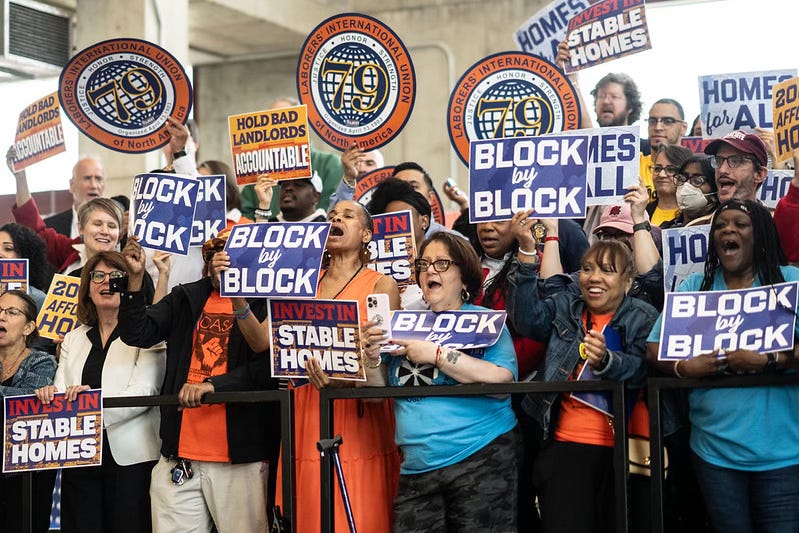
Taking a closer look at Block by Block, the Mamdani administration’s housing plan that was released this week, MI’s Eric Kober concludes that the plan “may produce significant new construction and some useful reforms, but it remains constrained by ideological commitments that limit its ability to solve the city’s housing problems.”
Existing rent-regulated housing will remain financially distressed and dependent on public support, while NYCHA’s capital crisis will continue to exceed the willingness of any level of government to fully address it, he writes. Meaningful improvement would require policy and funding shifts beyond the current political consensus.
Mayor Mamdani’s Budget Isn’t Socialist
New York’s budget is so burdened by legacy costs and institutional obligations that even a mayor elected to dramatically expand government ends up governing conventionally unless he is willing to cut, reform, or restructure the existing system first.
“It says a lot about New York City that in order to afford socialism, we’d have to cut spending first,” Nicole Gelinas observes in an excellent piece in the City Journal.
“Mamdani has proven politically pragmatic, preferring modest victories, relative to his campaign promises, to protracted fights with the ageless institutions, from unions to anti-poverty advocates, that make up New York City’s permanent government,” she writes.
As a result, his first budget is more of a continuation than a disruption.
The End of Low-End Contract Work?

Council Member Tiffany Cabán, a Democratic Socialist, has introduced a bill that would require operators of last-mile delivery facilities to obtain a license and directly employ workers who sort packages and make deliveries, prohibiting the use of subcontractors or staffing agencies for these core services—continuing a broader trend of policies that make it harder to operate low-margin, high-volume services within the city.
MI’s Adam Lehodey writes that framed as a worker-safety proposal, the measure would likely eliminate thousands of city delivery jobs, push logistics operations to the suburbs, increase costs for consumers, and worsen congestion without meaningfully improving safety outcomes.
As with similar regulations affecting app-based services, the effect is likely to be less to build new economic capacity than to reshape existing activity in ways that favor organized labor and politically aligned constituencies—often at the expense of consumers and contract workers.
Extra! Extra!
Chicago Transit Authority revised its 2015 ridership up by 19 million trips after deploying a new automatic passenger tracking technology. The data also showed a significant increase in the number of riders “underpaying” the fare. (Streetsblog Chicago)
After a deadly crash between a bicyclist and an e-scooter rider that killed both, experts and advocates are calling on Mamdani to focus on reining in illegal electric vehicles. (Streetsblog New York)
What parents of young children want is more time and more money, a new national survey by the left-leaning New America think tank finds, while no single work, child care, or leave arrangement dominates their preferences.
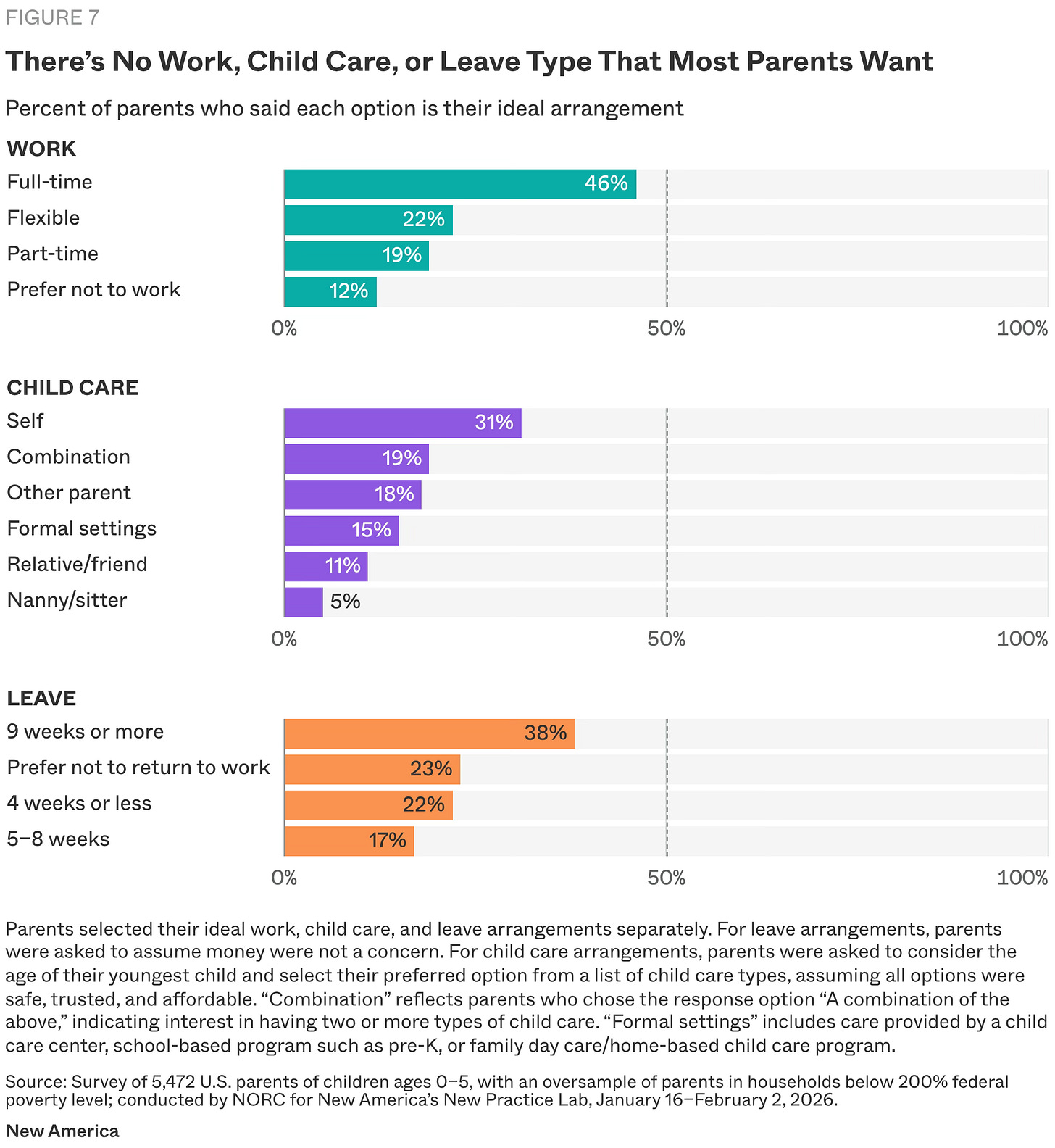
The Mamdani administration is also working with New America on a survey, paid for by the Robin Hood Foundation, of what parents of young children in NYC want when it comes to childcare.
Utah is shifting from "Housing First," which prioritizes low-barrier shelters and permanent housing, to a strategy emphasizing mandatory treatment and enforcement. (Bloomberg CityLab offers a deep dive.)