

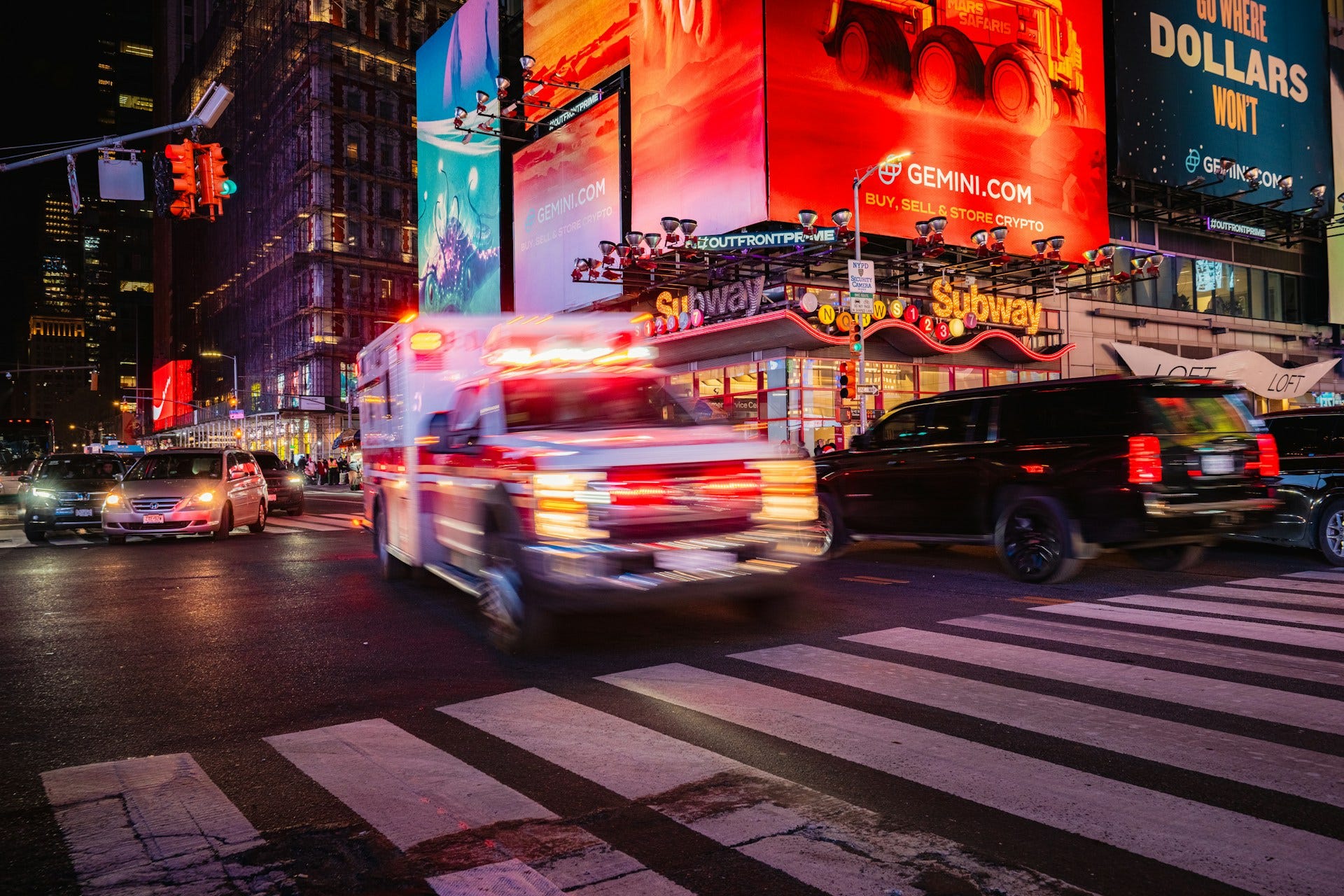
Around 4 p.m. on Monday, Aug. 31, a woman armed with two knives attacked two passersby in Times Square. She stabbed a 68-year-old man, then Erin Piacenti, a 32-year-old Bank of America vice president from Chester, N.J.; Piacenti died at the hospital. Police Commissioner Jessica Tisch called it a random and unprovoked attack. It was the second killing in Times Square this year.
Nearly seven weeks later, at midday on a Saturday, a 26-year-old man was shot dead on the E train platform at Seventh Avenue and 53rd Street, a few blocks from Carnegie Hall.
If Midtown feels less safe to you than it used to, you aren’t imagining things.
While killings like these remain rare, the broader serious violence, felony assaults, is not. Felony assaults in Midtown’s two precincts rose from 375 in 2019 to 884 in 2025, according to NYPD figures, up 136% against a citywide increase of 44% over the same period. 2025 was Midtown’s worst year since at least 2000.
And 2026 is no better. Through Oct. 18, Midtown recorded 764 felony assaults, 6% more than at the same point last year. In Midtown North, felony assaults are up 20% this year.
On the Street, in the Evening
What makes Midtown different from the rest of the city is where the assaults happen. Three-quarters of its felony assaults take place in public, according to NYPD complaint records1: on sidewalks, in subway stations and the bus terminal, in stores and restaurants. Citywide, fewer than half do.
The rise is concentrated from late afternoon into the night.
The subway tells a similar story systemwide. Felony assaults on riders rose from 276 in 2019 to 389 in 2025, while ridership fell by a quarter. Per ride, the risk nearly doubled. In Midtown’s two precincts, felony assaults in the subway rose from 40 in 2019 to 65 last year.
But Isn’t It Just...
More assaults on cops? The shelters concentrated in Midtown? A 2024 law that made assaulting a retail worker a felony?
Even after you take out every assault on a police officer and every assault inside a shelter, and in stores and restaurants, Midtown’s felony assaults still nearly doubled, from 280 to 546.
NYPD doesn’t publish whether suspects are homeless or mentally ill. But this month, Police Commissioner Jessica Tisch said that 48% of this year’s transit felony assaults citywide were committed by people with a documented mental-health history in police records.
Thousands of Witnesses
Felony assaults are still rare relative to the number of people who pass through Midtown.
But criminologists have long described “signal crimes” that have “a disproportionate impact upon fear of crime,” because of what they say about a place. On a busy Midtown block at rush hour, the city’s own pedestrian counts suggest hundreds of people could pass within the same block witnessing an assault before police arrive, and thousands more may pass by the scene before police leave.
Studies have also found that hearing about crime from neighbors, or seeing it on the local news, is linked to feeling less safe, whatever the actual crime rate.
Confidence in the subway has dropped, too. In 2017, 46% of New Yorkers told the Citizens Budget Commission they felt safe on the subway at night. In 2025, 22% did.
What Would Help
Experts point to concentrating police on small, high-crime spots, and to follow-up care for people with serious mental illness.
“While those are good suggestions, given how many violent crimes are committed by offenders with preexisting (and often lengthy) criminal histories, another policy intervention that should be considered would be to impose escalating sentencing enhancements in response to repeat offending to incapacitate the most prolific offenders,” says MI’s Rafael Mangual. “Though even this kind of approach comes with difficulties in light of the city’s arrest-sealing practices coupled with high dismissal rates attributable to the 2020 discovery reform.”
Mayor Zohran Mamdani has offered sympathy after some of these attacks.
NYPD’s own numbers have told the same story for five years running — while the city overall is safer, Midtown’s felony assaults are up. It would be irresponsible for City Hall to wait for a sixth.
50 Practical Ideas to Make NYC Better
“The mayor is right that improving the quality of life is a cause that ought to transcend partisanship or ideology. New Yorkers across the political spectrum want a city where they can find work, get ahead, afford a home, and raise a family. They expect safe neighborhoods and good schools, and they deserve public services that justify the taxes they pay. Addressing these quality-of-life concerns should be a source of common ground,” MI’s John Ketcham and Sean Speer write in a new brief.
They then present us with solid ideas for building more homes that people can afford, improving schools so children are better prepared for adult lives; ideas to support childcare that fits family life, make streets, parks and transit safer, and suggestions on how to create more opportunities for business and better city government.
You can also play around with this quiz MI’s Daniel Golliher created to see if you are a Manhattan Institute Urbanist:


Where Accountability Starts: Lessons From Paris’s School Riots
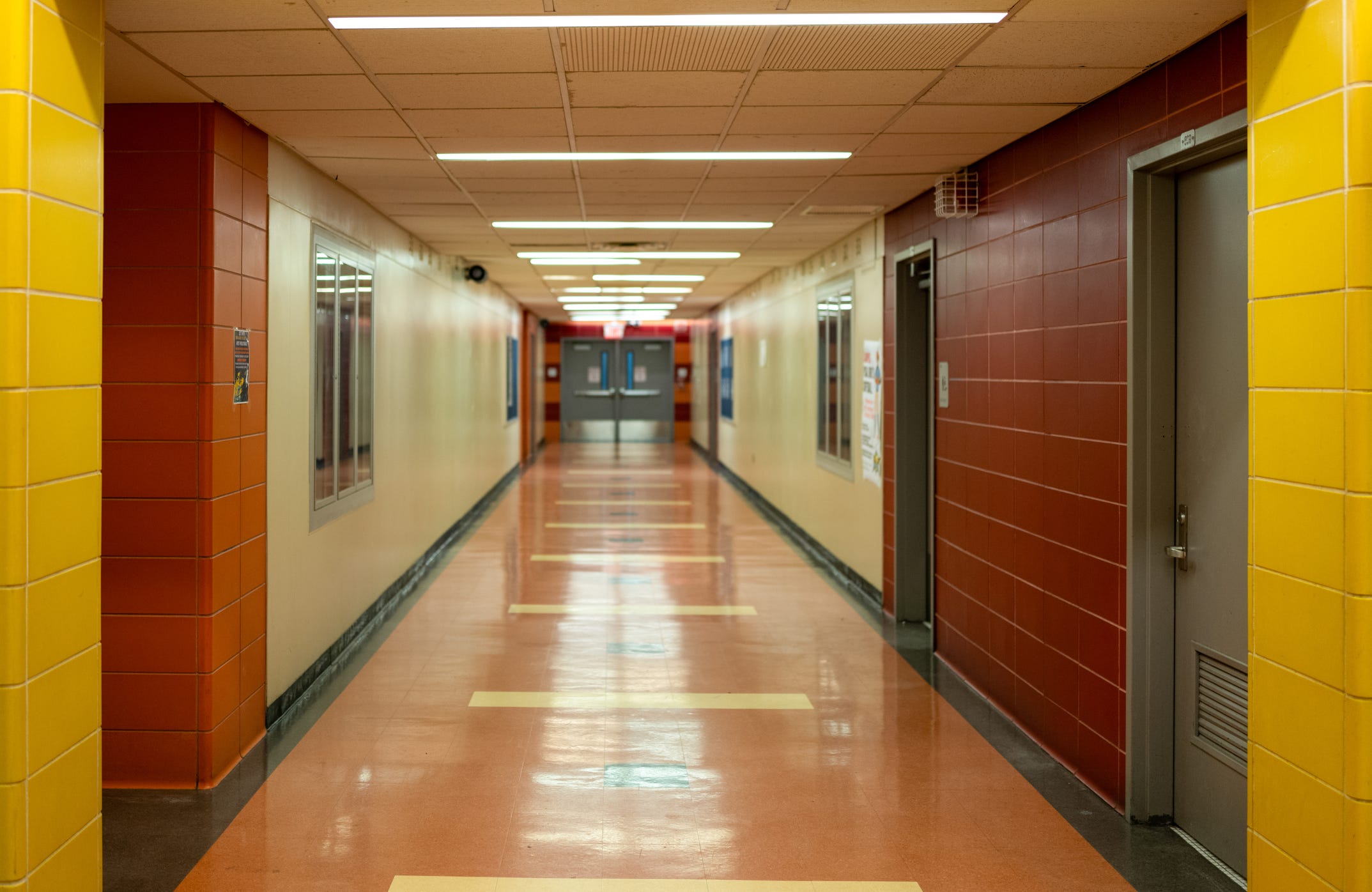
MI’s Jennifer Weber makes the case that France’s school riots are a warning for New York. What started as a blockade at a Créteil high school over teacher shortages and crumbling buildings quickly spread to more than 1,000 schools, ending in a national protest over things beyond education.
Weber looks at the situation from a behavioral point of view: students learn what they can get away with long before a crowd forms, and a government that shut schools, politicians who praised the blockades, and a discipline system that leaned on restorative justice helped normalize escalating the disruption.
What to Do About NYC’s Empty Schools
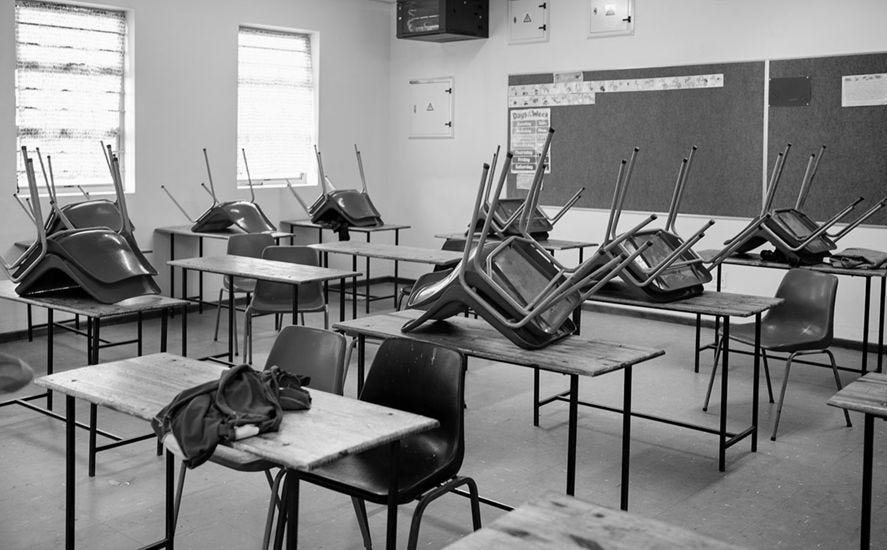
The city is considering closing a small high school in Harlem that enrolls just 112 students and has had a 39% decrease in enrollment over the last five years, Chalkbeat reported.
I asked my colleague Danyela Souza Egorov, who wrote a brief earlier this year recommending closing such schools, how small is too small?
“Schools with fewer than 150-200 students are not financially viable, and they tend to be underperforming,” she told me. “NYC has more than 130 schools with fewer than 150 students. It’s a good start to deal with a massive problem that NYC will have to face sooner or later. ”
Related:
The Unrelenting Nightmare of Applying to High School in New York City (The New York Times)
Do Socialists Care About Education? (The Bigger Apple)
Does the D.S.A. have a vision for public education? (The New Yorker).
Extra! Extra!
NYC Schools Chancellor dodges questions:
The MTA has suspended bus fare enforcement while it investigates enforcement irregularities, effectively making bus fare optional. Half the passengers already do not pay, and statements like this from the Mayor’s office do not exactly discourage nonpayment: “No New Yorker should fear for their safety because they cannot afford the fare. We welcome the MTA’s decision to suspend fare enforcement while it investigates reports of excessive force by members of its fare collection teams. Our transit system should make life easier, not harder.” (Gothamist)
City Council outlawed the operation of horse-drawn carriages in NYC, effective as of June 1, 2028. (The New York Times).
Community Opportunity to Purchase Act: the city council made it easier for nonprofits to acquire some distressed buildings that are put up for sale by requiring owners to give them an exclusive 90-day opportunity to purchase before offering it on the market, a watered-down version of a bill that was being considered last year. (New York Post)
Total and private-sector employment in NYC both fell in September while the unemployment rate remained steady at 4.8%, according to a new report from City Comptroller Mark Levine.
Annual totals for Midtown (the NYPD’s Midtown South and Midtown North precincts) and citywide come from the NYPD’s Seven Major Felony Offenses by Precinct report. Figures on where and when assaults occurred, and totals excluding assaults on police officers and in shelters, are our analysis of individual complaint records in the NYPD’s Complaint Data Historic dataset on NYC Open Data. Those records put Midtown’s felony assaults at 379 in 2019 and 870 in 2025, slightly different from the official totals of 375 and 884. Year-to-date 2026 figures come from NYPD CompStat reports for the week ending Oct. 18.